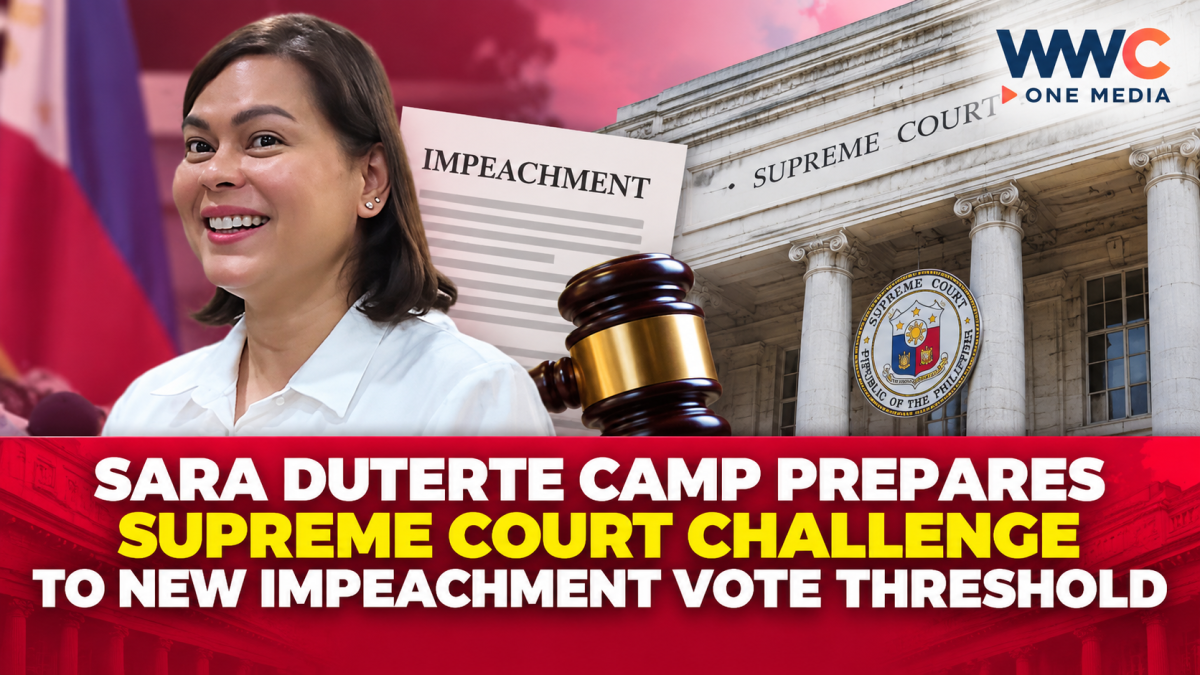
Vice President Sara Duterte’s camp is preparing to challenge before the Supreme Court the Senate impeachment court’s decision to change how the two-thirds vote required for conviction will be calculated.
Duterte spokesperson Salvador Paolo Panelo Jr. said the defense is considering a petition for certiorari, arguing that the new interpretation conflicts with the 1987 Constitution, which requires the concurrence of two-thirds of all members of the Senate for an impeachment conviction.
The Senate impeachment court voted 13-1 on Sept. 23 to overturn an earlier interpretation that fixed the conviction threshold at 16 votes. Six senator-judges did not participate in the vote.
Under the new ruling, the two-thirds requirement will be calculated using only senators who are legally and factually capable of participating when judgment is rendered. Senators who are detained or suspended, physically or medically incapacitated, beyond the Senate’s coercive processes, or otherwise unable to participate may be excluded from the calculation.
The decision does not establish a new fixed number of votes needed to convict Duterte. Instead, the denominator will depend on which senator-judges are considered capable of participating when the impeachment court reaches its final judgment. Any fraction resulting from the two-thirds calculation will be rounded up.
For example, Presiding Officer Francis “Chiz” Escudero said that if only 20 senator-judges were legally and factually capable of participating, two-thirds would amount to 13.33 votes, meaning 14 votes would be required after rounding up. That example does not represent the final threshold for Duterte’s case.
Panelo has argued that the Constitution specifically refers to “all the Members of the Senate” and that the impeachment court cannot change the constitutional basis for determining the required vote. The Senate majority, however, maintains that it did not reduce the two-thirds requirement but instead determined which members should be included when some senators are unable to participate.
The dispute could now move to the Supreme Court. A petition for certiorari would ask the high court to examine whether the impeachment court committed grave abuse of discretion in adopting the new voting formula.
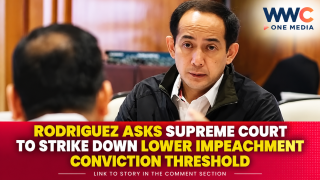
A separate petition has already been filed by former Executive Secretary Vic Rodriguez, who asked the Supreme Court to nullify the Sept. 23 ruling and sought a temporary restraining order. Another lawyer, Ernesto Francisco, also filed a petition on Sept. 25 seeking a status quo ante order, arguing that the constitutional question should be resolved before the disputed formula is applied.
The Senate impeachment court’s ruling remains in effect unless the Supreme Court intervenes. A challenge before the high court would also not automatically suspend the impeachment proceedings unless the court issues an appropriate order.
The threshold dispute is separate from the substantive allegations in Duterte’s impeachment case. The Senate impeachment trial is scheduled to resume on Sept. 28, while the legal challenge could add another constitutional issue for the Supreme Court to consider.
The next stage will depend on whether the Supreme Court takes action on the petitions and whether the impeachment court proceeds under its revised interpretation while the constitutional dispute remains unresolved.