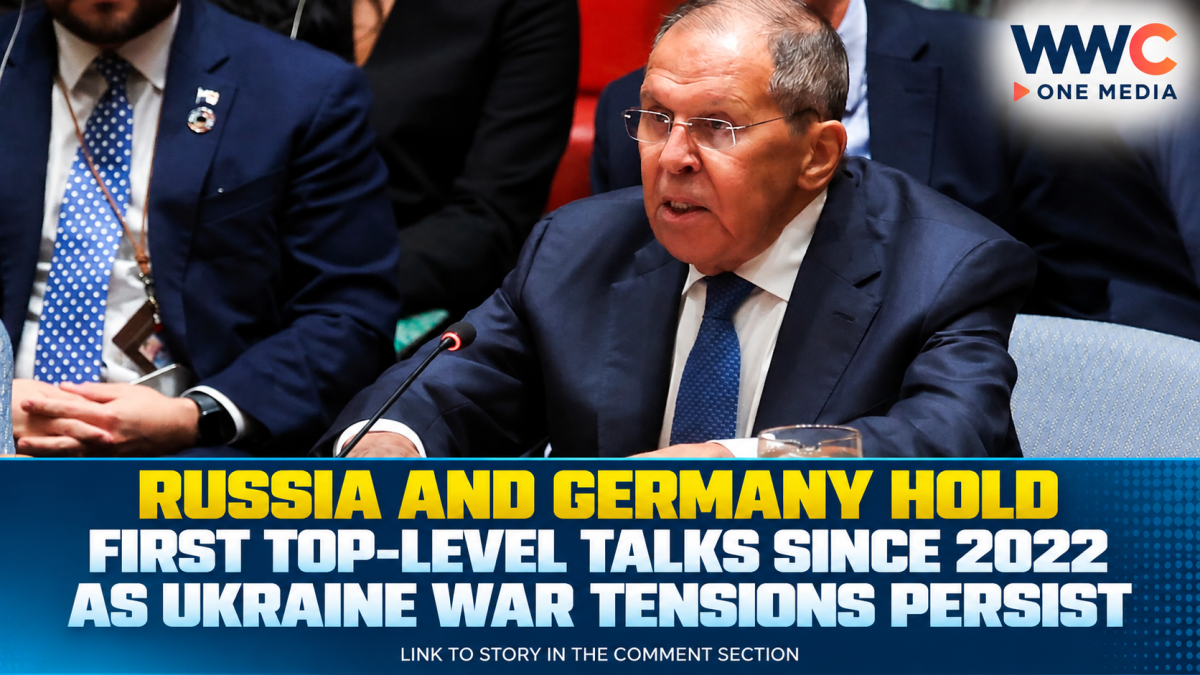
Russia and Germany’s foreign ministers have held their first direct talks since Russia’s full-scale invasion of Ukraine in 2022, bringing the two countries’ top diplomats together at a time when relations remain deeply strained.
Russian Foreign Minister Sergey Lavrov and German Foreign Minister Johann Wadephul met on the sidelines of the United Nations General Assembly in New York on Sept. 26. The discussion covered bilateral relations and the war in Ukraine, according to officials from both sides.
The meeting was requested by the German side and lasted roughly 20 minutes. Wadephul used the encounter to press Moscow to move toward an agreement allowing grain exports through the Black Sea, where fighting and attacks on ships and port infrastructure have disrupted trade.
Wadephul also urged Russia to abandon what Germany described as an escalating course toward Germany, Europe and NATO. He said incidents involving alleged Russian hybrid activity would not weaken Berlin’s support for Ukraine.
The Black Sea issue has taken on particular importance because Russia and Ukraine are major agricultural exporters, while disruptions to shipping have consequences for food supplies well beyond Europe. Wadephul emphasized the impact on countries in the Global South and argued that a practical arrangement on grain exports could create space for further steps.
Lavrov offered a much less positive assessment of the encounter. Speaking after the meeting, he said he had heard nothing from Wadephul that Germany had not already stated publicly, suggesting that the discussion had not produced a new diplomatic breakthrough.
Lavrov also said Russia had been discussing proposals for safer navigation in the Black Sea with countries including India, Egypt and Turkey. He argued that separate discussions with Ukraine would also be necessary, while blaming Kyiv for attacks on vessels. Ukraine has said it is open to agreements and holds Russia responsible for the consequences of the war.
The meeting comes after another deterioration in Russian-German relations following an August drone incident at Leipzig/Halle Airport. Germany said its investigation concluded that Russia was responsible and announced measures including the closure of a Russian consulate and cultural centre. Moscow rejected the accusations as fabricated.
The diplomatic encounter therefore took place against a backdrop of competing messages. Berlin used the meeting to reiterate its support for Ukraine and raise concerns over security and food exports, while Moscow signalled that it saw little new in Germany’s position.
The meeting did not produce an announced agreement on Ukraine, Black Sea shipping or broader bilateral relations. But the fact that the two foreign ministers spoke directly after more than four years without such a meeting gives the encounter significance amid continuing diplomatic efforts surrounding the war.
With the conflict still disrupting regional security, energy infrastructure and Black Sea trade, attention will now turn to whether the renewed direct contact remains a one-off meeting or develops into a broader channel for discussions between Moscow and Berlin.