
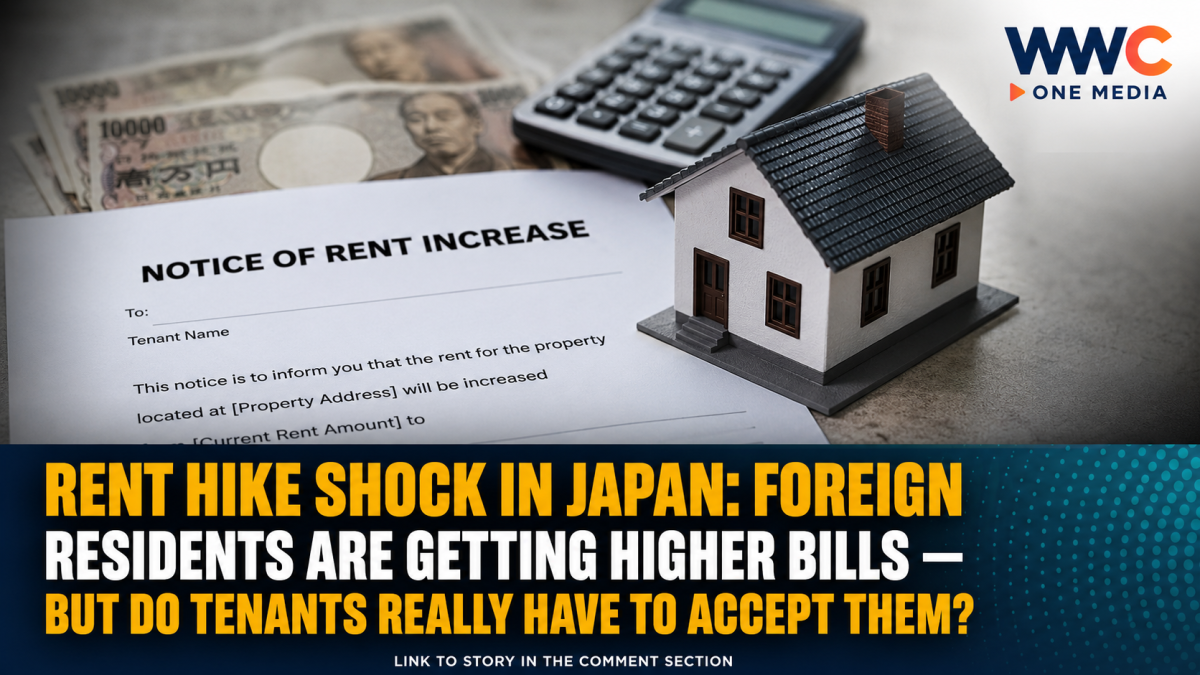
A recent report by The Japan Times highlights the dilemma facing foreign nationals as landlords increasingly seek higher rents amid changing economic conditions. One example is Leveth Jackson, a foreign resident in Chiba, who received a second consecutive rent increase when her two-year lease came up for renewal. Her rent had previously risen by ¥2,000, and her landlord is now seeking another ¥5,000 increase. If accepted, her family’s monthly rent would have climbed from ¥65,000 to ¥72,000 over four years — an increase of more than 10%.
The issue is becoming more significant as rental prices rise in major Japanese cities. Research from the Japan Research Institute found that rent inflation has been particularly pronounced in Tokyo’s 23 wards, where rent growth has outpaced the national average. The institute points to factors including stronger rental demand, population concentration in Tokyo and rising housing costs.
But can a landlord simply raise the rent?
Not necessarily.
Japan’s Act on Land and Building Leases allows landlords and tenants to request a rent increase or decrease when circumstances make the existing rent unreasonable. The law specifically refers to changes in property-related taxes and costs, economic conditions, changes in land or property values, or a significant disparity between the rent and comparable properties nearby.
Japan’s National Consumer Affairs Center similarly advises tenants who receive a rent-increase notice to first check their rental agreement, ask the landlord or management company for the reason and supporting basis for the increase, and negotiate. Where the contract does not provide otherwise, a rent change generally requires agreement between the parties.
That means receiving a notice is not the same thing as legally agreeing to the increase.
Tokyo’s housing authorities have issued similar guidance. The Tokyo Metropolitan Government says tenants do not necessarily have to accept a proposed increase and can continue paying the existing rent if they do not agree. If the landlord refuses to accept the existing payment, tenants can use a rent-deposit procedure to document that they have continued making payment.
What happens if the tenant refuses?
A disagreement does not automatically mean the tenant has to move out.
If negotiations fail, the dispute can proceed through mediation and, ultimately, court proceedings. Japan’s legal-aid service Houterasu explains that when a landlord seeks an increase and the parties cannot agree, the matter can be addressed through civil mediation before potentially going to court.
The situation can be particularly important at lease-renewal time. Tokyo authorities have warned tenants not to automatically accept a substantial increase simply because a landlord or management company presents a new renewal contract. Once a tenant signs an agreement accepting the higher rent, reversing that agreement can become considerably more difficult.
Why foreign residents may feel especially vulnerable
For foreign nationals, a rent dispute can involve more than the monthly payment. Finding another apartment may mean dealing with guarantor requirements, deposits, agency procedures and language barriers.
Japan’s rental housing industry has recognized these difficulties. The Japan Rental Housing Management Association, working with the Ministry of Land, Infrastructure, Transport and Tourism, provides rental-housing guidance and standardized documents for foreign residents in multiple languages, including English, Chinese, Korean, Vietnamese, Thai, Indonesian and Tagalog.
Guarantor arrangements can also be a significant part of the rental process for foreign residents. The University of Tokyo notes that landlords commonly require guarantors or guarantor-service companies, although some housing options do not require a personal guarantor.
The bottom line for renters in Japan
A rent-increase letter should not automatically be treated as a take-it-or-leave-it demand.
For tenants facing an increase, the key steps are to:
- Check the original rental contract and renewal terms.
- Ask the landlord or management company why the rent is being increased.
- Request the basis for the proposed amount.
- Compare the proposed rent with similar properties nearby.
- Do not sign a revised agreement before understanding the new terms.
- Seek consumer or legal advice if negotiations break down.
Japan’s rental market is clearly under upward pressure, particularly in major urban areas. But the growing cost of housing does not mean every proposed rent increase automatically becomes binding on the tenant.
For foreign residents already living in Japan, the most important question may therefore not be “How much is my rent going up?” — but “Do I actually have to agree to it?”
WWC ONE MEDIA MJE




Leave a Reply