
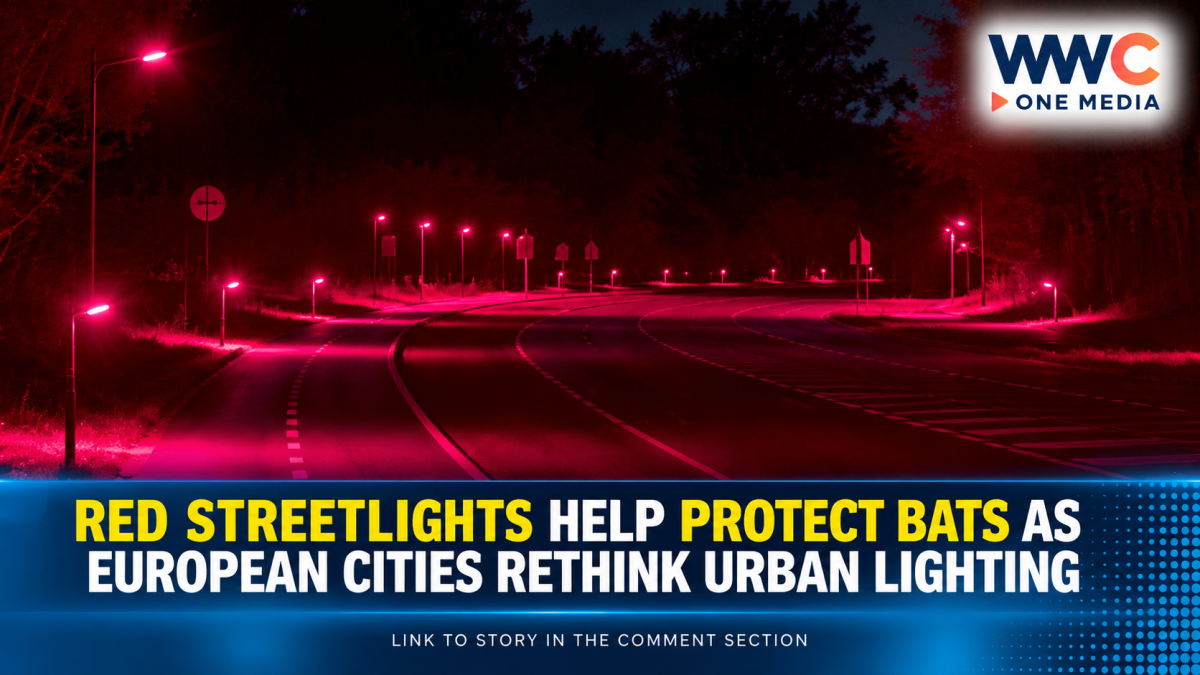
COPENHAGEN, Denmark — Several European cities are turning red in an effort to protect one of nature’s most misunderstood creatures: bats.
Traditional white streetlights are being replaced with red LED lighting in areas close to wildlife habitats, as cities search for ways to reduce light pollution while maintaining visibility and public safety.
In Gladsaxe, a suburb of Copenhagen, red lights have been installed along roads and cycle paths near areas inhabited by bats. The approach is designed to give people enough light to travel safely while reducing the disruption artificial lighting can cause to wildlife.
Why Red Lights?
Artificial light can dramatically affect the behavior of nocturnal animals.
For bats, which depend on darkness for feeding, navigation and avoiding predators, bright artificial lighting can alter natural movement patterns and discourage them from entering areas they would normally use.
Research cited in the report found that white and green lighting can reduce bat activity, while red light has little to no effect on some light-sensitive bat species.
Studies conducted in the Netherlands found that certain bats remained active under red lighting, making the technology a potentially valuable option for roads and pathways near sensitive wildlife habitats.
Dark Gaps Give Wildlife Room to Move
The Copenhagen-area lighting system is not simply about changing the color of every streetlight.
The red LED lights are placed at intervals, creating darker spaces between illuminated areas.
Those gaps can help light-sensitive animals move through their habitat without being continuously exposed to artificial light or becoming more visible to predators.
At the same time, the lighting provides enough visibility for pedestrians, cyclists and other road users.
The idea is to find a balance that has often been difficult for modern cities to achieve:
Keep people safe without turning the night into daytime for wildlife.
A Growing Fight Against Light Pollution
Light pollution has become an increasing environmental concern around the world.
Expanding cities, roads, commercial areas and residential developments have introduced artificial lighting into places that were once naturally dark.
For humans, lighting can provide security and convenience.
For wildlife, however, the consequences can be significant.
Artificial light can affect feeding patterns, migration, reproduction and movement among a wide range of animals.
Nocturnal species are particularly vulnerable because darkness is an essential part of their natural environment.
The growing use of wildlife-friendly lighting reflects a broader shift in urban planning, with cities increasingly considering the environmental effects of infrastructure that was once designed almost entirely around human needs.
Red Lighting Could Offer More Than Wildlife Protection
The potential benefits of red LED systems could extend beyond protecting bats.
The Taipei Times report noted that the technology could also help lower energy use and reduce maintenance requirements.
LED lighting generally offers greater energy efficiency and a longer operational lifespan than many traditional lighting systems.
That means cities could potentially reduce costs while also making roads and public spaces more environmentally friendly.
However, the success of such projects depends on careful planning.
Different species respond differently to various types and wavelengths of light, meaning a solution that works for one habitat may not automatically work everywhere.
Cities Begin Looking Beyond Human Needs
The red streetlights in Gladsaxe represent a small but important change in how cities think about the spaces they build.
For decades, the goal of street lighting was straightforward: provide as much visibility as possible.
Today, the question is becoming more complicated.
How much light is actually necessary?
What happens to animals when natural darkness disappears?
And can modern technology help cities protect wildlife without sacrificing public safety?
For communities near sensitive habitats, red lighting could offer one possible answer.
A Different Way to Light the Future
The idea behind the red streetlights is simple, but its implications are much broader.
Modern cities do not have to choose entirely between development and environmental protection.
Technology can sometimes help create a middle ground.
By changing something as ordinary as the color and placement of streetlights, cities may be able to reduce their impact on the natural world around them.
For bats and other nocturnal animals, that could mean the difference between abandoning a habitat and continuing to move, feed and survive in the darkness they depend on.
As European cities experiment with red streetlights, the message is becoming clear: protecting wildlife may not always require building less — sometimes, it simply means learning to see the world in a different light.
WWC ONE MEDIA J.M.D




Leave a Reply