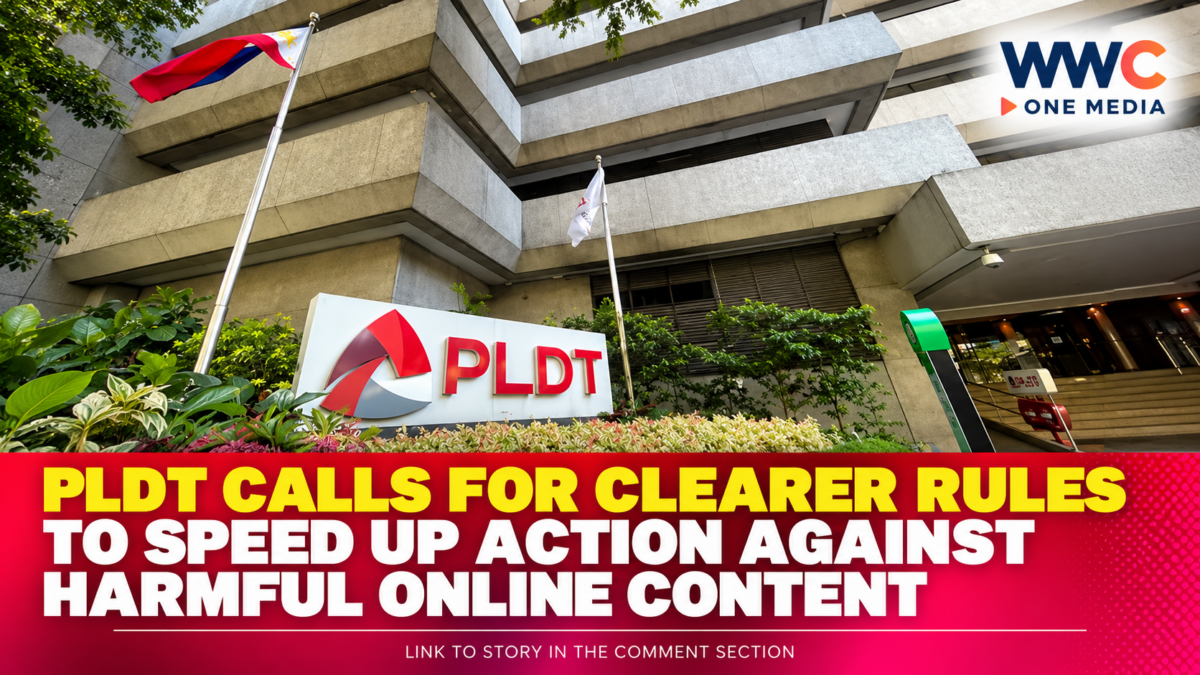
PLDT Inc. is urging the government to establish clearer rules that would allow telecommunications companies to respond more quickly to harmful online content, particularly material involving violence and threats to children.
PLDT Chief Operating Officer and Head of Network Menardo G. Jimenez Jr. said existing laws do not always give telecommunications providers sufficient authority to immediately block certain websites or online channels. He said the company is calling for legislation that would clearly define when telcos can take action without waiting for additional regulatory approval.
Jimenez made the remarks during an online child-safety forum, where government agencies, telecommunications companies, technology firms and other groups discussed measures to address harmful material circulating online.
PLDT has identified online channels that it says promote violence and nihilistic violent extremism. However, the company has said that its ability to block such content can be limited by existing regulatory and legal requirements.
The company is seeking a framework that would provide telcos with clearer authority and procedures for dealing with content that presents an immediate threat, while still establishing safeguards around how blocking decisions are made.
The issue comes as Philippine authorities increase efforts to protect children from online exploitation, violent material and other digital threats. Under existing law, internet service providers are required to detect and block websites involving online sexual abuse and exploitation of children and report relevant activity to authorities.
Telecommunications companies have already been taking voluntary measures to block harmful websites. PLDT and Smart Communications, for example, have begun preemptively blocking more than 100 domains associated with extreme violence, while other providers have expanded network-level blocking of websites containing graphic violence and child sexual abuse and exploitation material.
PLDT and Smart have also previously emphasized that blocking measures should not result in indiscriminate restrictions on legitimate online platforms. The companies have called for clearer guidance so that specific harmful content can be targeted without unnecessarily restricting access to lawful digital services.
The push for clearer rules comes amid broader government efforts to establish faster channels for responding to online threats. Authorities have recently sought stronger cooperation from major digital platforms, including mechanisms for rapidly reporting and reviewing content that may involve child exploitation, grooming or violent threats.
For telecommunications providers, the challenge is balancing the need for rapid intervention with legal and procedural safeguards. Clearer standards could help determine which types of content require immediate action, who has the authority to order or implement blocking, and what protections should apply to users and legitimate online services.
The discussions reflect the growing role of telecommunications companies in online safety. As more harmful activities move across digital platforms and networks, PLDT and other industry players are seeking a regulatory framework that allows them to respond faster while maintaining clear legal boundaries and accountability.