
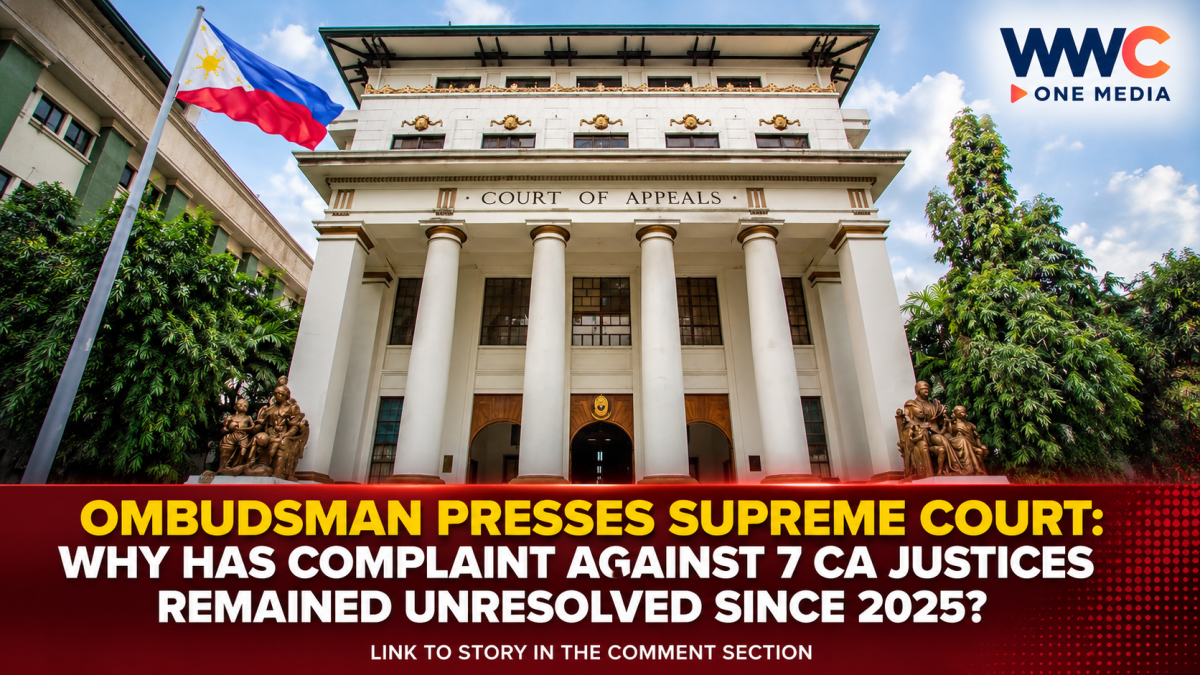
MANILA, Philippines — Ombudsman Jesus Crispin Remulla is pressing the Supreme Court to address an administrative complaint filed against seven Court of Appeals (CA) justices, saying there appears to be no public record showing that the case has been acted upon or resolved since it was filed in March 2025.
Remulla raised the issue after the Supreme Court recently challenged the Ombudsman—or any concerned party—to formally substantiate allegations of partiality, misconduct and corruption involving members of the judiciary.
The complaint in question was filed on March 21, 2025, by then-Ombudsman Samuel Martires against seven CA associate justices. The respondents were Louis Acosta, Marlene Gonzales-Sison, Rex Bernardo Pascual, Mary Charlene Hernandez-Azura, Roberto Quiroz, Rafael Antonio Santos and Ferdinand Baylon.
They were accused of gross ignorance of the law and conduct prejudicial to the best interest of the service, allegations that have not been established as facts by a final disciplinary ruling.
Complaint stemmed from CA rulings involving Antique officials
The administrative complaint reportedly stemmed from CA rulings involving the Ombudsman’s preventive suspension orders against officials in Antique.
One of the cases involved Tobias Fornier Mayor Ernesto Tanjanlangit III, whose preventive suspension had been challenged before the appellate court. The CA’s intervention became part of the Ombudsman’s broader concern over appellate rulings that reversed or restrained actions taken by the anti-graft agency.
Remulla has argued that repeated reversals and court interventions can undermine the Ombudsman’s ability to perform its constitutional and statutory mandate.
He has also said the Ombudsman is compiling records involving cases in which its decisions were reversed and temporary restraining orders were issued, with the intention of making the findings available to the public.
Remulla asks: What happened to the complaint?
In discussing the matter publicly, Remulla said there was apparently no public record indicating that the Supreme Court’s Judicial Integrity Board or the Court itself had acted on or resolved the complaint.
The Judicial Integrity Board is the Supreme Court body responsible for investigating disciplinary matters involving members of the judiciary.
Remulla’s call comes only days after the Supreme Court itself invited the Ombudsman or other concerned parties to submit proper complaints and supporting evidence if they believe judges or justices committed misconduct.
That exchange has placed the spotlight on an increasingly sensitive question: If a formal complaint has already been filed, what action has been taken on it?
Supreme Court says allegations must follow due process
The Supreme Court has emphasized that it takes allegations of partiality, misconduct and corruption seriously but cannot act on broad accusations against an entire appellate court based solely on public statements.
SC spokesperson Camille Ting said allegations must be raised through proper complaints and supported by evidence. The judges or justices involved must also be given an opportunity to respond.
The Court’s position is that a formal process is necessary before disciplinary authority can be exercised.
The Supreme Court also stressed that criticism of the judiciary and its decisions is protected, while serious accusations involving judicial misconduct must be substantiated through the appropriate channels.
Ombudsman says the judiciary must also face scrutiny
Remulla, meanwhile, has argued that no institution should be beyond scrutiny.
He has questioned the impact of appellate decisions that overturn Ombudsman actions, warning that the situation could weaken the anti-graft body’s ability to suspend or discipline government officials when warranted.
The Ombudsman has also pointed to other cases in which it believes judicial intervention has complicated enforcement actions.
However, those concerns should not automatically be interpreted as proof of wrongdoing by the CA justices involved. The allegations remain subject to the judicial disciplinary process and the respondents’ right to due process.
The bigger issue: checks and balances
The dispute highlights a broader tension within the Philippine justice system: How should disagreements between constitutional and judicial institutions be resolved when one government body believes another has improperly overturned or restrained its actions?
The Ombudsman has a constitutional mandate to investigate and act on complaints involving public officials, while the courts exercise judicial power and review whether government agencies acted within the law.
The Supreme Court itself has previously ruled on disputes involving the Ombudsman and the Court of Appeals, underscoring that disagreements between the two institutions are not unprecedented.
The present controversy, however, places unusual attention on the status of an administrative complaint involving sitting appellate justices.
For now, the central question raised by Remulla remains unanswered publicly: Has the complaint been formally acted upon by the Judicial Integrity Board or the Supreme Court, and if so, what stage has the proceeding reached?
Until the appropriate judicial body issues a ruling, the allegations against the seven CA justices remain allegations—not established findings of misconduct.
WWC ONE MEDIA J.M.S



Leave a Reply