
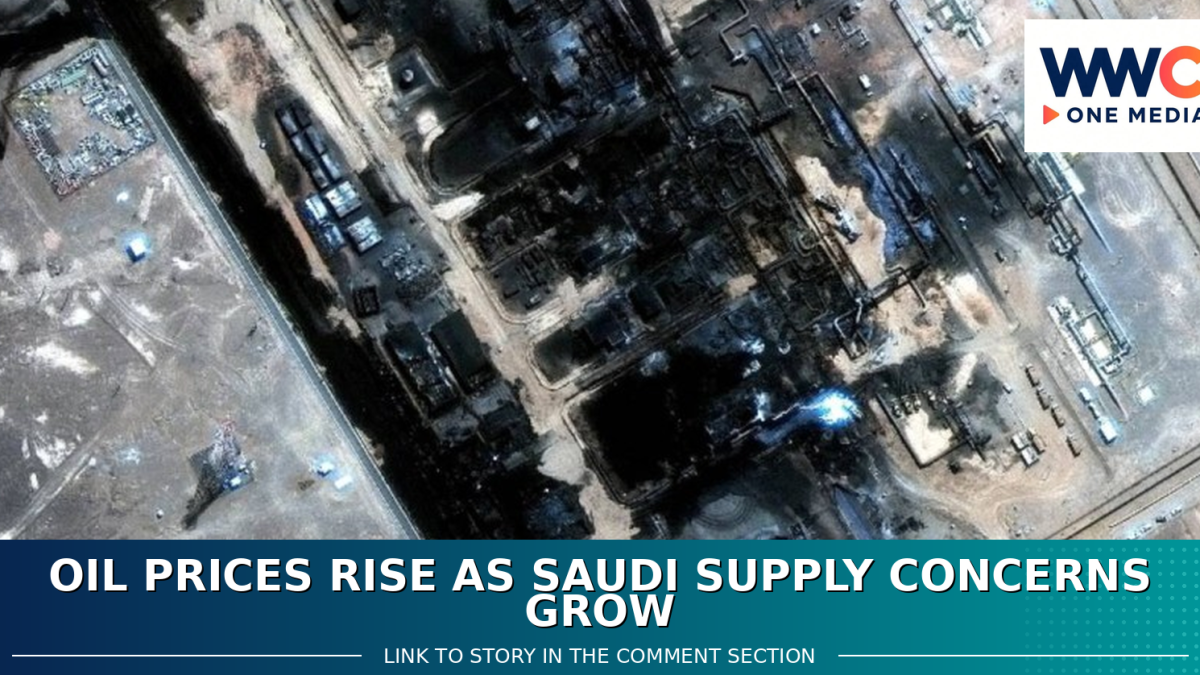
Oil prices climbed on Monday as fresh attacks on Saudi Arabian energy infrastructure and ships in the Middle East raised concerns about disruptions to global crude supplies.
Brent crude futures settled $1.07, or 1 per cent, higher at US$105.68 a barrel, while US West Texas Intermediate crude gained $1.34, or 1.3 per cent, to US$101.39.
Both benchmarks briefly jumped by nearly 5 per cent during the session before giving up some of those gains.
The latest price moves came after Yemen’s Iran-backed Houthi group launched another attack on Saudi Arabia, while a separate strike had damaged Saudi Arabia’s East-West oil pipeline.
The pipeline provides an alternative route for Saudi oil exports by allowing shipments to bypass the Strait of Hormuz. The disruption was estimated to put up to 4 per cent of global oil supply at risk.
Concerns have also grown over shipping through the Strait of Hormuz, where preliminary tracking data showed the number of commodity vessels passing through the waterway had fallen to single digits per day over the weekend.
The Red Sea port of Yanbu has become increasingly important as Saudi Arabia deals with the pipeline disruption. Industry sources estimated that storage there could cover only around five to seven days of exports.
The developments have added to broader concerns about the impact of escalating conflict in the Middle East on energy markets.
Oil prices were also influenced by comments from US President Donald Trump that Iran wanted to reach a deal with Washington, which helped ease some of the market’s earlier gains.
Investors are also watching developments involving Russia and Ukraine. Trump said the two countries had agreed not to target each other’s energy infrastructure, while any eventual agreement to end their war could potentially allow Russia to increase energy exports.
Higher oil prices are meanwhile adding to inflation concerns and could affect expectations for US interest rates, with more expensive energy raising costs for consumers and businesses.
The latest rise underscores the sensitivity of global oil markets to disruptions along major production and shipping routes, particularly as traders assess how long the current supply risks could last.




Leave a Reply