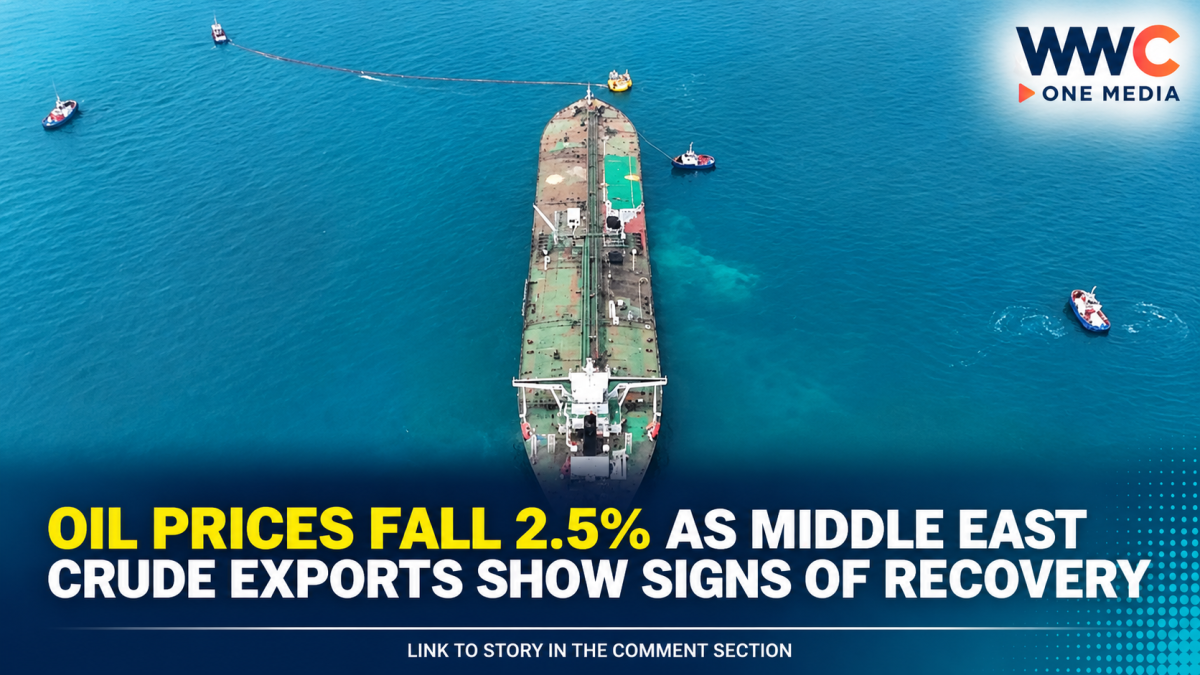
Oil prices fell more than 2.5% on Tuesday, Sept. 29, as investors focused on signs that crude exports from the Middle East are recovering, easing some concerns about supply disruptions linked to the conflict involving the United States, Israel and Iran.
Brent crude futures settled $2.69, or 2.6%, lower at US$102.59 a barrel, while US West Texas Intermediate crude fell $3.22, or 3.5%, to US$89.38. Despite the decline, Brent was still heading for a monthly gain of about 13%, while WTI was on track for a roughly 4% increase.
The latest decline came as Saudi Arabia resumed oil tanker loadings from its Red Sea port of Yanbu after restarting operations along its East-West pipeline. The developments provided fresh indications that regional crude flows were beginning to recover after disruptions earlier in the conflict.
Data from Kpler showed that crude exports from major Middle Eastern producers reached 16.328 million barrels per day in September, the highest level since the conflict began in late February. Saudi Arabia and the United Arab Emirates were among the producers contributing to the increase in shipments.
The recovery in exports has helped ease some pressure on oil markets, although supply risks remain. Investors are also monitoring diplomatic developments involving Washington and Tehran, which could affect the outlook for sanctions, regional shipping routes and future oil flows.
The oil-price decline also influenced broader financial markets. Falling crude prices helped ease some inflation concerns in the United States, while investors continued watching government bond yields and upcoming economic data for clues about the Federal Reserve’s policy direction.
For consumers and businesses, the direction of oil prices remains closely tied to the stability of Middle Eastern exports. A sustained recovery in crude shipments could reduce some of the supply pressure that pushed prices higher earlier in the year, while renewed disruptions could quickly reverse the recent decline.