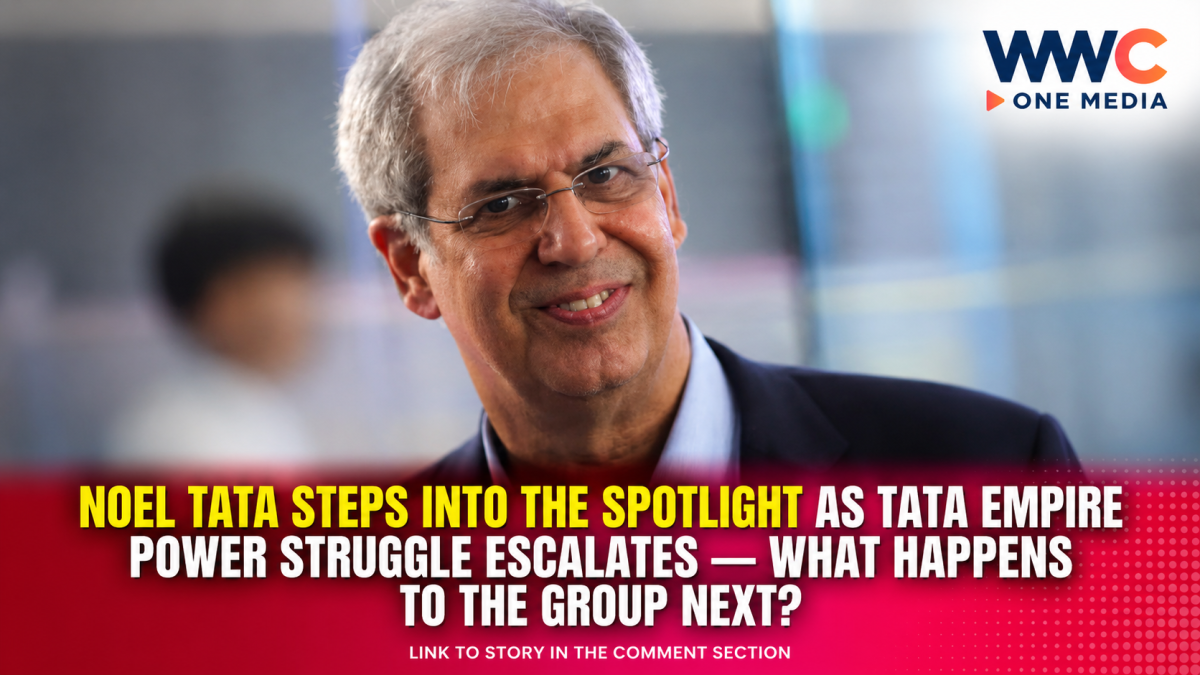
MUMBAI — A rare public power struggle is unfolding at the heart of India’s Tata Group, with Noel Tata and the Tata Trusts opposing the Tata Sons board’s decision to keep N. Chandrasekaran as chairman for another five years.
The dispute has thrust Noel Tata, the normally low-profile chairman of Tata Trusts, into the center of one of India’s biggest corporate governance battles. Tata Trusts collectively hold about 66% of Tata Sons, the holding company at the center of the Tata conglomerate.
The latest confrontation erupted after the Tata Sons board voted on September 17 to reappoint Chandrasekaran for another five-year term after he had previously said he would not seek another term when his current tenure expires in February 2027.
Noel Tata was the only director to vote against the reappointment, according to Tata Sons and reporting based on the board meeting.
Chandrasekaran reverses his exit decision
Chandrasekaran had informed the Tata Sons board on August 12 that he did not intend to seek another term.
Tata Trusts accepted that decision and subsequently called for the company to begin the process of selecting a successor.
But Tata Sons’ nomination and remuneration committee later asked Chandrasekaran to reconsider, citing his contribution to the group and what the committee described as the broader interests of Tata.
Chandrasekaran ultimately agreed to reconsider, and the board subsequently approved another five-year term.
The decision has now produced an unusual corporate governance dispute: Tata Sons says Chandrasekaran has been reappointed, while Tata Trusts argues that the appointment is legally invalid.
Noel Tata challenges the board decision
Tata Trusts said Noel Tata maintained that Chandrasekaran’s earlier decision not to seek another term had already been accepted and had therefore become final.
The Trusts further argued that Tata Sons’ Articles of Association require the support of the Trusts’ nominee directors for the appointment or reappointment of the chairman.
Because Noel Tata voted against the proposal, Tata Trusts says the resolution amounted to a “legal nullity.” The Trusts also said Noel Tata presented a legal opinion from former Chief Justice of India D.Y. Chandrachud supporting its interpretation.
That is the Trusts’ position, however, rather than a settled judicial determination. Tata Sons, meanwhile, has proceeded on the basis of its board vote.
The bigger fight: Should Tata Sons go public?
The leadership dispute is only one part of a much larger disagreement over the future structure of the Tata Group.
Tata Sons is privately held and sits at the center of the sprawling conglomerate. About 66% of its equity is held by philanthropic Tata trusts, according to Tata’s own corporate information.
One of the most important questions now concerns whether Tata Sons should eventually be listed on the stock market.
Noel Tata and Tata Trusts have opposed a listing, arguing that the traditional Tata ownership model should be preserved.
In a September 17 statement, Tata Trusts said it had not agreed to the listing of Tata Sons and called for alternatives to be examined. The Trusts said the Tata Sons board had agreed to explore available options rather than treating a public listing as the only route.
The issue has gained urgency because Tata Sons has been classified by the Reserve Bank of India as an upper-layer non-banking financial company, subjecting it to enhanced regulatory requirements. RBI records identify Tata Sons as a core investment company within the upper layer.
Why the listing issue matters
A public listing could potentially change the balance of influence surrounding Tata Sons.
Tata Trusts currently hold the controlling stake, meaning the trusts have significant influence over the holding company and, indirectly, the wider Tata ecosystem.
Reuters reported that the Tata Sons board is moving toward compliance with applicable regulatory requirements while Tata Trusts continues to oppose a listing and wants alternatives considered.
The disagreement therefore extends beyond one chairman.
It touches on who ultimately determines Tata Sons’ leadership, how the holding company should be structured and whether the Tata Group’s traditional trust-led model can continue in its present form.
A conglomerate worth hundreds of billions of dollars
The stakes are enormous.
Reuters described Tata as a conglomerate with businesses spanning automobiles, technology, steel, aviation, consumer products and other industries, with combined annual revenue of roughly $185 billion.
The group’s listed companies also represent hundreds of billions of dollars in combined market value, meaning decisions made at Tata Sons can have implications far beyond the holding company itself.
The dispute has already drawn attention from investors. Reuters’ Breakingviews reported that several Tata group stocks moved sharply following the latest boardroom developments, including Tata Chemicals, Tata Motors and Tata Consultancy Services.
Noel Tata’s role becomes increasingly important
Noel Tata is the half-brother of the late Ratan Tata and became chairman of Tata Trusts after Ratan Tata’s death in October 2024.
He does not personally own the roughly 66% stake in Tata Sons. The shares belong to the charitable trusts, whose governance structures determine how they exercise their shareholder rights.
His position as chairman of Tata Trusts nevertheless places him at the center of the ownership side of the current dispute.
That puts Noel Tata opposite a Tata Sons board that has backed Chandrasekaran’s continuation and is also dealing with the question of Tata Sons’ regulatory and ownership structure.
What happens next?
The immediate battle is likely to move beyond the September 17 board vote.
Tata Trusts has said the search for a successor should continue, while Tata Sons has approved Chandrasekaran’s five-year reappointment.
The two sides also remain divided over the potential listing of Tata Sons.
The disagreement could therefore become a prolonged governance and legal dispute, particularly if the competing interpretations of Tata Sons’ Articles of Association are formally challenged.
For a group that has historically emphasized stability and long-term decision-making, the current confrontation represents a significant test of how its unique trust-controlled ownership model and corporate board structure operate when major shareholders and directors disagree.
And with Chandrasekaran’s future, Tata Sons’ possible listing and the authority of Tata Trusts now intertwined, the next decisive move may determine far more than who occupies the chairman’s office.