
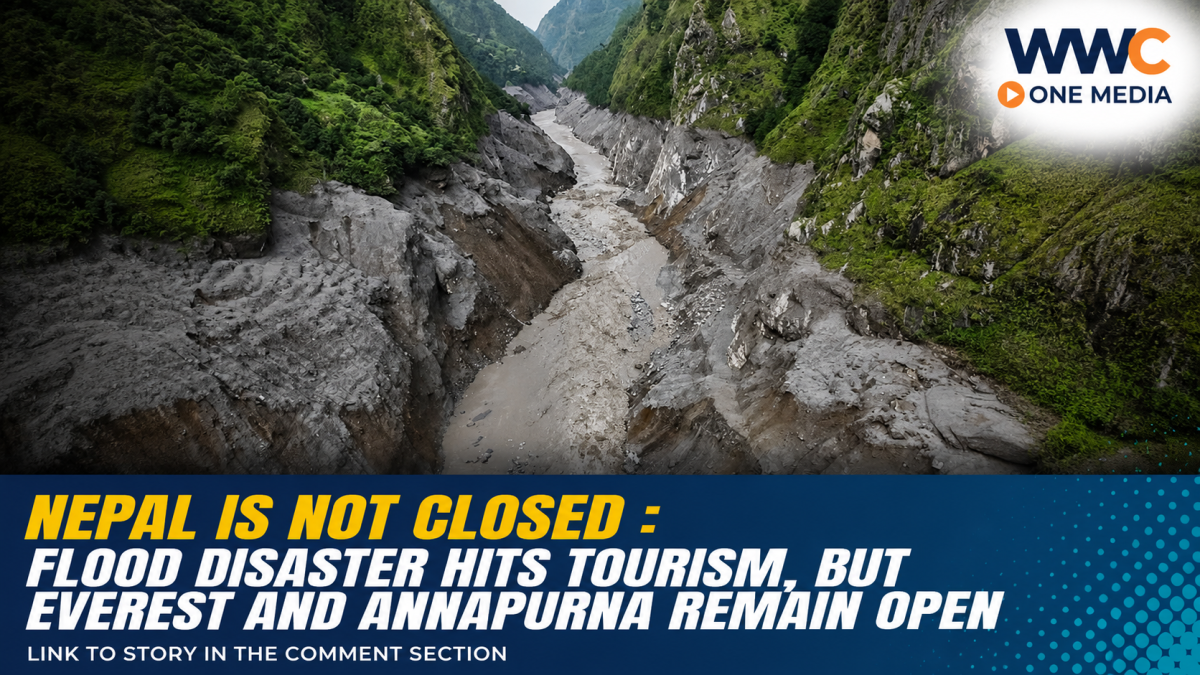
Nepal’s tourism industry is fighting to prevent one of the country’s worst natural disasters in years from becoming a nationwide tourism crisis, with tour operators urging travellers not to cancel trips to areas that remain open and operating.
The appeal comes after catastrophic flash floods and mudslides struck northern Nepal on August 26, devastating communities along the Bhote Koshi and Trishuli river corridors near the Nepal-China border. As of September 3, Nepal’s Foreign Ministry said 1,252 bodies had been recovered, around 4,200 people remained missing and nearly 12,000 had been rescued, including more than 300 foreign nationals. Around 590 foreign nationals from 34 countries were still listed as missing.
The disaster has understandably triggered alarm among international travellers—but tourism officials say Nepal itself has not shut down.
The message from Nepal: “We are still open”
The Nepal Tourism Board has launched its “Nepal Calling” campaign, stressing that while some areas have suffered severe damage, much of the country remains open for visitors.
Kathmandu, Pokhara, Chitwan, Lumbini, Janakpur, the Everest region, Annapurna region and Bardiya are among the destinations identified as continuing to operate. Airports across the country are also operating, according to officials cited by The Kathmandu Post.
Tourism operators say the biggest problem now is perception.
Images of destroyed roads, collapsed bridges and flooded communities have circulated globally, creating the impression that the entire country has been affected in the same way.
But the damage is heavily concentrated along particular river corridors.
The Pacific Asia Travel Association’s Nepal update says the Langtang, Rasuwa and Bhote Koshi corridor remains closed, while the Everest and Annapurna regions are outside the affected river system and were not in the flood path.
The autumn tourism season is at risk
The timing could hardly be worse.
September through November is Nepal’s major post-monsoon tourism season, accounting for nearly 40% of annual tourist arrivals, according to The Kathmandu Post. Tourism businesses had been preparing for a strong season when the disaster triggered a new wave of cancellations.
Some hotels have already reported significant losses.
One Kathmandu hotel manager told The Kathmandu Post that approximately 20% of bookings had been cancelled within a week of the disaster, particularly online reservations.
Nepal recorded 85,444 foreign visitors in August, a 3.65% decline from August 2025, with cancellations increasing after the August 26 disaster.
For guides, porters, hotels, restaurants, transport companies and trekking agencies, the consequences could extend far beyond lost reservations.
Tourism contributes roughly 6.7% of Nepal’s GDP and supports more than a million jobs, according to The Kathmandu Post.
But some areas should still be avoided
The message that “Nepal is open” does not mean every destination is safe.
The Rasuwagadhi-Timure-Syafrubesi area of Rasuwa has suffered extensive flood damage and remains extremely dangerous.
The U.S. State Department specifically advises travellers not to enter that disaster zone, citing damaged infrastructure, disrupted communications, ongoing search-and-rescue operations and the possibility of additional flooding and landslides.
Australia’s Smartraveller similarly advises travellers to reconsider visiting flood-affected areas along the Bhote-Koshi and Trishuli rivers and recommends postponing overland travel between Nepal and Tibet, including Mount Kailash and Lake Manasarovar routes.
The Nepal Tourism Board has also established an information desk involving government agencies, Tourist Police and tourism organisations to provide updates on affected and missing tourists.
The biggest disruption: Kailash pilgrimage routes
One of the hardest-hit segments of Nepal’s tourism industry is religious travel.
The disaster disrupted the Kailash Mansarovar pilgrimage route through Nepal, which is particularly important to Indian travellers. The Rasuwa border corridor has been severely damaged, making the route impossible for now.
Hundreds of foreign nationals were among those caught up in the disaster, including tourists and pilgrims travelling toward the Tibet region. Nepalese authorities continue to coordinate with foreign governments and families searching for missing travellers.
Tourism operators want visitors to return—but safely
Local operators are therefore walking a difficult line.
They want international visitors to understand that a disaster in one part of Nepal does not automatically mean the entire country is inaccessible.
At the same time, they acknowledge that affected areas need to remain off-limits while rescue, recovery and infrastructure repairs continue.
Some industry representatives have proposed incentives such as hotel discounts, airfare reductions and easier travel arrangements to rebuild confidence during the crucial autumn season.
The tourism campaign is ultimately about restoring confidence without minimizing the scale of the tragedy.
Nepal’s tourism dilemma
Nepal now faces two very different realities.
In the disaster zone, rescue teams are still searching for thousands of missing people, infrastructure has been destroyed and communities are beginning the long recovery process.
Elsewhere, hotels, trekking companies, restaurants and guides are trying to keep operating.
That is why the country’s tourism industry is pushing one message: Nepal is not closed—but travellers need to know exactly where it is safe to go.
For anyone planning a trip, conditions should be checked directly with tour operators, airlines and official authorities immediately before departure, because mountain weather, roads and trekking conditions can change rapidly.
WWC ONE MEDIA J.M.D


Leave a Reply