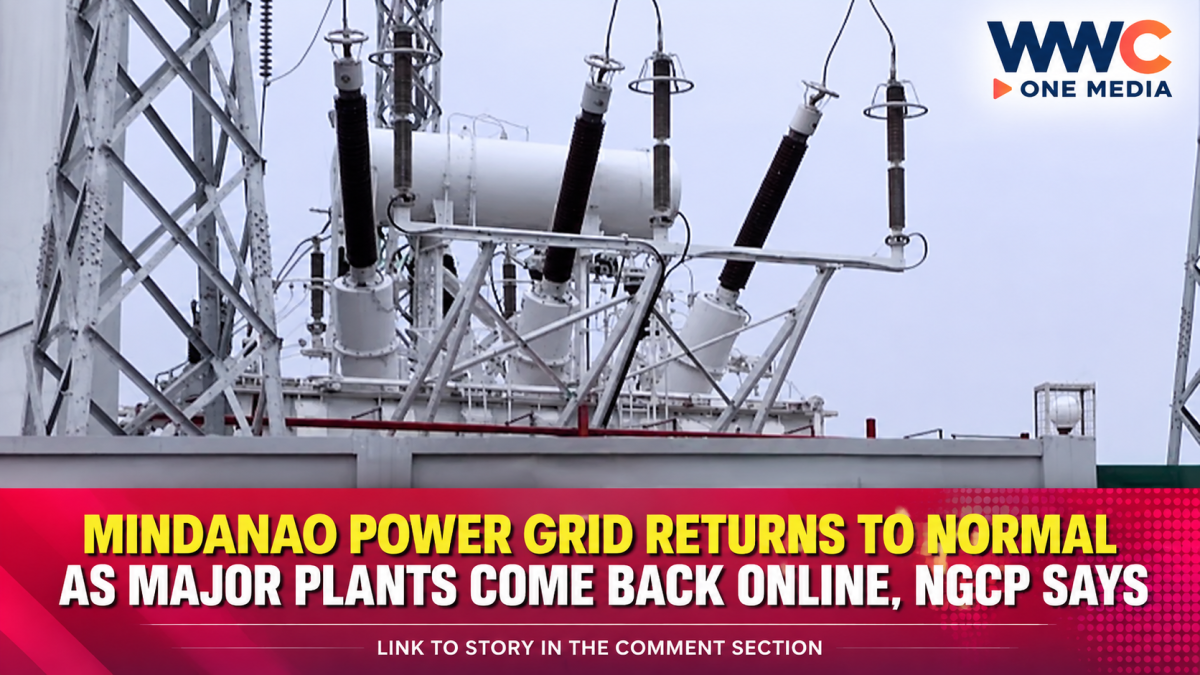
The Mindanao power grid has returned to normal operating conditions after several major generating units were restored, giving the region additional reserves as electricity demand continues to rise.
The National Grid Corporation of the Philippines (NGCP) said the forced outages affecting key baseload coal plants, including units of GNPower Kauswagan in Lanao del Norte and Therma South in Davao, have been resolved. The restoration has brought more generating capacity back into the system.
As of September 23, Mindanao had about 2,984 megawatts (MW) of available generating capacity against a system peak demand of 2,656 MW. This translated to an operating reserve of roughly 227 to 300 MW, according to figures presented by NGCP.
The improvement follows a period of significantly tighter reserves earlier in September. The Department of Energy previously reported that the grid had experienced yellow and red alerts between August 10 and September 12, as scheduled maintenance coincided with unexpected outages at several major generating facilities.
Several units returned to service in the middle of September, including GNPower Kauswagan Unit 3 and Therma South Unit 2. The DOE said most other plants undergoing maintenance or forced outages were expected to return by the end of September or the first week of October.
With the supply situation stabilized, Mindanao can also export excess electricity to the Visayas through the Mindanao-Visayas Interconnection Project. NGCP said exports can reach as much as 400 MW during normal operating conditions, but electricity is retained for Mindanao consumers when the grid is under an alert.
Despite the improved situation, NGCP cautioned that yellow or red alerts remain possible. Unexpected generating-unit failures are difficult to predict, while extreme heat and El Niño conditions can place additional pressure on power generation, particularly hydroelectric facilities.
The latest improvement also comes with a longer-term concern. NGCP has separately warned that Mindanao could face increasingly tight reserves by 2028 if additional generation capacity does not keep pace with demand. The agency has pointed to recurring yellow and red alerts in recent years as signs of growing pressure on the system.
NGCP emphasized that it operates the transmission network rather than generating electricity. The availability of power therefore depends on generating plants being able to produce sufficient electricity for the grid to transmit to distribution utilities and consumers.
Authorities continue to urge households and businesses to conserve electricity, particularly during peak-demand periods. For now, Mindanao has regained a more comfortable operating margin, but the reliability of generating units and the addition of future power capacity will remain crucial to keeping the grid stable.