
Korean instant noodles are getting a global makeover — and the latest flavors look less like traditional ramyeon and more like something you might find on a Western restaurant menu.
From gochujang butter and soy sauce butter to vongole-style noodles and truffle bulgogi, Korean food makers are increasingly blending familiar Korean flavors with international culinary ideas as they pursue consumers beyond South Korea.
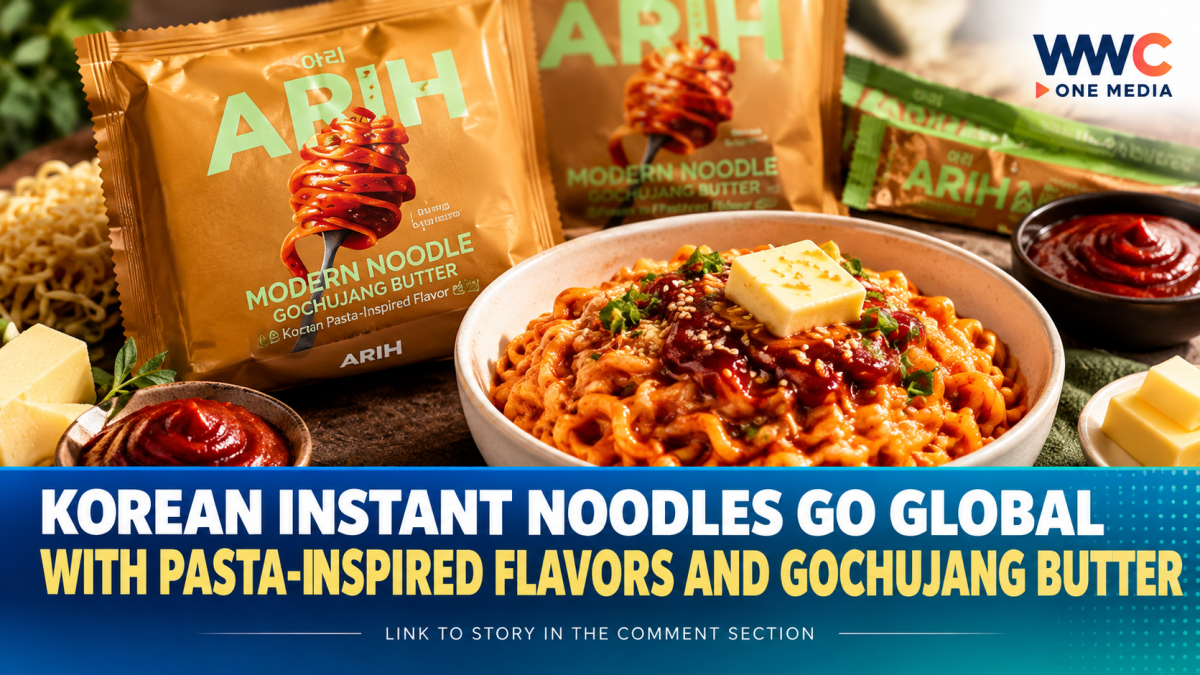
One of the most visible examples in 2026 is ARIH, a Western-Korean fusion food and beverage brand developed by Korean companies Paldo and hy in collaboration with BTS. The brand launched in the United States through Walmart with a line of “Modern Noodles” designed around restaurant-inspired, stir-fried noodle dishes.
Gochujang meets butter
Among ARIH’s noodle varieties is Gochujang Butter, combining the sweet-spicy character of Korea’s fermented chili paste with a rich butter flavor.
Other varieties include Soy Sauce Butter, Black Pepper Tteokbokki, Truffle Bulgogi, Vongole, Spicy Seaweed and K-Super Spicy Seaweed, showing how manufacturers are moving beyond the familiar spicy soup-style instant noodle format.
The Vongole variety is particularly notable for its Italian-inspired positioning, using a white-clam-style flavor profile with flat, pasta-like noodles. The concept illustrates how Korean instant-noodle companies are borrowing from international dishes while retaining recognizable Korean ingredients and flavors.
Why the shift matters
Korean instant noodles have already become a major part of the country’s global food culture, helped by the international popularity of Korean entertainment and the broader Korean Wave.
The new generation of products is taking that strategy further by adapting the format and flavor language for consumers who may know Korean culture but are less familiar with traditional ramyeon.
Instead of asking consumers to adapt to a conventional Korean noodle dish, the products combine familiar international tastes with ingredients associated with Korean cuisine.
That approach is also visible in the wider food industry, where Korean companies are developing products specifically around Western-Korean fusion rather than simply exporting domestic products unchanged.
BTS brings another global audience
ARIH adds another dimension because BTS was involved in the brand’s development alongside Paldo and hy. The companies said the group participated in areas including the brand name, flavors and package design.
The brand launched across Walmart stores in the United States in April 2026, giving the noodle line access to a large mainstream retail network rather than limiting it to specialty Korean-food outlets.
Food & Wine later sampled the Modern Noodle range, while other food publications highlighted the unusual combination of Korean and Western flavors. Sporked, for example, reviewed the Gochujang Butter and Soy Sauce Butter varieties and described the former as moderately spicy with a creamy, lingering butter flavor.
From ramyeon to global fusion food
The trend reflects a larger evolution in how Korean instant noodles are being marketed internationally.
Traditional Korean ramyeon remains important, but manufacturers are increasingly experimenting with new textures, sauces and flavor combinations that can fit different eating habits and culinary preferences.
The result is a category that now stretches from classic spicy noodle soups to restaurant-inspired stir-fried noodles, pasta-influenced dishes and fusion flavors.
For Korean food companies competing overseas, the question is no longer simply how to sell Korean ramyeon abroad — it is how far they can push the boundaries of what an instant noodle can taste like.
And with flavors such as gochujang butter and Korean-style vongole already entering the mainstream market, the next global ramyeon trend may look very different from the one that started it all.
WWC ONE MEDIA G,A




Leave a Reply