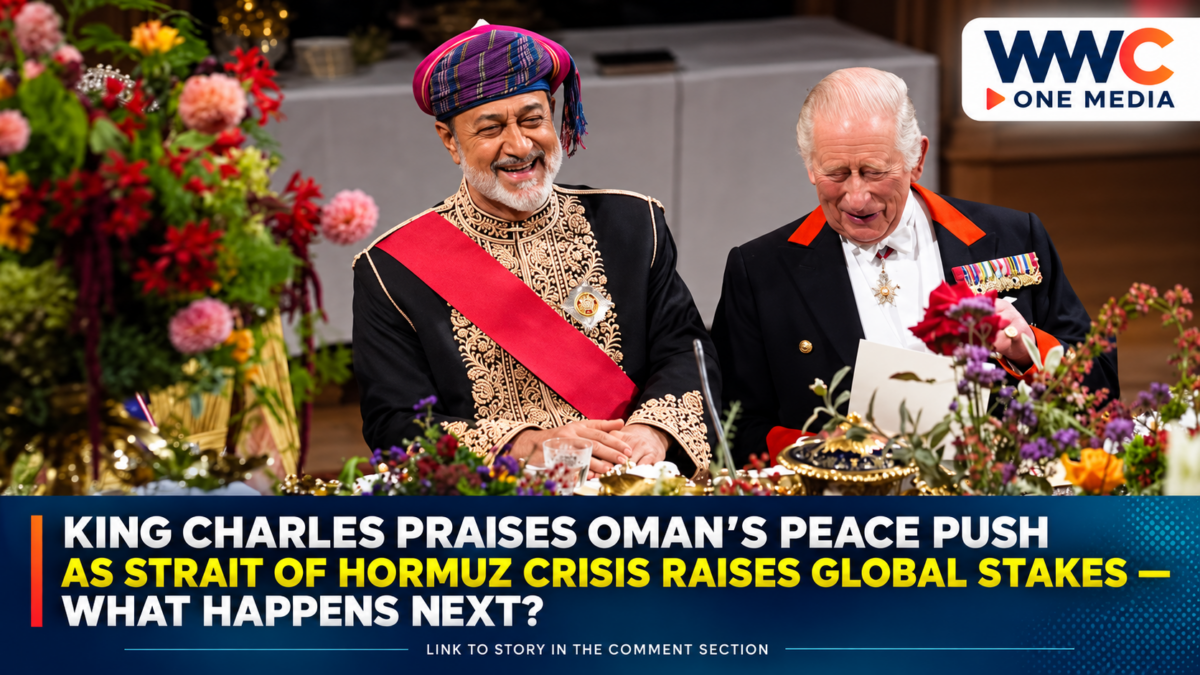
WINDSOR, United Kingdom — October 21, 2026 — King Charles III has praised Oman’s diplomatic efforts to promote peace in the Middle East, highlighting the Gulf nation’s role as a mediator amid mounting regional tensions and concerns over shipping through the strategically important Strait of Hormuz.
The British monarch delivered the remarks during a state banquet at Windsor Castle on October 20, welcoming Omani Sultan Haitham bin Tarik on the first day of his state visit to the United Kingdom.
Charles recognized Oman’s commitment to maintaining dialogue among opposing parties, describing the country’s approach as “constructive neutrality.” He also commended Muscat’s efforts to help restore the flow of maritime traffic through the Strait of Hormuz, a critical passage for international energy supplies.
The king’s remarks underscored the importance of Oman’s diplomatic role at a time when conflict in the Middle East has placed regional security and international trade routes under renewed pressure.
King Charles recognizes Oman’s role in regional diplomacy
During the banquet attended by approximately 160 guests, Charles praised Oman for remaining a trusted interlocutor among parties involved in regional disputes.
The king said Oman’s contribution to diplomacy across the Gulf extends well beyond the Strait of Hormuz and deserves international respect.
Sultan Haitham, meanwhile, emphasized his country’s commitment to pursuing an independent diplomatic path despite persistent regional conflict. He also acknowledged Britain’s longstanding friendship and support for Oman’s efforts.
The exchange highlighted the diplomatic significance of the visit, which brought together the two countries’ leaders at a time when stability in the Middle East remains a major international concern.
According to reporting by Al Jazeera and Agence France-Presse, Oman has played a mediating role in contacts involving the United States and Iran since the conflict escalated in late February 2026.
Why the Strait of Hormuz matters to the world
The Strait of Hormuz is among the world’s most strategically important maritime passages. It connects the Persian Gulf with the Gulf of Oman and the wider Arabian Sea, providing a major route for oil and other energy shipments reaching global markets.
Disruptions in the waterway can affect shipping costs, energy prices and supply chains far beyond the Middle East.
Oman occupies a strategically important position along the strait and has sought to use diplomacy to reduce tensions and encourage negotiations.
The country’s efforts have become particularly significant amid the conflict involving the United States and Iran, which has increased concerns about maritime security and the uninterrupted movement of commercial vessels.
The Associated Press reported on October 20 that Oman was working to broker a peace agreement while maintaining a neutral diplomatic position. The country’s own security has also come under pressure during the conflict.
Charles’ public recognition of Oman’s efforts therefore carried a message extending beyond royal protocol: diplomatic engagement remains important when regional confrontation threatens international commerce and security.
Historic state visit strengthens UK-Oman ties
Sultan Haitham’s visit also highlights the longstanding relationship between Britain and Oman, which includes diplomatic, military and economic cooperation.
The visit is particularly notable because it is the first state visit to Britain by an Omani ruler in 44 years. The previous such visit took place in 1982, when Sultan Qaboos visited Queen Elizabeth II.
The ceremonial welcome at Windsor Castle featured military honours, a carriage procession and a formal reception hosted by Charles and Queen Camilla. The state banquet brought together members of the British royal family, government representatives, business leaders and other distinguished guests.
Beyond the ceremonial programme, the visit provides an opportunity for both countries to reaffirm their strategic partnership and discuss shared regional and economic interests.
Britain also maintains military links with Oman, including British personnel serving in the Omani armed forces and a Royal Navy facility at Duqm on Oman’s Arabian Sea coast, according to the Associated Press.
These connections add a security dimension to the relationship as both countries navigate an increasingly uncertain regional environment.
Royal ties extend to the next generation
Charles also highlighted the relationship between Prince William and Sayyid Theyazin bin Haitham, the Omani sultan’s son.
The two have become joint patrons of the Jewel of Arabia expedition, a project retracing a route through Oman associated with British explorer Bertram Thomas’ 1928 journey.
The king presented their partnership as a symbol of friendship being carried forward by a younger generation.
His remarks also acknowledged broader challenges facing future leaders, including climate change, competition for resources and the opportunities and risks associated with artificial intelligence.
The reference suggested that cooperation between Britain and Oman is intended to extend beyond immediate regional security concerns to longer-term global challenges.
What happens next?
The diplomatic significance of the visit will depend in part on whether discussions translate into concrete cooperation on regional security, maritime access and economic ties.
Sultan Haitham’s programme includes talks with British Prime Minister Andy Burnham in London, with regional stability and the situation around the Strait of Hormuz among the important issues facing both countries.
Oman’s ability to maintain channels of communication with competing sides could prove valuable in efforts to prevent further escalation. However, mediation alone cannot guarantee an agreement, and the security situation remains dependent on decisions by the parties involved.
For Britain, supporting Oman’s diplomatic role also reflects the importance of working with regional partners to protect stability and international trade.
The state visit has placed the UK-Oman relationship in the international spotlight. Whether that renewed attention produces meaningful progress toward peace will be an important question in the days ahead.
For now, King Charles’ message is clear: Oman’s commitment to diplomacy matters well beyond the Gulf, particularly when regional conflict threatens vital international shipping routes.