
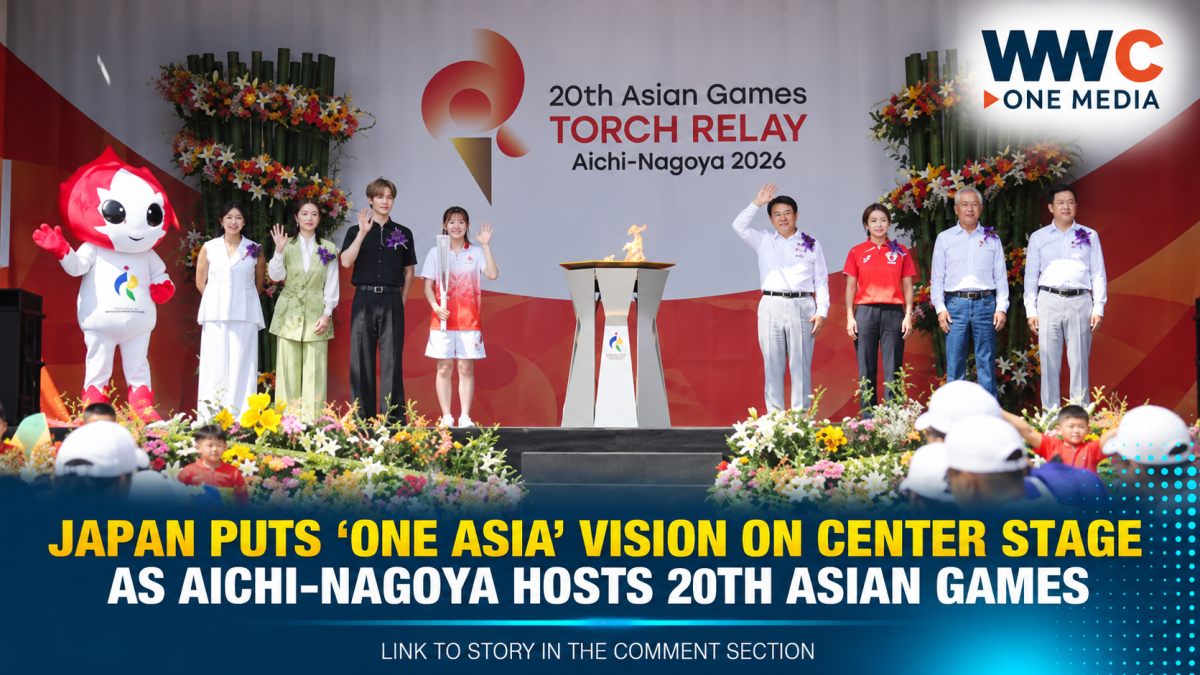
AICHI-NAGOYA, JAPAN — Japan is placing sport at the center of a broader message of regional connection as it prepares to host the 20th Asian Games, with the event built around the concept “IMAGINE ONE ASIA.”
The Aichi-Nagoya Games officially open on September 19 and continue through October 4, bringing athletes from 45 countries and regions together to compete in 43 sports. Japan is hosting the Asian Games for the third time, 32 years after the 1994 Hiroshima Games.
‘IMAGINE ONE ASIA’ becomes the Games’ defining message
Organizers say the “IMAGINE ONE ASIA” concept reflects an ambition to use sport to strengthen connections across the continent and create a shared vision for the future.
The official Japanese Olympic Committee describes the Games as an opportunity to deepen bonds across Asia through sport, linking athletes and communities beyond the competition itself.
The message comes as thousands of athletes, coaches and officials from across Asia converge on Japan for one of the region’s largest sporting events.
More than 11,000 athletes expected
The scale of the Games is substantial.
More than 11,000 athletes are expected to participate, with competition spread across Aichi Prefecture, Nagoya and additional venues in other parts of Japan.
The program also includes sports that do not feature in every Olympic Games, including baseball, cricket, kabaddi, sepak takraw, squash, teqball and esports, alongside established Olympic disciplines. The Japanese Olympic Committee lists 43 sports for the 2026 Games.
That breadth reflects the Asian Games’ distinct role: bringing together sporting traditions from across a continent with enormous cultural and sporting diversity.
Japan’s sports diplomacy in the spotlight
The event also gives Japan a platform to promote sports exchanges across Asia.
A recent example is cricket. Reuters reported that Japan has used the Asian Games period to help develop the sport domestically, including a historic Twenty20 match between Japan and India on September 22 and additional matches involving major cricket-playing nations. Japanese officials and cricket organizers have described the initiative as part of efforts to strengthen ties through sport.
Such events illustrate how hosting a major multisport competition can extend beyond medal ceremonies and into longer-term sporting relationships.
A massive event—but not without challenges
The “One Asia” vision is being presented against a complicated backdrop.
Organizers have faced accommodation and logistical problems ahead of the opening. Because a traditional athletes’ village was not built, participants are being housed in hotels, Airbnbs, temporary facilities and the Costa Serena cruise ship. Reuters reported that organizers have promised to address complaints about some accommodations.
Severe rainfall and flooding in the Nagoya area have also tested preparations. The Associated Press reported that around 400 athletes and staff staying in converted shipping-container facilities were temporarily evacuated during heavy rain, although major competition venues were not seriously damaged.
The organizing committee has nevertheless maintained that the Games will proceed as scheduled.
A continental stage for different cultures and sports
The Asian Games bring together countries and regions with different languages, cultures, political systems and sporting traditions.
Japan’s “IMAGINE ONE ASIA” concept seeks to place those differences alongside a common sporting experience.
For athletes, that means competing against the best in the region. For host communities, it means welcoming delegations from across Asia. And for the organizers, it provides an opportunity to demonstrate how a major sporting event can serve as a meeting point for the continent.
The Games will also showcase Japan’s ability to host competitions across a wide network of venues, with events taking place in locations ranging from Nagoya and Aichi to other Japanese cities.
The next chapter begins in Aichi-Nagoya
With the opening ceremony only days away, attention is shifting from preparations to competition.
Japan’s stated vision is straightforward: use sport to bring Asia closer together while creating a shared experience for athletes and fans.
Whether that message resonates beyond the competition venues will depend on the experience of the thousands of people taking part.
But when the first events begin on September 19, the Aichi-Nagoya Asian Games will put the idea of “ONE ASIA” on one of the region’s biggest sporting stages.
The medals will ultimately belong to individual athletes and teams—but Japan is hoping the lasting story of Aichi-Nagoya will be about something larger: how sport can connect a continent.



Leave a Reply