
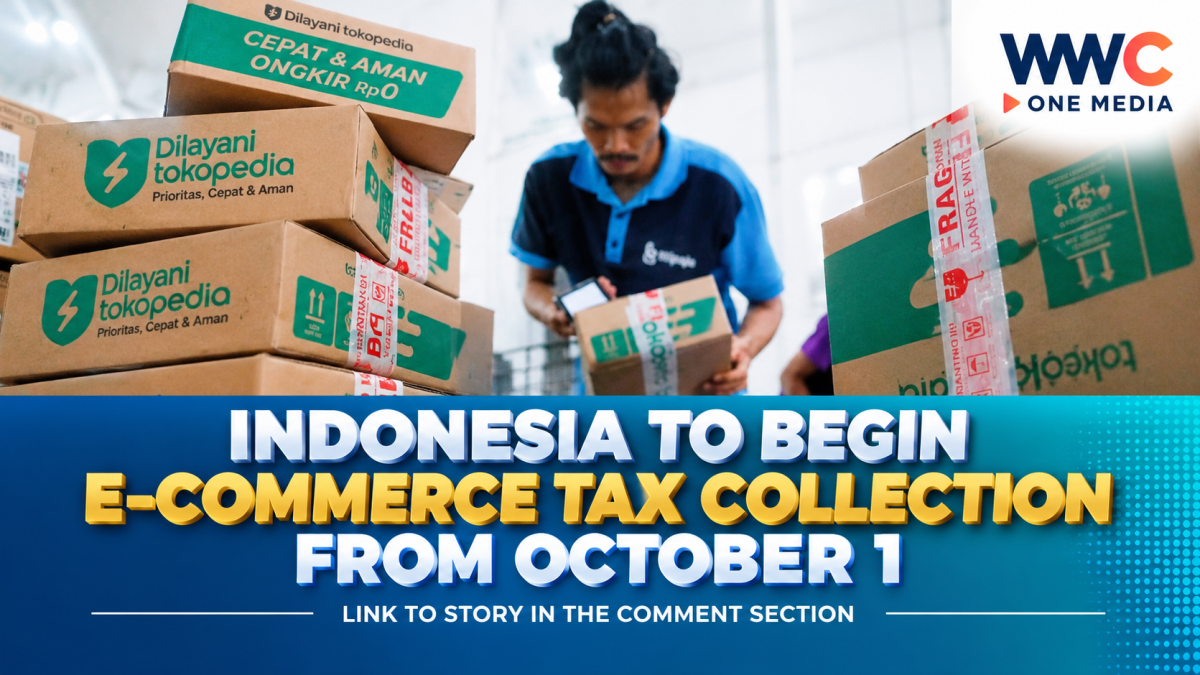
Indonesia will begin requiring major e-commerce platforms to collect income tax from online sellers from Oct 1, bringing forward the implementation date that had previously been postponed to November.
The move follows a change in the country’s finance ministry leadership after former Finance Minister Purbaya Yudhi Sadewa was dismissed and replaced by Suahasil Nazara.
Indonesia’s tax chief, Bimo Wijayanto, said the tax authorities and participating platforms were ready to activate the system from Oct 1. The announcement reverses an earlier decision to delay the measure because of concerns that it could affect consumer purchasing power.
The tax collection system was originally scheduled to begin in August. Purbaya subsequently ordered a postponement, with the tax office announcing that implementation would instead begin on Nov 1.
Under the system, designated e-commerce platforms will collect and remit income tax on behalf of sellers operating through their marketplaces. The arrangement is intended to simplify tax administration and improve compliance among online merchants.
Tokopedia, Shopee, Lazada and Blibli have been appointed by Indonesia’s Directorate General of Taxes to act as tax collectors under the system.
The policy is based on Indonesia’s existing income tax regulations for domestic merchants using electronic trading platforms. The government has described the measure as an administrative mechanism rather than the introduction of a new type of tax.
The four platforms have been preparing their systems and conducting testing ahead of implementation. Tax authorities said the companies have been working on the technical requirements since last year.
The move comes as Indonesia’s e-commerce sector continues to expand rapidly. The country’s online commerce market was estimated to have generated about US$71 billion in gross merchandise value in 2025 and is projected to reach US$140 billion by 2030.
The government expects the digital tax collection system to make it easier to track taxable income generated through online marketplaces while reducing the administrative burden associated with collecting taxes from individual sellers.
The earlier delay reflected concerns about the potential effect of additional tax collection on purchasing power, particularly as policymakers sought to support domestic consumption.
With the implementation date now moved forward to Oct 1, sellers using the designated platforms will face the new collection mechanism as Indonesia continues efforts to strengthen tax administration across its rapidly growing digital economy.




Leave a Reply