
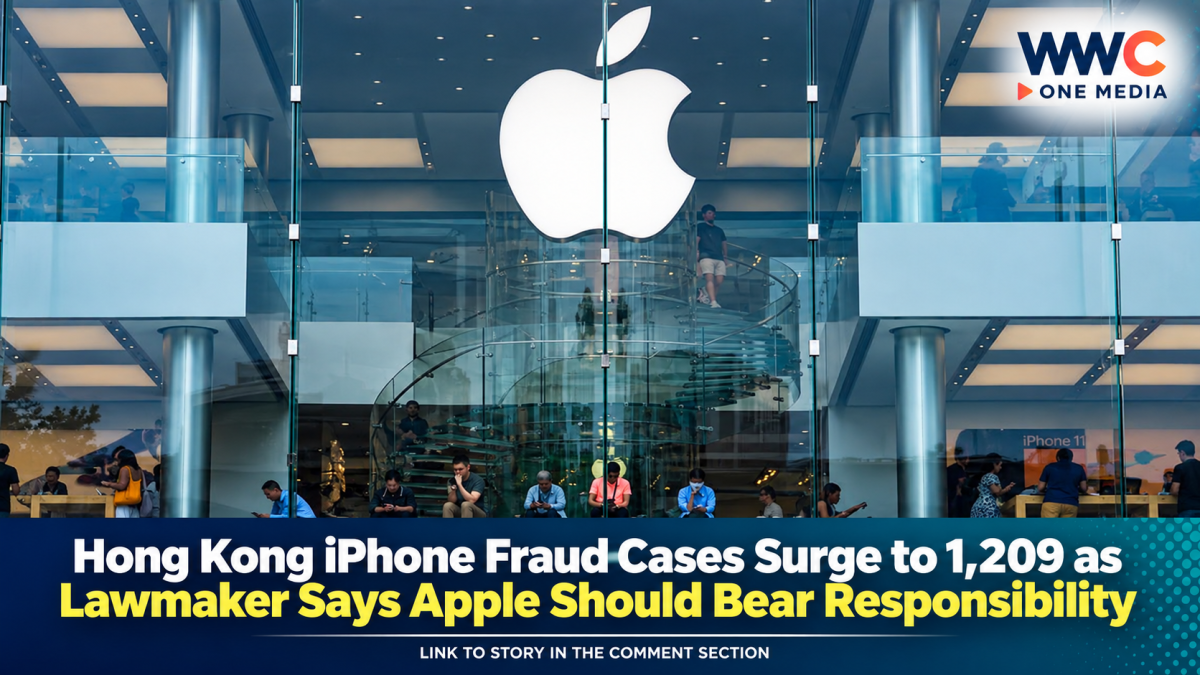
Hong Kong is investigating a rapidly expanding wave of unauthorised credit card transactions linked to pre-orders for Apple’s latest iPhone models, with a lawmaker arguing that Apple should ultimately bear responsibility for the losses.
Police said the number of suspicious transactions had climbed to 1,209 by Monday evening, involving about HK$25 million, or roughly US$3.2 million.
The figure represents a sharp increase from the more than 700 cases initially reported over the weekend, when the total amount involved was estimated at HK$14.7 million.
More than 1,200 suspicious transactions reported
The suspected fraud emerged after Hong Kong consumers began receiving alerts about unauthorised credit card charges connected to online pre-orders for the new iPhone 18 Pro series.
The affected cards were issued by multiple banks.
Police said they had contacted the relevant banks and Apple after receiving the initial reports and were investigating the transactions as suspected fraud.
One of the largest reported individual cases involved HK$114,000 in unauthorised charges.
No arrests had been reported as of Monday.
Questions raised over Apple’s payment safeguards
A key issue now under investigation is how the fraudulent transactions were able to pass through Apple’s online ordering system.
Police said preliminary investigations indicated that the disputed online pre-orders did not require customers to enter a one-time password sent by SMS or use another form of authentication.
That detail has intensified questions over whether weaknesses in the payment process allowed stolen card information to be used at scale.
Election Committee legislator Johnny Ng Kit-chong said retailers should ultimately bear responsibility for unauthorised transactions occurring through their platforms.
He described the scale of the incident as unusual and called for greater accountability from companies operating large online retail systems.
Apple reviews every current order
Apple has said it is reviewing all orders received before processing them and is working to identify and cancel potentially fraudulent transactions.
The company has not been accused by police of deliberately enabling the transactions.
The investigation is instead focused on determining how criminals obtained the card information and how the unauthorised orders were successfully submitted.
The unusually high number of transactions has also raised the possibility that fraudsters obtained large batches of stolen card details before the iPhone launch and attempted to use them simultaneously.
Banks urge customers to act quickly
Hong Kong banks have advised customers to immediately suspend their credit cards if they discover transactions they did not authorise.
Customers can generally freeze cards through banking applications or by contacting their banks directly.
The advice comes as authorities attempt to determine the full scale of the incident.
Because the transactions involved multiple banks and cardholders, investigators are examining whether the cases are connected to a single coordinated operation.
Fraud investigation could widen
The incident highlights the risks created when highly anticipated technology launches generate enormous volumes of online transactions within a short period.
A new iPhone release can attract thousands of customers simultaneously, creating an environment where criminals may attempt to exploit payment systems or test stolen card details.
The investigation will need to establish whether the transactions resulted primarily from compromised credit card information, weaknesses in authentication, a technical problem or a combination of factors.
Authorities will also have to determine where the stolen card information originated and whether the suspected perpetrators are based in Hong Kong or elsewhere.
Apple faces pressure to explain what happened
For affected consumers, the immediate priority is recovering money taken through unauthorised transactions and ensuring that compromised cards are cancelled or secured.
For Apple, the incident presents a separate challenge: explaining how so many suspicious purchases could be linked to a major product launch before being detected.
With the number of reported cases already exceeding 1,200 and the financial exposure reaching HK$25 million, pressure is growing on Apple, banks and authorities to establish exactly how the fraud occurred.
The case could also prompt renewed scrutiny of online payment authentication and whether retailers should bear greater responsibility when large-scale fraud exploits weaknesses in their purchasing systems.




Leave a Reply