
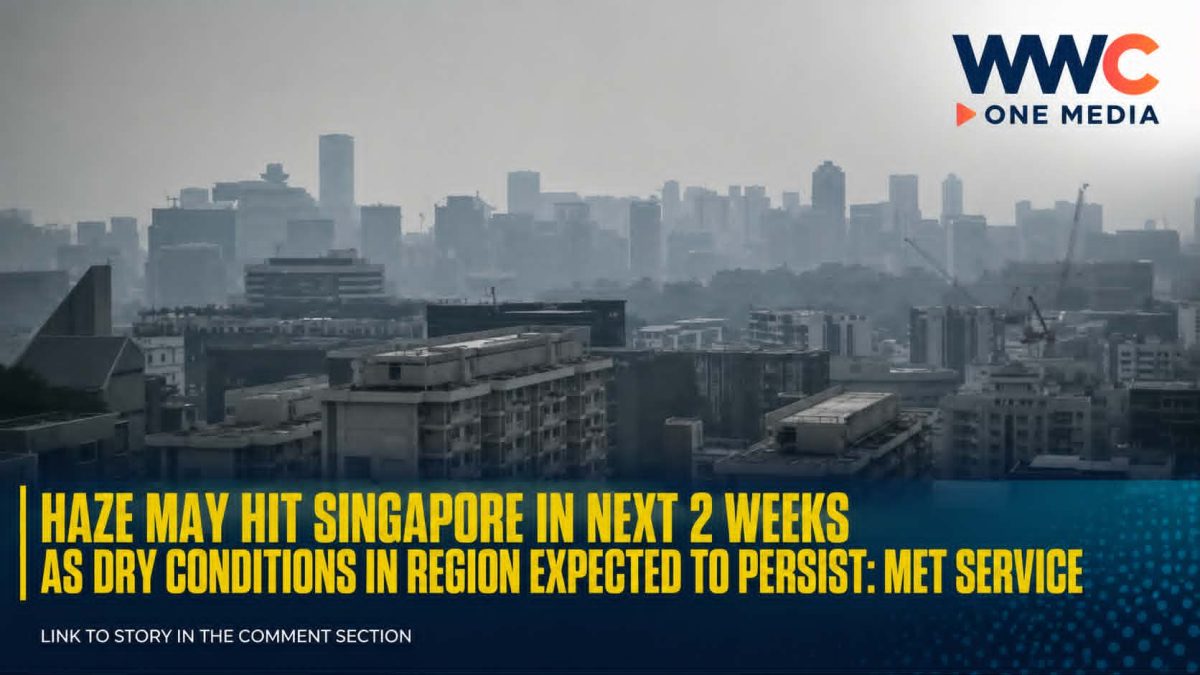
Singapore Could See Haze in Next Two Weeks as Dry Weather Persists
SINGAPORE — Singapore could experience periods of haze over the next two weeks as dry conditions continue across the region and fires in parts of Indonesia remain a concern, according to the Meteorological Service Singapore (MSS).
The latest fortnightly outlook, issued on Sept. 1, 2026, says the Southwest Monsoon is expected to persist into the first half of September, with winds mainly blowing from the southeast or southwest. Those conditions could carry smoke toward Singapore if fires in the region intensify.
The warning does not mean Singapore is certain to experience severe haze. Rather, MSS says the risk will depend heavily on whether regional fires worsen and whether prevailing winds transport smoke toward the island.
🔥 Regional fires are already raising concern
MSS reported an escalation in hotspot and smoke-haze activity across the surrounding region, with dense smoke haze observed over southern and central Sumatra and parts of Kalimantan on most days since around Aug. 21.
The situation is particularly concerning because Indonesia is currently dealing with a severe wildfire season.
Reuters reported that nearly 95,000 hectares were burned in Indonesia in July, while more than 9,000 hotspots were detected in August. The fires have been intensified by exceptionally hot and dry conditions associated with a strong El Niño event.
Indonesia is responding with firefighting operations, including aerial water bombing and weather-modification efforts. Authorities are also investigating companies whose concession areas have been affected by fires.
🌬️ Why wind direction matters for Singapore
Singapore’s exposure to transboundary haze depends heavily on where fires are burning and which direction the winds are blowing.
CNA reported previously that hotspots and smoke plumes in southern Sumatra and Kalimantan, combined with southeasterly or southwesterly winds, could result in haze reaching Singapore if fires intensify.
That risk has become more significant as dry conditions continue.
The National Environment Agency says most of the southern ASEAN region is expected to remain dry, while prevailing winds are likely to blow from the southeast to south. Under prolonged dry conditions, hotspot and smoke-haze activity could remain elevated in fire-prone areas.
☀️ Singapore is also facing hotter, drier weather
Residents should expect more than just the possibility of haze.
MSS forecasts daily maximum temperatures of around 33°C to 35°C on most days, with temperatures potentially exceeding 35°C on some days. Nights are also expected to remain warm and humid, with minimum temperatures staying above 27°C on most nights.
Rainfall is expected to be below average across most of Singapore during the first half of September, although brief thundery showers could still occur on some days.
🌏 Malaysia is already seeing the impact
The developing regional situation is not confined to Indonesia.
Malaysia’s Sarawak has experienced particularly severe haze as smoke from fires in neighbouring Kalimantan crossed the border. Recent reports said some areas recorded hazardous air-quality readings, prompting authorities to consider additional measures including cloud seeding.
CNA also reported that parts of Malaysia have already experienced unhealthy air quality as the dry season intensified, demonstrating how quickly smoke from Indonesian fires can affect neighbouring countries.
🌡️ El Niño adds another layer to the problem
The current fire situation is occurring against the backdrop of a powerful El Niño, which is associated with hotter and drier conditions in parts of Southeast Asia.
Reuters reported that Indonesia’s forestry minister expects firefighting efforts to remain challenging this month as El Niño reaches its peak, with hotter and drier weather increasing the risk and intensity of fires. The minister also stressed that human activities are a major contributor to the fires.
Earlier in June, the Singapore Institute of International Affairs warned of a high risk of severe haze across Southeast Asia in the second half of 2026, citing El Niño and other factors that could prolong the region’s dry season.
📊 What happens if Singapore’s air quality worsens?
Singapore’s authorities are monitoring the situation closely.
The National Environment Agency (NEA) says it will issue daily haze advisories if Singapore’s 24-hour Pollutant Standards Index (PSI) enters the unhealthy range. The agency has also maintained preparedness measures through its inter-agency haze task force.
For now, the important message is that haze is a risk, not a certainty.
The combination of dry weather, active fires in Indonesia and regional wind patterns creates the conditions for smoke to reach Singapore. But whether Singapore experiences noticeable or severe haze will depend on how the fires develop and how atmospheric conditions evolve over the coming days.
🚨 The Bigger Picture
This year’s situation is becoming a wider Southeast Asian environmental story rather than an isolated Singapore weather event.
Indonesia is battling widespread fires, Malaysia is already dealing with serious smoke pollution in parts of the country, and Singapore is entering a period of continued heat and below-average rainfall.
The next two weeks could therefore be critical.
If regional fires continue to intensify while dry conditions persist, Singapore could see more frequent episodes of haze — putting air quality, outdoor activities and vulnerable residents under greater pressure.
And with the region still in the heart of the dry season, the question is no longer simply whether fires are burning — but where the smoke goes next.
WWC ONE MEDIA G.A



Leave a Reply