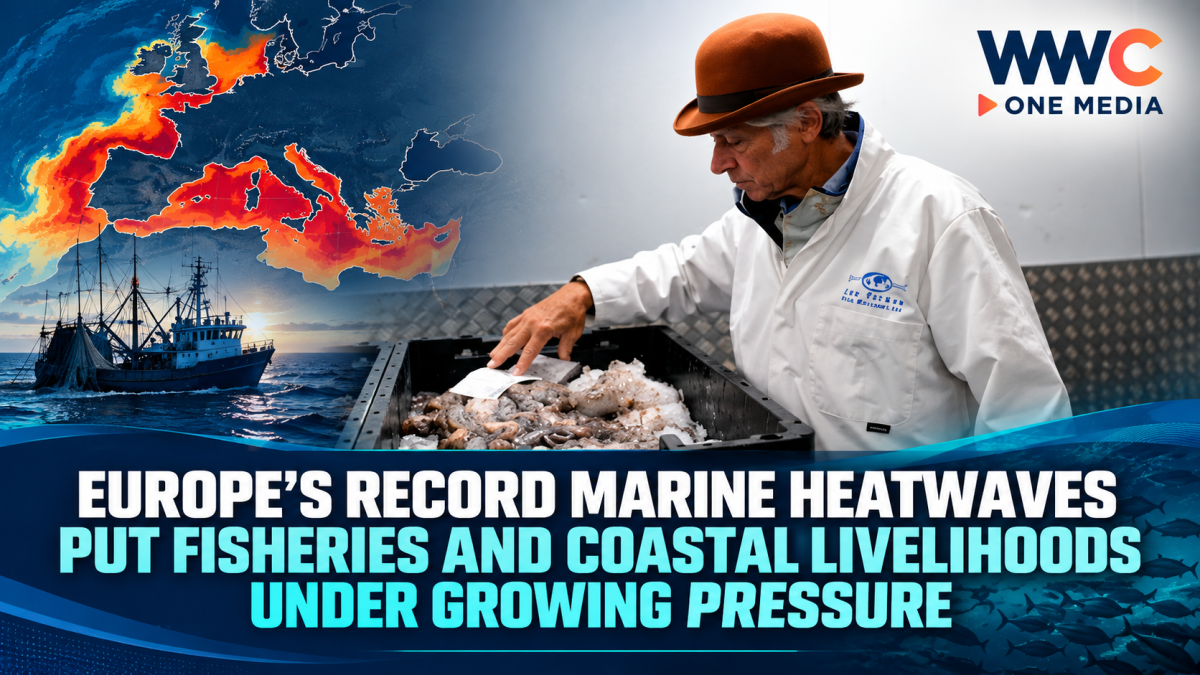
Europe’s seas experienced their hottest summer on record in 2026, with prolonged marine heatwaves disrupting marine ecosystems and creating growing challenges for fisheries and coastal communities.
Average sea-surface temperatures across European waters reached 21.6°C between June and August, the highest level recorded in 45 years of available satellite-era data. The Bay of Biscay was among the areas experiencing the most extreme warming, averaging 21.4°C — more than 2.4°C above its 1991-2020 average.
The unusually warm conditions are changing where marine species can survive and reproduce. Scientists say species traditionally associated with cooler waters are declining in some areas, while warmer-water species are moving north into regions where they were previously uncommon.
The Bay of Biscay illustrates the scale of the change. The region recorded 185 marine heatwave days by the end of August, compared with only a handful of such days annually during the 1980s. Marine heatwaves are generally defined as periods of at least five consecutive days when sea temperatures are significantly above the historical norm.
One major concern is the loss of kelp forests along parts of northern Spain. Researchers estimate that around 95% of large brown kelp stands along sections of the Asturias coast have disappeared since monitoring began in 2010. Kelp provides food, shelter and nursery habitat for numerous marine species that support local fisheries.
Fishermen in Galicia are also reporting changes in shellfish stocks. Warmer waters have been associated with declines in species such as sea urchins and other organisms traditionally harvested by coastal communities, while warmer-water species including triggerfish and Portuguese man o’ war have appeared farther north.
Not every fishing community is experiencing the same effect. On England’s southern coast, fishermen have reported a dramatic increase in common octopus, a species that historically struggled to survive the colder waters.
UK fisheries data show that around 2,600 metric tons of octopus were landed last year, with more than 3,000 tons already recorded this year. Before 2025, annual landings were below 30 tons.
The surge has created new commercial opportunities for some fishermen because octopus has a ready market in southern Europe. But the species also preys on commercially valuable lobsters, crabs and scallops, creating a more complicated economic picture for the wider fishing industry.
Researchers say these changes demonstrate that marine heatwaves can reshape entire food webs rather than simply making the ocean warmer. When foundational habitats such as kelp disappear, species that depend on them can also decline, potentially affecting catches and the communities built around them.
The warming is occurring as greenhouse-gas emissions continue to increase the amount of heat stored in the global ocean. Scientists have warned that marine heatwaves are becoming more frequent, more intense and more widespread as the planet warms.
For European fishermen, the consequences may therefore extend beyond a single unusually hot summer. Changes in species distribution can affect traditional fishing grounds, alter seasonal patterns, disrupt supply chains and make it harder for communities to predict which catches will remain commercially viable.
The bigger challenge is that Europe’s fisheries are now having to adapt to seas that are changing faster than many coastal communities have experienced in generations — potentially reshaping what species can be caught, where they can be found and which fishing traditions can survive.