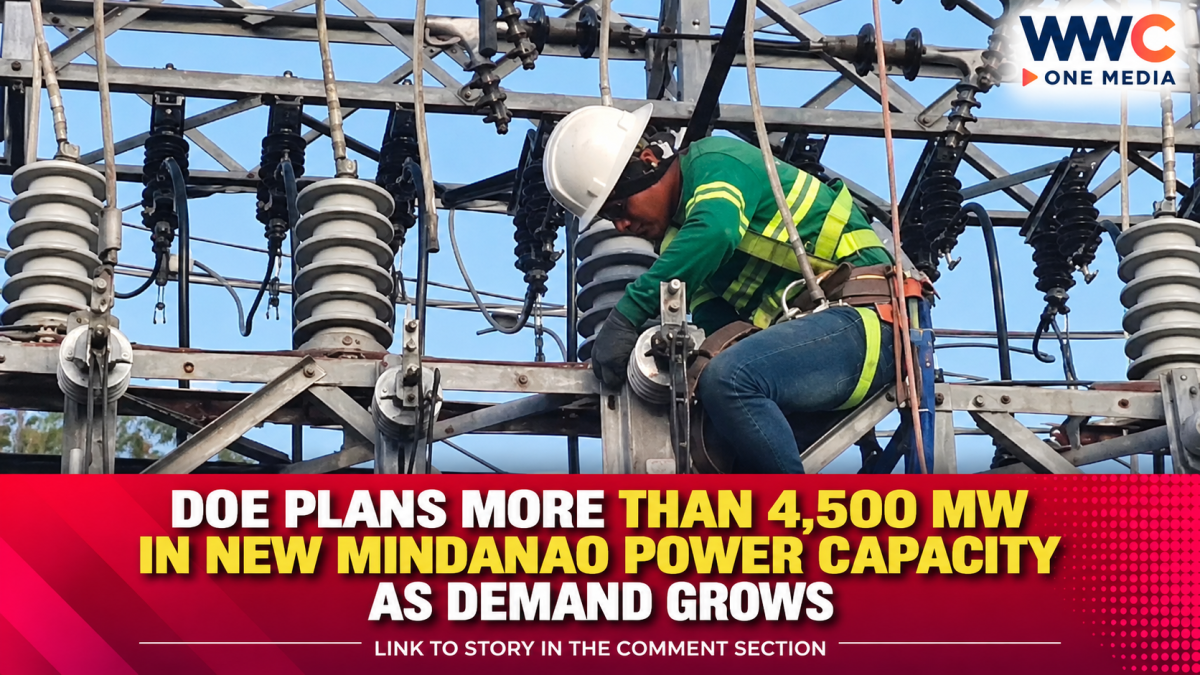
The Department of Energy is preparing a major expansion of Mindanao’s electricity generation capacity, with 67 committed and indicative projects expected to add a combined 4,580.895 megawatts (MW) of potential capacity between 2026 and 2031.
The planned expansion comes after Mindanao experienced periods of tight power reserves and grid alerts earlier this month, highlighting the need for additional generation capacity as electricity demand continues to increase.
According to the DOE Mindanao Field Office, 30 of the projects are classified as committed, representing 1,323.915 MW of additional capacity. Another 37 projects are still considered indicative and account for 3,256.98 MW.
The combined figure does not mean that more than 4,500 MW will immediately be available to consumers. Indicative projects still have to complete development, regulatory, financing, construction and grid-connection requirements before they can begin generating electricity.
Renewable energy projects account for 19.26 percent of the combined capacity in the 2026-2031 pipeline, as the government continues to diversify Mindanao’s power mix while expanding overall generation.
The proposed expansion follows a significant improvement in the region’s immediate power situation. The DOE said Mindanao returned to normal grid operating conditions on September 13, with average available generation reaching about 3,226 MW as of September 20 against average demand of 2,451 MW. That represented an average gross reserve of around 755 MW.
The National Grid Corporation of the Philippines separately reported that major generating units affected by forced outages, including units at GNPower Kauswagan in Lanao del Norte and Therma South in Davao, had returned to the system. NGCP said Mindanao subsequently had sufficient reserves and could export excess electricity to the Visayas through the Mindanao-Visayas Interconnection Project when conditions allowed.
Earlier in September, however, the grid experienced much tighter conditions. NGCP data showed negative gross reserves on September 8 and 11 after several generating units went offline, while scheduled maintenance further reduced available capacity. The return of key generating units helped restore the grid to normal conditions.
The DOE said the recent Yellow and Red Alerts were primarily associated with unexpected generating-unit outages. A Yellow Alert indicates that the operating reserve has fallen below the required level, while a Red Alert means available generation is insufficient to meet demand and the required reserve.
To speed up new power projects, the DOE is using mechanisms such as Certificates of Energy Projects of National Significance and its Task Force 200, which monitors priority energy projects and works to address delays affecting development and commissioning.
Transmission capacity is also being treated as a key part of the expansion. The DOE said new generation must be matched by adequate transmission infrastructure so electricity from new plants can actually reach consumers across the grid. An ad hoc committee is working with NGCP to address transmission-related concerns that could delay projects.
The government is also continuing to promote energy efficiency and conservation alongside generation expansion. The DOE said reducing electricity demand during peak periods can help limit pressure on the grid and reduce the need to operate more expensive peaking plants.
For now, DOE projections indicate that Mindanao is expected to avoid Yellow or Red Alerts for the remainder of 2026, provided normal operating conditions continue and there are no major unplanned outages. But the proposed 4,580.895 MW pipeline shows that maintaining long-term reliability will depend on how quickly planned projects move from the development stage to actual electricity generation.