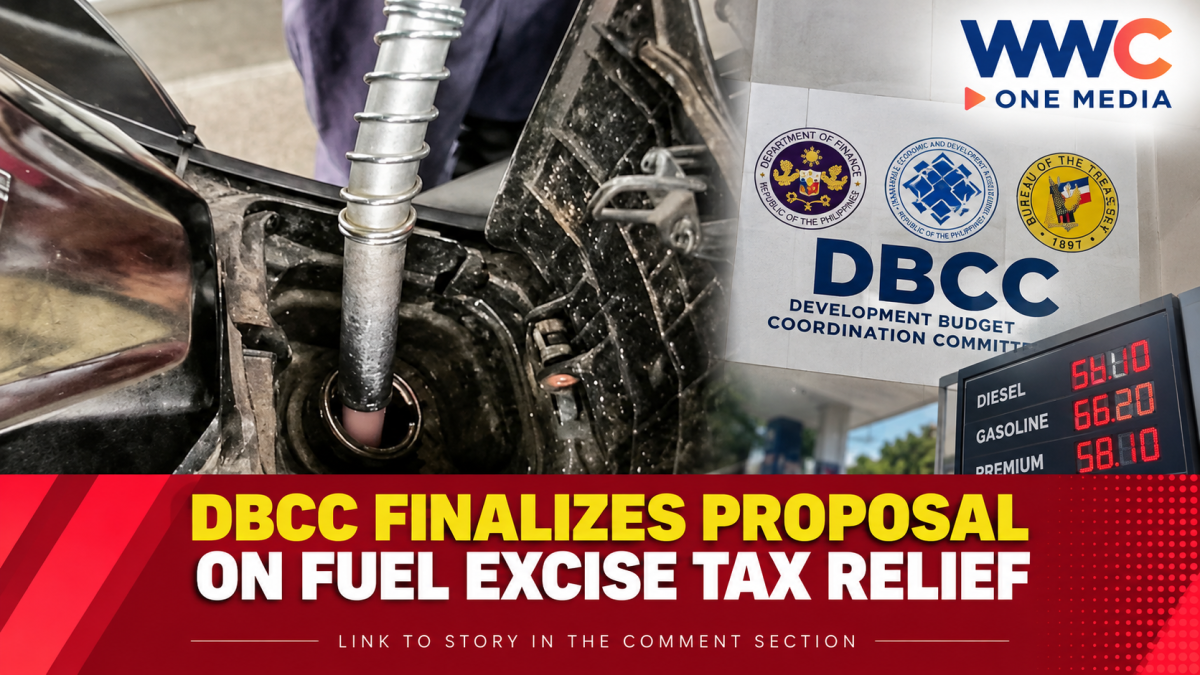
The Development Budget Coordination Committee (DBCC) is finalizing its recommendation on possible relief from fuel excise taxes as sharp increases in pump prices continue to put pressure on consumers.
Palace Press Officer Claire Castro said on September 17 that the economic team was still evaluating the proposal and would submit its recommendation to President Ferdinand Marcos Jr. once finalized.
The review follows a certification from the Department of Energy (DOE) that the one-month average price of Dubai crude reached $99.41 per barrel from August 13 to September 11. The figure is above the $80-per-barrel threshold established under Republic Act 12316 for possible suspension or reduction of fuel excise taxes.
Under the law, the President may suspend or reduce excise taxes on specified petroleum products upon the recommendation of the DBCC and in coordination with the Energy Secretary. Any relief may cover a period of up to three months for each instance.
The review comes after another round of fuel price increases took effect from September 15 to 21. Gasoline prices rose by P5.68 per litre, while diesel increased by P4.31 and kerosene by P4.62, according to the DOE.
The government has attributed the continuing pressure on domestic fuel prices to elevated international crude prices and supply disruptions linked to conflict in the Middle East. Disruptions affecting oil shipments through the Strait of Hormuz have also added to concerns over global supply.
The government previously suspended excise taxes on liquefied petroleum gas and kerosene in April after Dubai crude prices breached the statutory threshold. The taxes were restored in July after the average crude price fell below $80 per barrel.
The DOE said the country continues to maintain adequate petroleum inventories. As of September 11, estimated supply stood at 57.17 days for gasoline, 60.80 days for diesel and 124.57 days for kerosene.
Targeted assistance for public transport operators is also continuing. As of September 9, the DOE said P718.10 million in fuel subsidies had been availed of by 102,356 public utility vehicle beneficiaries through transactions at 3,574 gasoline stations nationwide.
The final DBCC recommendation will determine what form of fuel tax relief, if any, will be presented to the President for consideration. No final decision on the possible suspension or reduction had been announced as of September 17.