
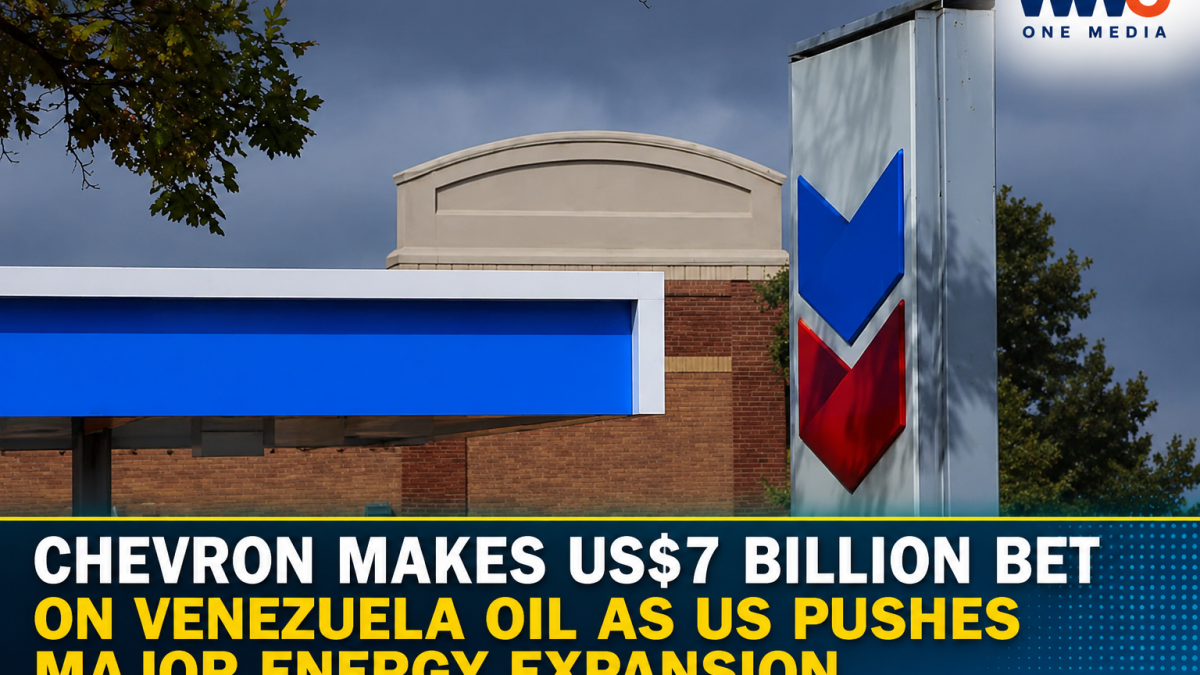
CARACAS, Venezuela — US energy giant Chevron is making a major new bet on Venezuela, announcing plans to invest more than US$7 billion over the next five years to dramatically expand oil production in a country sitting on some of the world’s largest petroleum reserves.
The ambitious plan aims to more than double Chevron’s Venezuelan production to approximately 600,000 barrels per day, marking one of the most significant investments yet in the country’s struggling energy industry.
Chevron said it had secured additional acreage in Venezuela’s oil-rich Orinoco Belt, supported by updated fiscal, commercial and legal terms for its joint ventures in the country. The company said the new arrangements are designed to support long-term investment and production growth.
A Massive Oil Bet in a Country Rich in Reserves
Venezuela possesses the world’s largest proven oil reserves, yet its oil industry has suffered years of declining production amid infrastructure deterioration, mismanagement, sanctions and chronic underinvestment.
That contradiction is at the heart of Chevron’s gamble.
The country has enormous untapped potential, but turning those reserves into profitable production will require substantial investment, technical expertise and years of rebuilding.
Chevron, which has operated in Venezuela for more than a century, believes the opportunity is worth the risk. The company said its Venezuelan operations could provide relatively low-cost production, estimating total costs at below US$20 per barrel.
Chevron Moves as Washington Expands Its Venezuela Energy Strategy
Chevron’s announcement comes amid a broader push by the US government to reshape Venezuela’s energy sector.
In recent days, the Trump administration has pursued major agreements involving Venezuelan oil development, including a separate arrangement involving access to significant oil reserves.
Reuters reported that Venezuela’s National Assembly approved an oil agreement involving US interests and 17 oil fields, signaling a dramatic expansion of energy cooperation between Washington and Caracas.
The developments suggest that Chevron’s US$7 billion expansion is part of a much larger geopolitical and economic shift surrounding Venezuela’s oil industry.
But Can Venezuela’s Oil Infrastructure Handle a Comeback?
Despite the scale of the investment, analysts have warned that reviving Venezuela’s oil industry will not happen overnight.
Much of the country’s infrastructure requires extensive rehabilitation, while Venezuela’s heavy crude presents additional technical and financial challenges.
The Orinoco Belt contains vast quantities of extra-heavy crude, but extracting, transporting and refining it requires specialized infrastructure and sustained investment.
Chevron’s strategy relies partly on its existing operations and infrastructure, potentially giving the company an advantage over competitors that would have to build operations from scratch.
Chevron is currently the only major US oil company with a significant operational presence in Venezuela. Other American energy giants, including ExxonMobil and ConocoPhillips, exited after previous asset nationalizations.
The Race to Rebuild Venezuela’s Oil Industry
Chevron’s investment could become an important test of whether Venezuela can successfully attract major foreign capital back into its energy sector.
The company is targeting approximately 600,000 barrels per day within five years—an ambitious increase that would significantly strengthen its position in the country.
But the bigger question extends far beyond Chevron.
Can Venezuela rebuild an oil industry that once ranked among the world’s most powerful?
And can Washington’s renewed involvement transform the country’s vast reserves into a reliable source of global energy?
For Chevron, the answer is apparently worth US$7 billion.
For Venezuela, the stakes could be even higher.
Because beneath the world’s largest proven oil reserves lies a question that could reshape the global energy market: Can Venezuela finally turn its enormous underground wealth back into real economic power?
WWC ONE MEDIA J.M.D



Leave a Reply