
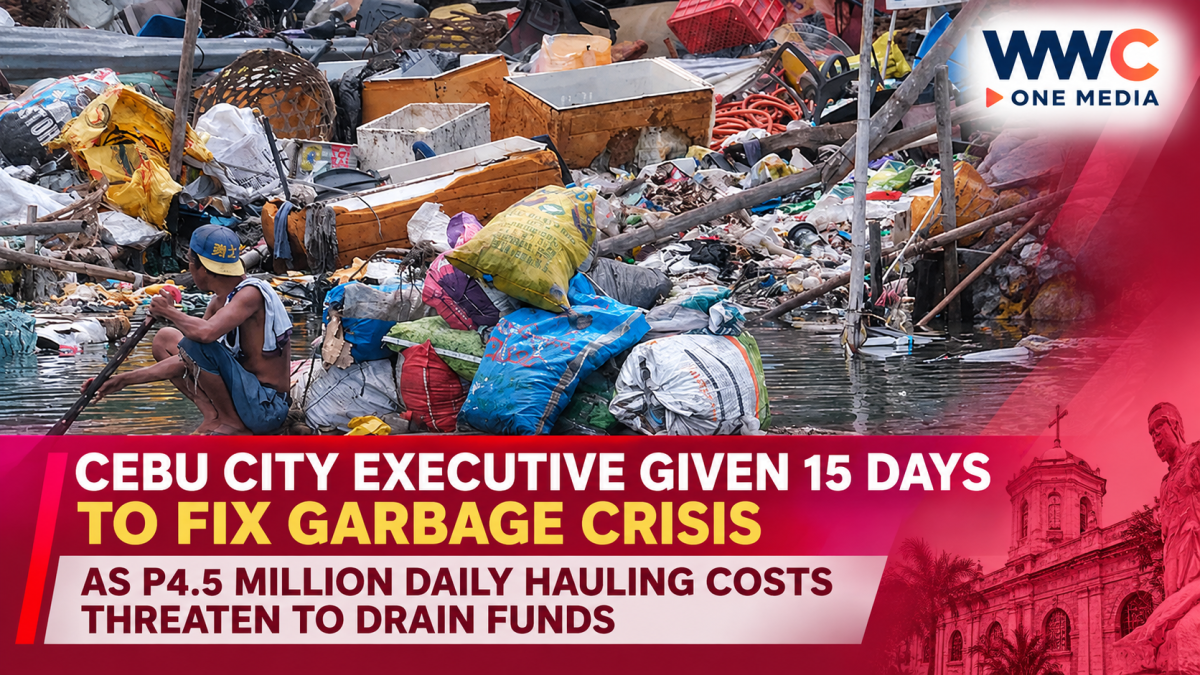
CEBU CITY, Philippines — Cebu City officials have been given just 15 days to present a comprehensive, long-term solution to the city’s worsening garbage crisis, as the government continues spending millions of pesos daily to transport waste outside the city.
The Cebu City Council ordered the Executive Department to come up with a sustainable waste management plan following months of costly temporary measures triggered by the January 8, 2026 Binaliw landfill landslide.
The pressure is growing fast.
Cebu City is now spending between P4.2 million and P4.5 million every day to haul garbage to a private landfill in Aloguinsan, while officials warn that available funds could be exhausted as early as November if the current arrangement continues.
From P1,100 to P3,906 Per Ton: The Cost of Cebu’s Garbage Crisis
The financial impact of the Binaliw landfill closure has been enormous.
Before the crisis, Cebu City’s garbage disposal cost was approximately P1,100 per ton.
But after the January landfill disaster forced the city to find alternative disposal arrangements, waste has had to be transported over longer distances to a private facility in Aloguinsan.
The cost has since risen to around P3,906 per ton.
That dramatic increase is now placing enormous pressure on the city’s budget and raising fears that Cebu could face an even more serious waste disposal problem if funding runs out before a permanent solution is established.
Why Did the Garbage Crisis Begin?
Cebu City’s current waste problem can be traced back to the devastating Binaliw landfill landslide on January 8, 2026.
The tragedy claimed dozens of lives and forced authorities to halt operations at the landfill, which had served as a major disposal site for Cebu City and other local governments.
The closure immediately created a disposal crisis.
Without Binaliw operating normally, Cebu City was forced to rely on temporary and more expensive arrangements while officials searched for a long-term replacement.
The crisis has also affected the wider Metro Cebu area, highlighting how dependent nearby cities had become on limited waste disposal infrastructure.
Binaliw Reopening Faces Major Obstacles
Reopening the Binaliw landfill has been discussed as one possible option, but significant obstacles remain.
According to reports presented to the Cebu City Council, the facility faces several unresolved issues, including:
- A proposed intake limit of only 500 metric tons
- An unsettled balance of approximately P130 million involving the landfill operator
- Procurement and bidding delays
- Questions about the stability of the waste mass
- Concerns over methane venting
- Fire protection deficiencies
- Sanitation and other safety issues
Cebu City’s disaster office has also warned that Binaliw cannot yet be considered safe for sustained operations because important safety gaps remain unresolved.
Can Cebu City Afford to Keep Hauling Its Garbage?
That is now one of the biggest questions facing city officials.
The temporary arrangement may be keeping garbage moving for now, but the financial burden is becoming increasingly difficult to sustain.
At up to P4.5 million per day, the cost of transporting waste to Aloguinsan could rapidly consume funds intended for other city services.
The Cebu City Council’s decision to impose a 15-day deadline reflects growing frustration over the lack of a permanent solution.
Officials now want the Executive Department to move beyond temporary fixes and present a clear long-term strategy for collection, transport and disposal.
Cebu City Has Also Reopened Bidding for Waste Disposal Services
The city has been attempting to secure additional disposal capacity through procurement.
Earlier this month, Cebu City reopened bidding for the services of a licensed solid waste disposal facility, with an approved budget of approximately P99.3 million.
The move was aimed at finding a more stable arrangement for garbage collection and disposal as the city continues dealing with the fallout from the Binaliw closure.
However, the bidding process itself does not immediately solve the broader problem of finding a sustainable, safe and affordable long-term waste management system.
The Real Problem Is Bigger Than Garbage Collection
Cebu City’s crisis is no longer simply about collecting trash from households and barangays.
The bigger challenge is where the garbage goes after it is collected.
The Binaliw disaster exposed the risks of relying heavily on limited disposal facilities without sufficient alternatives.
Now, Cebu City must deal with several problems at once:
- Rising waste disposal costs
- Limited landfill capacity
- Long-distance hauling
- Safety concerns at Binaliw
- Procurement delays
- Budget pressure
- The need for stronger waste segregation
Officials and environmental advocates have repeatedly stressed that better waste segregation could reduce the amount of garbage sent to landfills and ease pressure on disposal facilities.
But segregation alone will not solve the immediate problem.
Cebu City still needs a reliable destination for the huge volume of waste produced every day.
Fifteen Days to Produce a Plan
The Cebu City Council has now made its position clear.
The Executive Department has 15 days to present a comprehensive and long-term waste management strategy.
The deadline comes as the city continues paying millions every day for temporary disposal.
And with officials warning that available funds could be depleted by November, the timeline for action is becoming increasingly urgent.
What Happens if Cebu Runs Out of Funds?
That is the question hanging over Cebu City.
If the current temporary system continues and funds are exhausted, officials could face an even more serious emergency.
Garbage collection could come under greater pressure.
Waste could begin piling up in communities.
Public health and sanitation risks could increase.
And Cebu City could find itself scrambling for another emergency solution.
For now, the city has just 15 days to show that it has a plan.
Cebu City is spending as much as P4.5 million every day. The old landfill remains surrounded by safety concerns. A new disposal solution is still being pursued. And officials warn the money may not last beyond November.
The garbage is still moving—for now.
But with the deadline ticking and millions disappearing every day, can Cebu City finally find a permanent solution before its garbage crisis becomes an even bigger disaster?




Leave a Reply