
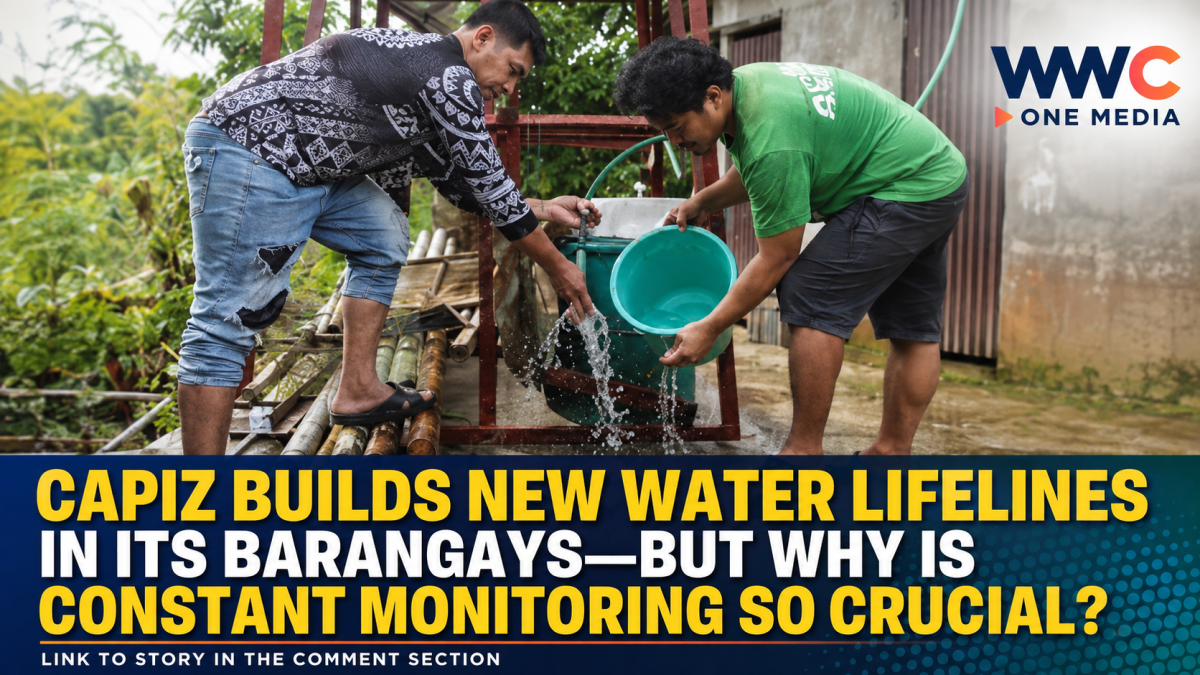
CAPIZ, Philippines — Small water impounding systems may not be as large as major dams, but for communities facing changing weather conditions and growing pressure on water resources, they can play an important role in capturing and conserving water.
The Department of Environment and Natural Resources (DENR) in Capiz has intensified its field monitoring and inspection of Small Water Impounding Systems (SWIS) constructed in several barangays across the province, as authorities work to ensure that the projects are properly implemented and remain functional.
According to Dr. Ernest Federiso, Provincial Environment and Natural Resources Officer of DENR Capiz, the systems are designed to support water storage and conservation initiatives, including activities connected with the government’s National Greening Program and the needs of surrounding communities.
Among the sites inspected were SWIS facilities in Barangay Olalo in Pilar, Barangay Agloloway in Jamindan, Barangay Agustin Navarra in Ivisan, Barangay Bayuyan in President Roxas, and Barangay Blasco in Pilar.
Some of the facilities have a reported capacity of 20 cubic meters, highlighting their role as localized water-conservation infrastructure rather than large-scale reservoirs.
Federiso stressed that continued monitoring is necessary to determine whether the projects are functioning as intended and delivering benefits to the communities they are meant to serve.
The initiative forms part of DENR Capiz’s broader soil and water conservation efforts aimed at improving the management and protection of the province’s natural resources.
Why Small Water Systems Matter
The importance of small-scale water storage extends beyond simply collecting rainwater. The Department of Agriculture’s Bureau of Soils and Water Management (BSWM) has emphasized that effective watershed management is critical to maintaining Small Water Impounding Systems because soil erosion and siltation can reduce a reservoir’s storage capacity and shorten its operational life.
BSWM has also previously identified a SWIS watershed in Tapaz, Capiz among sites covered by soil and water conservation initiatives, while farmers in the municipality received watershed-management training in 2025 focused on sustainable land management, erosion prevention and the long-term protection of water resources.
This means that the success of water infrastructure is not determined by construction alone. Proper maintenance, healthy vegetation and responsible land use around watersheds can be just as important in keeping these systems useful over time.
Part of a Wider Push for Water Security in Capiz
Capiz has also seen other investments aimed at improving water access and agricultural productivity. In December 2025, the Department of Agrarian Reform said a solar-powered irrigation project in Dao was expected to help farmers reduce irrigation costs and maintain more reliable access to water during dry months.
Meanwhile, the National Irrigation Administration has been developing the much larger Bayuyan Small Reservoir Irrigation Project in President Roxas, which is intended to provide irrigation and other benefits to farming communities in the area.
These projects differ significantly in scale and purpose, but they point to a wider challenge facing agricultural and rural communities: securing reliable water while protecting the watersheds and natural resources that make that supply possible.
The Bigger Question: Will the Systems Deliver Long-Term Benefits?
For DENR Capiz, the latest inspections are a reminder that building infrastructure is only the first step.
The real test will be whether the Small Water Impounding Systems remain operational, are properly maintained and continue to provide meaningful benefits to the barangays they serve.
As climate variability and water-management challenges continue to affect communities, even relatively small water-conservation projects could become increasingly important—especially when backed by sustained monitoring and community participation.
For now, DENR Capiz is keeping watch. And for the communities depending on these systems, the long-term results may prove that when it comes to water security, even small infrastructure can make a major difference.




Leave a Reply