
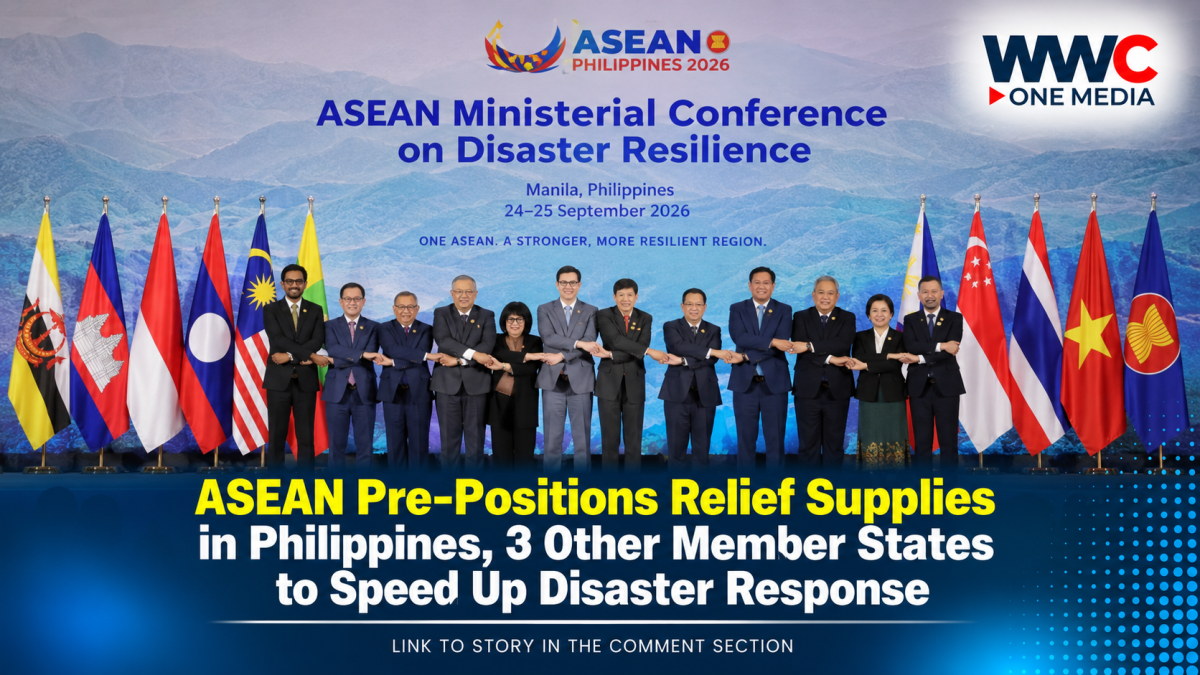
MANILA, Philippines — ASEAN is strengthening its regional disaster-response system by pre-positioning emergency relief supplies in four member states, including the Philippines, in a move designed to get critical assistance to disaster-hit communities faster.
The initiative is part of ASEAN’s broader effort to strengthen collective disaster preparedness and reduce the time needed to mobilize humanitarian supplies when major emergencies strike. The ASEAN Coordinating Centre for Humanitarian Assistance on Disaster Management (AHA Centre) serves as the region’s main coordinating body for disaster management and emergency response.
Relief Supplies Moved Closer to Disaster Zones
Instead of waiting to transport all emergency supplies after a disaster occurs, ASEAN’s Disaster Emergency Logistics System for ASEAN (DELSA) uses strategically located stockpiles to make essential relief items available closer to areas that may need them.
The AHA Centre has previously described the system as a way to mobilize and distribute relief items to disaster-affected ASEAN member states, with regional and satellite warehouses forming part of the logistics network.
The Philippines is among the countries hosting these strategic stocks. An ASEAN satellite warehouse was established at Camp Aguinaldo in Quezon City, complementing the regional stockpile in Malaysia and other strategically positioned facilities.
Why the Philippines Matters
The Philippines is among Southeast Asia’s most disaster-exposed countries, regularly facing threats from typhoons, floods, landslides, earthquakes and volcanic activity.
That exposure makes faster access to food, water, shelter and other emergency supplies particularly important when large-scale disasters disrupt roads, airports or other transportation routes.
The pre-positioning approach is intended to reduce logistical delays by keeping supplies within the region rather than moving everything from a distant central warehouse after an emergency has already begun.
ASEAN’s experience has shown the value of this regional coordination. During major disasters, the AHA Centre works with affected governments and international partners to identify needs, coordinate assistance and help move relief supplies where they are required.
ASEAN Builds a Faster Regional Response
The initiative reflects the principle behind “One ASEAN, One Response,” the regional framework for coordinated disaster assistance.
The AHA Centre was established in 2011 to facilitate cooperation among ASEAN member states and coordinate disaster-management and emergency-response efforts with international organizations.
The logistics network has expanded beyond a single regional stockpile. ASEAN has worked on establishing strategically located satellite warehouses, including facilities in the Philippines, Malaysia and Thailand, with the objective of improving the speed at which relief resources can be mobilized.
Philippines Leads Regional Resilience Push
The development comes as the Philippines holds the 2026 ASEAN chairship, with disaster resilience among the regional priorities being discussed this year.
The Philippine government has been promoting stronger regional cooperation on disaster preparedness, including early-warning systems, climate resilience and coordinated emergency response. ASEAN officials and Philippine agencies have also been discussing ways to translate regional disaster commitments into practical preparedness measures.
The latest pre-positioning effort therefore represents more than a warehouse strategy: it is part of a broader attempt to ensure that regional disaster cooperation can translate into faster assistance on the ground.
From Preparedness to Rapid Action
For communities facing sudden disasters, the first hours can be critical. Roads may become inaccessible, communications can be disrupted and conventional supply chains can slow down.
By positioning relief stocks in advance, ASEAN aims to shorten the distance between regional preparedness and emergency response.
The system does not eliminate the logistical challenges of delivering aid after a major disaster, but it gives ASEAN an additional mechanism for getting essential supplies moving more quickly.
As climate-related hazards and other disasters continue to test Southeast Asia’s preparedness, the region is betting that having supplies ready before the next emergency hits could make the response faster when every hour counts.


Leave a Reply