
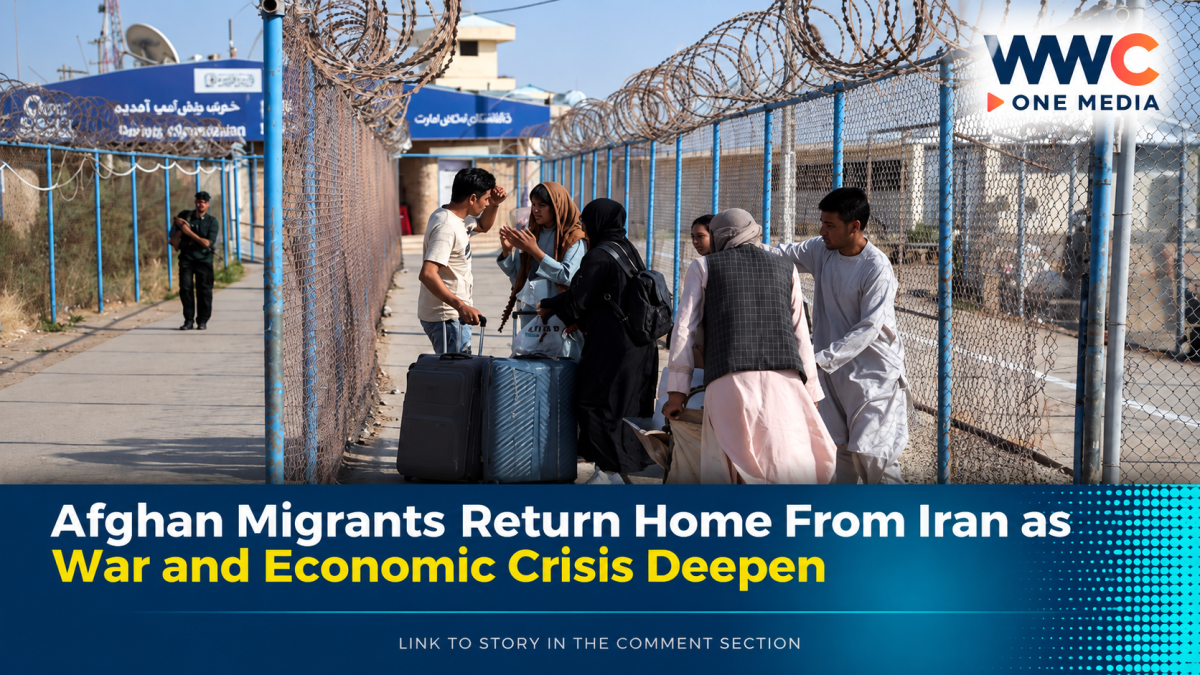
Thousands of Afghans who had built lives in Iran are returning to Afghanistan after the conflict involving Iran, the United States and Israel triggered a severe economic crisis and wiped out much of their savings.
Many of those returning had originally fled Afghanistan after the Taliban returned to power in 2021. Iran had offered them jobs, income and, for some families, greater opportunities than they could find under Taliban rule.
Now, soaring prices, unemployment and the collapse in the value of Iran’s currency have made life increasingly difficult. Some returnees said their savings had lost more than two-thirds of their value as the Iranian rial weakened sharply.
Consumer prices in Iran have risen by nearly 90 per cent year on year, according to Iran’s Statistical Centre, while food inflation has approached 130 per cent. The economic pressure has left many Afghan workers unable to find stable employment or cover basic living costs.
International Organisation for Migration surveys found that only about 29 per cent of Afghans who recently returned from Iran still had savings. Their average income had fallen by nearly one-third compared with levels before the crisis.
The changing circumstances have also brought more women and entire families into the flow of returnees. For years, many Afghan women and girls had remained in Iran after the Taliban takeover because of restrictions on education, employment and movement in Afghanistan.
Returning therefore presents difficult choices for many families. While Iran’s economic crisis has made it increasingly difficult to remain, Afghanistan’s restrictions under Taliban rule limit opportunities for women and girls.
One returning father, Abdul Jabbar, said his family had lived in Iran for nearly four decades and enjoyed a relatively comfortable life before the war disrupted his work. After returning to Afghanistan with little savings, the family moved into a small home and he remained unemployed.
His 15-year-old daughter said she missed her education and friends in Iran and would return if she had the opportunity.
At the Islam Qala border crossing in western Afghanistan, officials have reported a steady flow of returning families. Some migrants have also complained that Iranian employers withheld wages they were owed.
The return is not entirely without opportunity for everyone. Mohammad Saeed and his mother, Rezwana Jami, who had operated a pizza-cheese business in Iran, used their remaining savings to purchase kitchen equipment and restart production after returning to Afghanistan.
The family hopes to find customers in a market where locally produced pizza cheese remains relatively uncommon. However, Jami said her teenage daughter has struggled with the loss of access to education after returning.
The latest movement adds to a much larger return crisis. The United Nations has estimated that millions of Afghans could return from Iran and Pakistan during 2026, placing additional pressure on communities already facing poverty, limited employment and shortages of basic services.
For many of those arriving from Iran, the decision to return is therefore less a choice between two attractive alternatives than a response to deteriorating economic conditions. They are rebuilding their lives in a country they once left, while facing a very different set of challenges under Taliban rule.


Leave a Reply