
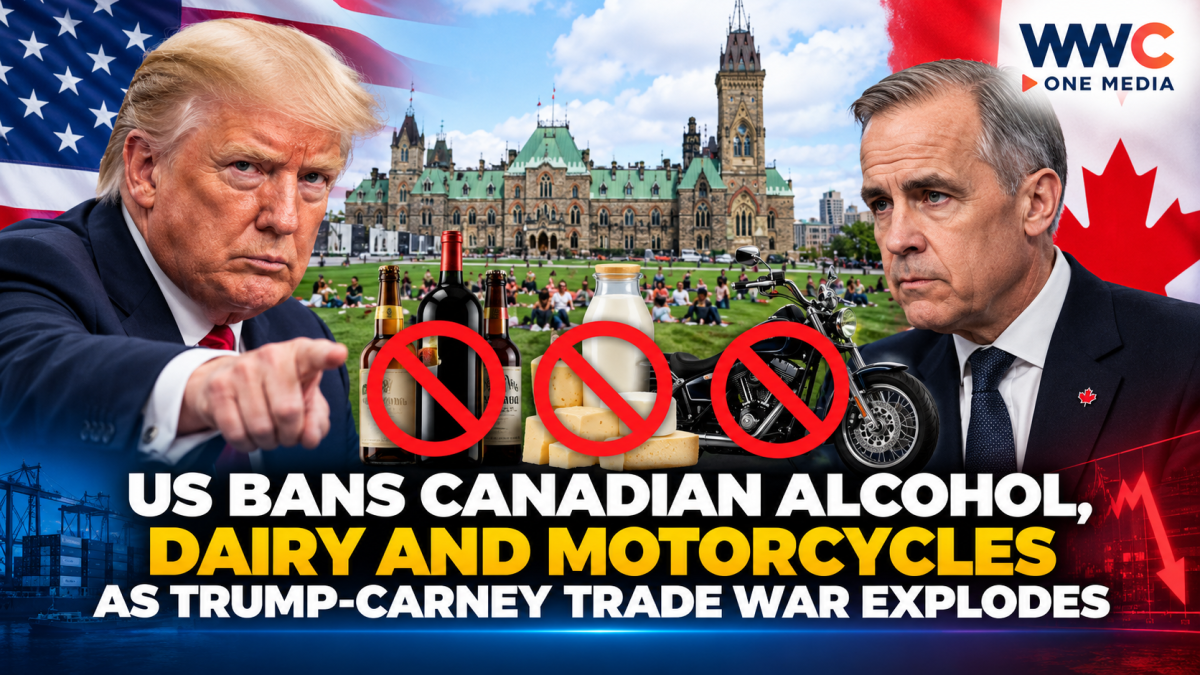
WASHINGTON — The United States is dramatically escalating its trade war with Canada, moving beyond tariffs to outright import bans on a range of Canadian products, including alcoholic beverages, dairy goods and motorcycles.
The new measures are set to take effect on September 29 and come after Canada imposed retaliatory tariffs on about US$20 billion worth of American goods, marking one of the sharpest deteriorations in relations between the two longtime allies in decades.
US Moves From Tariffs to Outright Bans
The White House announced that the United States will block imports of a broad range of Canadian products, including most alcoholic beverages, selected dairy-related goods and motorcycles.
Products affected by the ban include alcoholic drinks such as beer, wine, whisky, bourbon, rum, vodka and other spirits, while certain dairy and related products are also covered.
Cheese products were not included in the outright ban but were added to a list facing 50 percent tariffs, along with other Canadian goods.
The escalation represents a major shift in the trade dispute.
Until now, much of the conflict had centered on tariffs. The latest measures take the dispute further by using outright import restrictions against products from one of America’s closest economic and security partners.
Canada Strikes Back With US$20 Billion in Tariffs
The latest US action followed the implementation of Canada’s retaliatory tariffs on American goods.
Canadian officials imposed duties ranging from 15 percent to 50 percent on approximately US$20 billion in US products, targeting sectors including steel, furniture, clothing and electronics.
The measures were designed to put economic and political pressure on Washington after earlier US tariffs on Canadian exports and the collapse of trade negotiations between the two countries.
Canada’s International Trade Minister Dominic LeBlanc criticized the latest US measures and said Ottawa’s priority remained protecting Canadian workers, farmers, families and businesses.
Mark Carney Calls for Canada to Pivot Away From the US
Canadian Prime Minister Mark Carney has responded by urging the country to reduce its dependence on the United States.
Carney said Canada has the resources and ability to build a stronger future by expanding its economic relationships beyond its largest trading partner.
He acknowledged that changing course would come with costs but argued that doing nothing would be more damaging in the long run.
The growing divide is now raising serious questions about the future of the deep economic relationship that has tied the two countries together for generations.
USMCA Now Facing New Pressure
The escalating dispute has also raised concerns about the future of the US-Mexico-Canada Agreement, the regional free-trade pact that replaced NAFTA.
The agreement has underpinned North American trade for years, creating deeply interconnected supply chains across industries ranging from automobiles and agriculture to manufacturing and technology.
Analysts warn that continued retaliation could create an escalating cycle of new tariffs and restrictions that damages businesses and consumers on both sides of the border.
Trump Keeps Threat of Higher Auto Tariffs Alive
The dispute may not be over.
A US official said President Donald Trump’s previous threat to increase tariffs on Canadian automobiles from 25 percent to 50 percent beginning January 1 remained in effect.
The Trump administration has also taken a tougher position toward Canadian companies and products more broadly, raising fears that additional industries could become targets if negotiations fail.
US Trade Representative Jamieson Greer and Canadian International Trade Minister Dominic LeBlanc have remained in contact, however, leaving open the possibility of a negotiated path to de-escalate the dispute.
Alcohol Industry Caught in the Middle
Alcohol has become one of the most politically visible battlegrounds in the trade war.
Canadian actions against US alcohol products had already hurt American distillers and producers, while the new US restrictions now threaten Canadian producers seeking access to the massive American market.
Industry groups have warned that escalating restrictions could disrupt supply chains, reduce consumer choice and hurt producers on both sides of the border.
The dispute also comes as businesses increasingly face uncertainty over where goods can be sold and what new tariffs or restrictions may be imposed next.
From Friendly Neighbors to Trade Rivals
The United States and Canada share one of the world’s largest and most integrated trading relationships.
That makes the current dispute particularly significant.
Rather than a conflict between traditional geopolitical rivals, the trade war is unfolding between two countries with deeply connected economies, a shared border and decades of cooperation.
The latest import bans show just how far the dispute has escalated.
What began as disagreements over tariffs has now turned into a broader economic confrontation involving outright import restrictions, retaliatory duties and threats of further action against major industries.
The Bottom Line
The US is now moving beyond tariffs and into outright import bans as its trade war with Canada intensifies.
Starting September 29, a range of Canadian alcoholic beverages, selected dairy products and motorcycles will be blocked from entering the US, while other goods face steep new tariffs.
Canada has already retaliated with tariffs on about US$20 billion in American products, and Prime Minister Mark Carney is urging the country to reduce its dependence on its southern neighbor.
With auto tariffs still under threat and the USMCA facing growing pressure, the question is no longer whether the trade war is escalating.
It already is — and America and Canada may be heading toward their deepest economic rupture in generations.
WWC ONE MEDIA J.M.D




Leave a Reply