
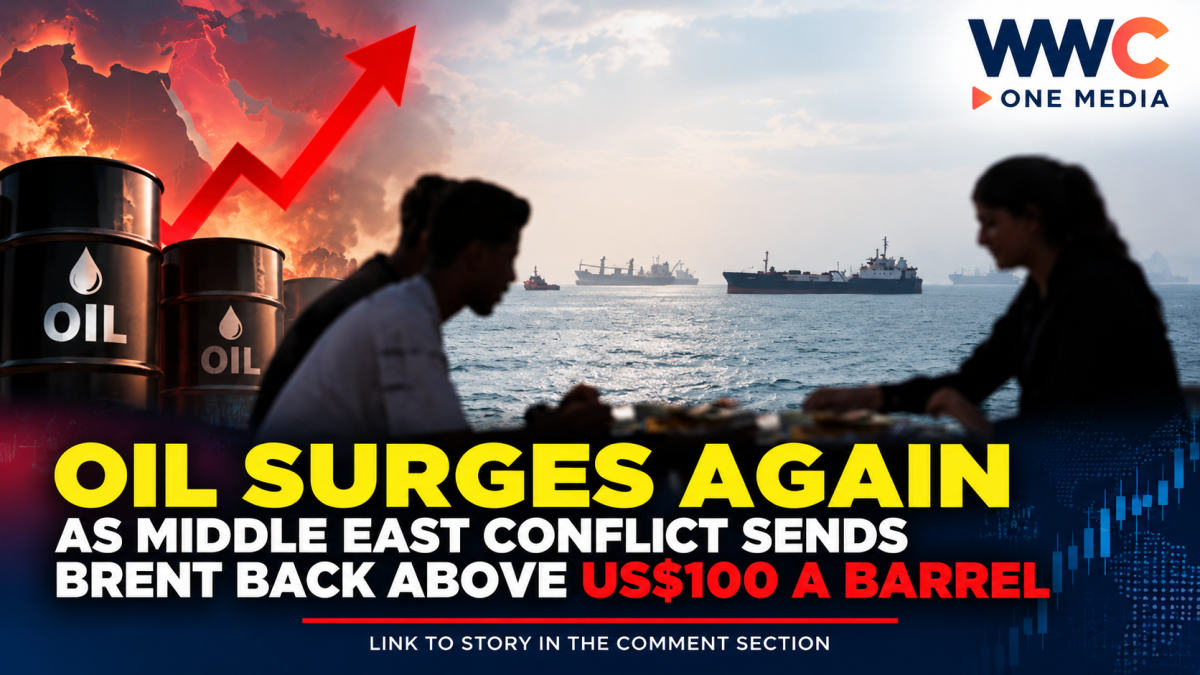
SINGAPORE — Global oil prices have surged back above the US$100-per-barrel mark as the escalating conflict in the Middle East triggers fresh fears of a prolonged disruption to global energy supplies.
Brent crude futures settled at US$101.21 a barrel on Wednesday, up US$3.29 or 3.4 per cent, while US West Texas Intermediate crude closed at US$96.05. Both benchmarks reached their highest closing levels since late May.
The latest rally came after a dramatic escalation in attacks involving oil tankers and energy infrastructure, raising fears that the conflict could further disrupt supplies from one of the world’s most important energy-producing regions.
Iran and US Escalate Attacks on Tankers
Oil markets reacted sharply after Iran said it had attacked 10 ships near the Strait of Hormuz, while the United States sank five Iranian oil tankers in what Reuters described as the largest wave of attacks on shipping since the conflict began.
The escalation has forced traders to reconsider earlier expectations that the conflict’s impact on oil supplies would be temporary.
Instead, the market is increasingly preparing for the possibility of a much longer disruption.
Analysts say the return of Brent to triple-digit territory reflects growing concern that the Middle East crisis could continue restricting energy supplies for months.
Strait of Hormuz Remains the Biggest Concern
At the center of the oil market’s anxiety is the Strait of Hormuz, one of the world’s most strategically important energy shipping routes.
Before the conflict, the waterway handled roughly one-fifth of the world’s oil and gas supplies.
But shipping volumes through the strait remain significantly below pre-war levels, creating uncertainty over how much oil is actually reaching global markets.
The situation has become even more complicated as some tankers reportedly switch off their tracking signals while crossing the region to reduce the risk of being targeted.
That has made it increasingly difficult for governments, traders and analysts to accurately determine how much oil is still flowing through the strategic waterway.
One-Third of Gulf Oil Exports Still Missing
Despite efforts by producers to find alternative ways to move crude, a significant amount of Gulf oil remains absent from the global market.
Reuters reported that approximately one-third of oil exports from the Gulf region is still missing compared with pre-war levels, despite the use of so-called “dark crossings” by tankers attempting to avoid detection while moving through dangerous waters.
Industry estimates suggest Gulf exports remain well below their previous levels, increasing pressure on global inventories and leaving the oil market vulnerable to further disruptions.
The uncertainty surrounding supply has helped push Brent higher.
Houthi Attacks Add to Supply Fears
The conflict’s impact is no longer limited to the Strait of Hormuz.
Renewed attacks by Iran-backed Houthi forces on Saudi energy facilities have raised fears that the crisis could spread to oil infrastructure and alternative shipping routes.
The Red Sea has become increasingly important as companies look for ways to reduce their dependence on the Strait of Hormuz.
But new threats in the region could place even those alternative routes at risk.
The growing danger across multiple energy routes has increased fears that oil supplies could face even greater disruptions.
Brent Previously Hit US$126.41
The latest surge above US$100 is not the highest oil price seen during the conflict.
Brent crude reached a peak of US$126.41 a barrel in April, its highest level in more than four years, as fears over the conflict and supply disruptions intensified.
Oil prices later retreated as hopes for de-escalation and possible peace talks temporarily eased market concerns.
But the latest attacks have revived fears that the conflict could once again send prices sharply higher.
Brent is now back above US$100, and analysts warn that further attacks on oil infrastructure or shipping could push prices even higher.
Higher Oil Prices Could Hit Consumers Worldwide
The impact of rising crude prices is already being felt beyond the oil market.
Higher energy prices can eventually affect:
- Gasoline and diesel costs
- Airfares
- Shipping expenses
- Food prices
- Manufacturing costs
- Transportation costs
- Electricity and energy bills
Refined fuel prices have already increased significantly in several markets as supply disruptions and refinery pressures add to the cost of crude oil.
The rise in energy costs is also creating renewed concerns about global inflation.
If oil remains above US$100 for an extended period, central banks could face additional pressure as higher fuel and transportation costs filter through the wider economy.
Oil Market Faces a Growing Supply Crunch
The latest rally comes as analysts warn that the global oil market has less room to absorb additional disruptions.
The conflict has already removed millions of barrels of supply from normal market flows, while global inventories and emergency reserves are under increasing pressure.
The International Energy Agency has also warned of a significant decline in global supply this year as Middle Eastern disruptions continue to affect production and shipping.
That means another major attack on energy infrastructure could have an immediate impact on prices.
Can Oil Reach US$120 Again?
With Brent already back above US$100, attention is turning to whether oil could return to the US$120 level — or even challenge its April peak.
Some analysts have warned that prices could rise significantly if the conflict expands further or if major oil infrastructure suffers serious damage.
The market’s biggest fear remains a prolonged disruption involving the Strait of Hormuz, Saudi energy facilities or other major supply routes.
For now, the situation remains highly volatile.
Every new attack, military development or sign of possible peace negotiations could send oil prices sharply higher or lower.
The Bottom Line
Brent crude has surged back above US$100 a barrel as renewed attacks involving Iran, the United States, oil tankers and Saudi energy infrastructure deepen fears of a prolonged Middle East supply crisis.
Brent settled at US$101.21, while US crude closed at US$96.05, marking their highest levels since late May.
The oil market is now facing a dangerous combination of threats:
Attacks on tankers. Disrupted shipping through the Strait of Hormuz. Reduced Gulf oil exports. Threats to Saudi energy infrastructure. And growing uncertainty over how long the conflict will last.
Brent has already reached as high as US$126.41 a barrel during the conflict.
Now that oil has returned above US$100, the world is watching one question closely:
Will the Middle East conflict push global oil prices even higher — and send the cost of fuel and everyday goods rising with them?
WWC ONE MEDIA J.M.D




Leave a Reply