
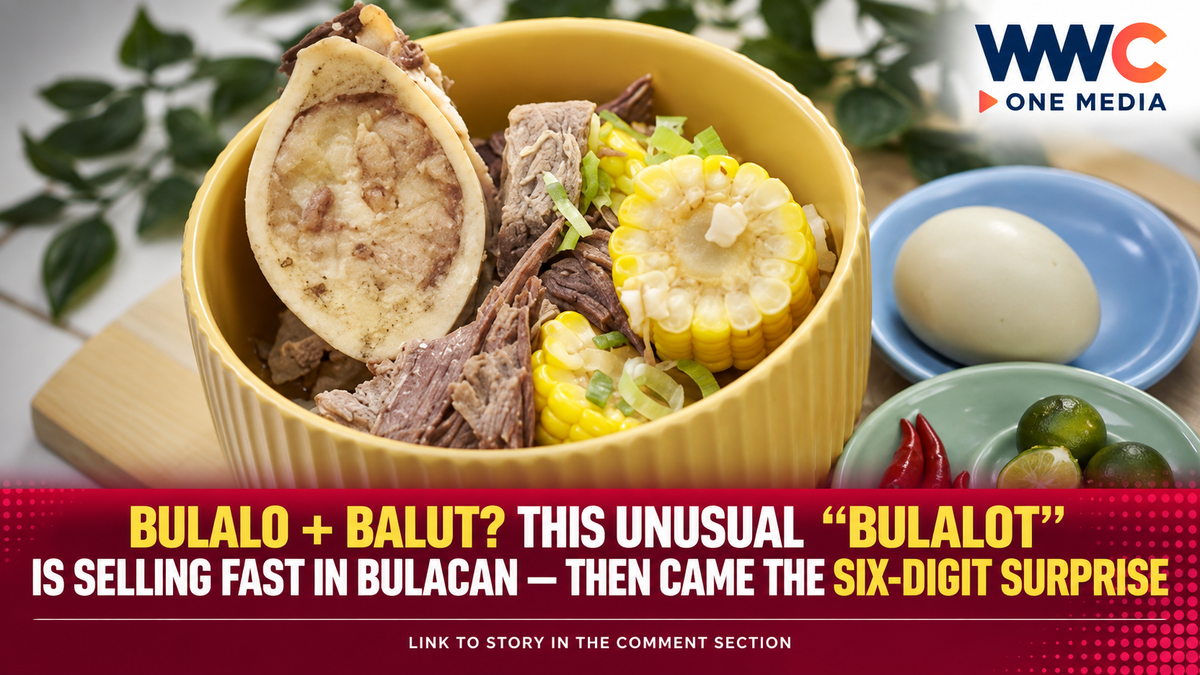
MALOLOS, Bulacan — What happens when two Filipino comfort-food favorites—bulalo and balut—are put together in one steaming bowl?
A food business in Malolos, Bulacan, found an answer that is proving surprisingly profitable.
Dubbed “bulalot,” the dish combines the familiar richness of bulalo—with beef, vegetables, bone marrow and savory broth—with the distinctly Filipino balut. The unusual combination has become the signature offering of Zhig’s Bulalord Restobar, a business featured by GMA News’ Pera Paraan.
And behind the eye-catching dish is an even more compelling business story: three friends who started with an ₱80,000 investment eventually turned their struggling food-cart operation into a business reporting six-digit net income every month.
From beef pares to bulalot
The business was started by friends Jenalyn Aya, Jessica and Raymond, initially selling beef pares from a rolling food cart.
They invested ₱80,000 in the venture and set up their cart along a sidewalk near other food establishments in Malolos. But the business faced intense competition, and sales eventually weakened.
There was another problem: rain meant fewer customers.
Because the original food-cart setup offered little protection from bad weather, the group eventually decided they needed their own covered location. That decision would become an important turning point for the business.
The big twist: bulalo with balut
After securing their own location, the entrepreneurs expanded their menu and introduced their signature bulalot.
The dish is built around a generous serving of bulalo containing vegetables, beef and bone marrow—then topped off with balut.
The soup itself is prepared in large quantities. According to the report, around 10 kilograms of meat and nearly 4 kilograms of fat are cooked together with the other ingredients.
The broth is simmered for approximately four to five hours, allowing the flavors from the meat and other ingredients to develop.
The result is a meal designed both for individual diners and groups.
How much does the “bulalot” cost?
The reported prices are:
- ₱195 — solo serving
- ₱710 — group serving for up to five people
The meal also comes with unlimited soup, unlimited rice and soft drinks, according to GMA News.
That value proposition may help explain why the unusual dish has gained traction among customers, particularly during the rainy season when hot soup-based meals are especially appealing.
200 bone marrows and nearly 100 balut a day
The numbers behind the business are perhaps even more surprising than the dish itself.
According to the report, the restaurant can sell approximately 200 pieces of bone marrow and nearly 100 pieces of balut every day.
The business reportedly generates six-digit net income each month—a remarkable turnaround from its earlier struggles as a small food cart.
Importantly, the six-digit figure is reported net income from the business owners, rather than a claim that the business earns six digits in gross sales every day.
Why the business found a second life
The story is not simply about an unusual food combination.
For the owners, having a permanent, covered location solved one of the biggest problems they experienced while operating the food cart: bad weather could stop their sales altogether.
With a roof over the dining area, customers could eat without being exposed to rain, while the business could continue operating even during wet weather.
The owners also credited their partnership and shared goal for helping the business grow.
Jenalyn said trust, communication and regularly discussing how to improve the business were important to their progress.
More than just a viral food combination
The “bulalot” may initially grab attention because of its unusual pairing, but the larger story is about adaptation and entrepreneurship.
The founders started with a modest ₱80,000 investment, struggled against competition, experienced weather-related sales problems and eventually changed both their location and their product strategy.
Their experience illustrates a familiar lesson for small food entrepreneurs: sometimes, survival depends not only on having a good product, but also on recognizing why the original business model is failing—and being willing to change it.
In this case, the answer was a covered restaurant, a new menu and one particularly Filipino idea: putting balut in bulalo.
And that unexpected combination is now at the center of a business reportedly earning six-digit net income every month.




Leave a Reply