
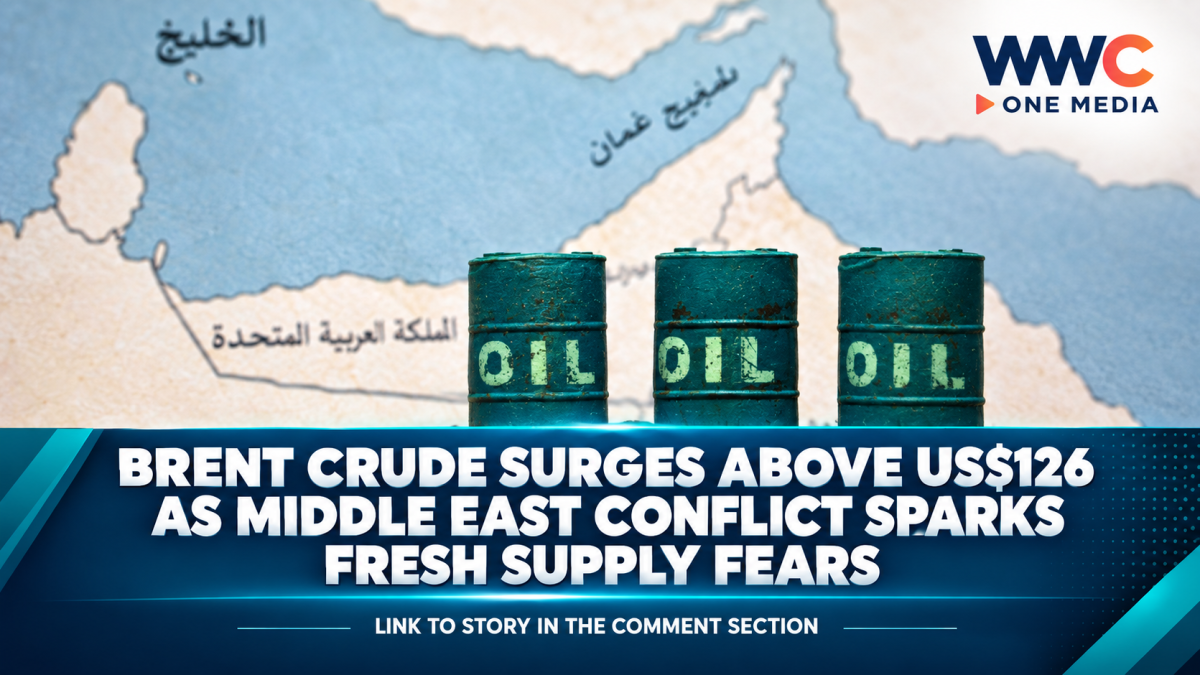
LONDON — Brent crude oil briefly surged above US$126 a barrel as escalating conflict in the Middle East intensified fears of major disruptions to global energy supplies.
The sharp rise came as renewed military action and attacks on energy infrastructure raised concerns about oil production and shipping routes across the region.
Brent crude later pulled back from its intraday high, highlighting the extreme volatility facing global energy markets as investors reacted to rapidly changing developments.
Conflict fuels fears over oil supplies
Oil markets have been under pressure as the conflict in the Middle East threatens production facilities, shipping routes and the movement of crude through strategically important waterways.
The Strait of Hormuz remains a major concern because of its importance to global oil exports.
Any prolonged disruption to shipping through the region could significantly tighten global supplies and push prices even higher.
Recent attacks and military operations have added to uncertainty, with traders closely monitoring whether the conflict could spread further and affect more energy infrastructure.
Oil prices hit extreme levels
The latest surge pushed Brent crude above US$126 per barrel during trading before prices retreated.
The movement reflects how quickly oil markets can react to geopolitical developments.
Earlier in 2026, Brent prices had also climbed sharply as conflict disrupted energy supplies, with prices reaching similar levels during previous periods of intense fighting.
Oil has since remained highly volatile, with prices moving sharply depending on developments surrounding military action, negotiations and the outlook for shipping routes.
Shipping routes remain under pressure
One of the biggest concerns for energy markets is the continued disruption to oil shipments.
The Strait of Hormuz is one of the world’s most strategically important energy corridors, carrying large volumes of crude and other petroleum products.
Alternative routes can help reduce the impact of disruptions, but they cannot fully replace the capacity of the region’s main shipping lanes.
Analysts have warned that a prolonged reduction in oil flows could place further pressure on global supplies.
Higher oil prices could drive inflation
The surge in crude prices could have consequences beyond energy markets.
Higher oil prices can increase costs for:
- Transport
- Manufacturing
- Airlines
- Shipping
- Food production
- Consumer goods
If elevated prices are sustained, businesses may pass higher costs on to consumers.
That could create fresh inflation pressures at a time when governments and central banks are already closely watching economic conditions.
Markets brace for more volatility
Investors are now watching several developments that could determine where oil prices move next.
These include:
- Further military escalation
- Damage to energy infrastructure
- Disruptions to oil shipping
- Changes in production levels
- Progress in diplomatic negotiations
- The availability of alternative global supplies
Some analysts believe prices could remain elevated if supply disruptions continue, while others point to increased production outside the Middle East and alternative shipping routes as factors that could help limit further gains.
The bottom line
Brent crude briefly climbed above US$126 a barrel as escalating conflict in the Middle East triggered fresh fears over global oil supplies.
The sharp rise underscores the growing pressure on energy markets as military action threatens oil infrastructure and major shipping routes.
While prices later retreated from their peak, the latest surge shows how vulnerable global oil markets remain to developments in the region.
With conflict continuing and supply routes under pressure, traders are bracing for further volatility in the days ahead.
WWC ONE MEDIA J.M.D




Leave a Reply