
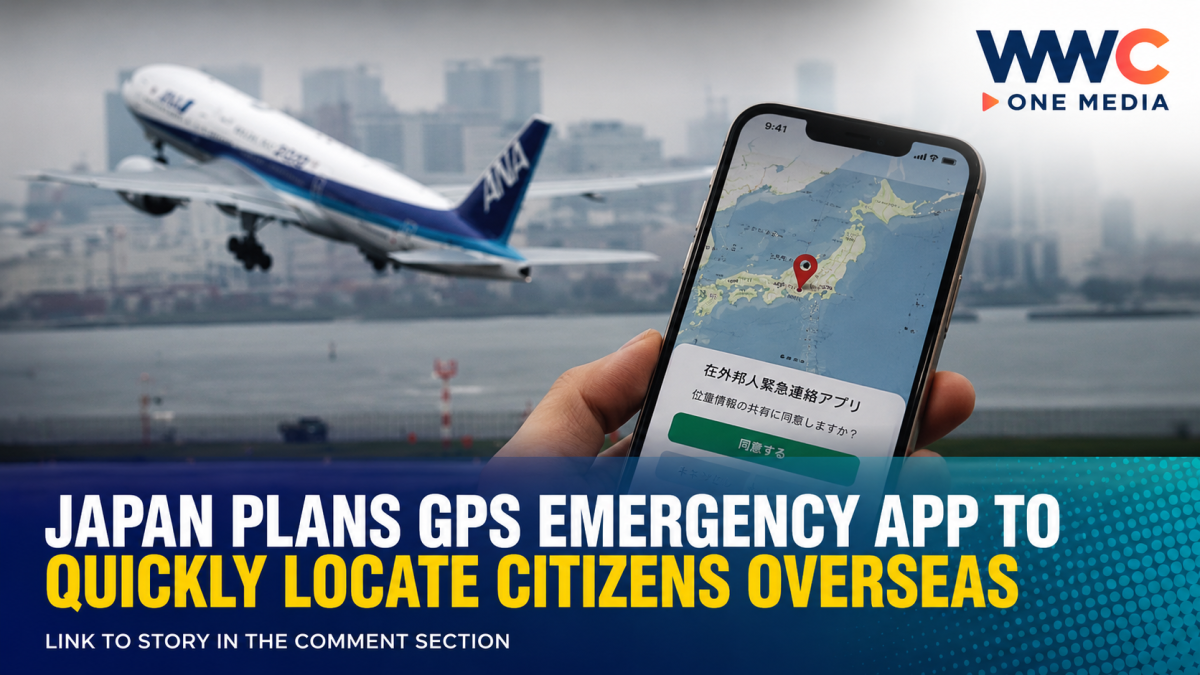
Japan is preparing a new smartphone app that could fundamentally change how the government locates and checks on Japanese citizens caught in overseas emergencies.
The Foreign Ministry is developing a GPS-enabled system designed to help officials determine the whereabouts and safety of Japanese nationals living, working or traveling abroad during major disasters, armed conflicts and other emergencies. The ministry is targeting fiscal 2027 for the start of operations.
The key change: location sharing with consent
Under the proposed system, users would consent to having their location information accessed. The aim is not simply to create a location database, but to give Japanese diplomatic authorities a faster way to identify where citizens may be when conventional communication breaks down.
The Foreign Ministry has traditionally relied heavily on telephone and other communications to check the safety of Japanese nationals after conflicts or major disasters. That approach can become difficult when telecommunications networks are damaged, overloaded or disrupted.
The planned app is being designed to provide location information even in circumstances where mobile reception is poor, while officials are also considering an in-app system that could send users a safety-check message and receive their responses.
It could also replace or absorb existing services
The proposed platform is expected to bring together functions currently spread across Japan’s overseas registration and safety-information systems.
One major service is Tabi-Regi, launched in 2014. It provides Japanese travelers with safety information about destinations and can be used to communicate important warnings during overseas emergencies. The Foreign Ministry’s current system also supports the Overseas Residential Registration required for Japanese citizens staying abroad for three months or longer.
The new application could eventually allow people staying overseas for extended periods to submit required documents and apply for certificates through the same platform, according to reports.
Why Japan says a new system is needed
One of the problems facing Tabi-Regi is awareness.
A government survey reportedly found that fewer than 20% of respondents knew about Tabi-Regi, while awareness among people traveling overseas was around 30%. At the same time, approximately 80% of respondents said they would agree to the government using their location information during an emergency.
That gap — relatively low awareness of existing services but strong willingness to share location information during a crisis — appears to be one of the factors behind the new initiative.
A senior Foreign Ministry official described Tabi-Regi’s low visibility as a serious problem and said the government wants the new system to be more user-friendly.
Japan already has GPS-related safety technology
The planned system should not be confused with Japan’s existing Overseas Safety App.
The current official app uses a smartphone’s GPS capability to display safety information relevant to a user’s location, but the Foreign Ministry states that it does not collect users’ GPS information through that application.
The proposed new platform would represent a significant shift because, with user consent, location information could be used by authorities to help establish where Japanese nationals are located during serious overseas emergencies.
What this means for Japanese travelers
If implemented as planned, the system could give Japanese embassies and consulates another tool for rapidly identifying citizens who may be trapped in conflict zones or affected by earthquakes, floods, major accidents or other disasters.
It would also consolidate several functions — safety alerts, emergency confirmation and potentially overseas-stay paperwork — into a single smartphone platform.
However, the project is still under development, and the precise technical specifications, privacy safeguards and operational rules have not yet been fully announced. The reported target is fiscal 2027, so the system should not be treated as an operational GPS-tracking service today.
Japan’s existing Tabi-Regi and Overseas Residential Registration systems remain important for travelers and long-term residents in the meantime. The Foreign Ministry says travelers can register with Tabi-Regi to receive destination safety information and emergency communications, while people staying in one country for three months or longer are required to submit an overseas residential registration.
Why this matters
The proposal reflects a broader shift in disaster and consular preparedness: when a crisis cuts phone lines or disrupts communications, knowing where citizens are can become just as important as being able to call them.
If Japan can combine consent-based location sharing with emergency messaging and existing overseas registration systems, officials could potentially move from waiting for individual travelers to respond to having a much clearer picture of where their citizens are during a rapidly unfolding crisis.
WWC ONE MEDIA MJE




Leave a Reply