Viktor Orbán’s Brother Detained in Hungarian Human-Smuggling Probe Involving 100 Vietnamese Nationals — Is a Bigger Political Scandal About to Unfold?
BUDAPEST, Hungary — November 11, 2026 — A widening criminal investigation in Hungary has reached the family of one of Europe’s most controversial former political leaders after authorities detained Áron Orbán, the younger brother of former Prime Minister Viktor Orbán, over suspected people-smuggling and influence peddling.
The investigation centers on an alleged visa-facilitation network that reportedly helped more than 100 Vietnamese nationals obtain Hungarian residence permits in 2024, with many allegedly intending to travel onward to Western European countries.
Hungarian authorities arrested four individuals and conducted coordinated searches at multiple locations in Budapest and Pest County on November 9, according to reports by the Associated Press and Reuters.
The case is attracting international attention not only because of the alleged immigration-related offenses but also because it involves a relative of a former prime minister whose 16-year administration ended following a major election defeat in April 2026.
Prime Minister Péter Magyar has presented the investigation as part of his government’s wider campaign to examine alleged corruption and abuses of power under the previous administration.
Viktor Orbán, however, has accused the new government of politically motivated persecution, arguing that his brother is being used to target him.
The investigation now raises a bigger question: Could the alleged visa-smuggling operation expose a wider network of political and business connections that operated during Orbán’s years in power?
Áron Orbán Detained as Police Investigate Alleged Visa-Smuggling Network
The Hungarian government confirmed the detention of Áron Orbán following coordinated law-enforcement operations involving the National Bureau of Investigation (NNI) and the National Office for Asset Recovery and Protection (NVVH).
Police confirmed that four suspects were apprehended and that searches were conducted at four locations in and around Budapest.
Authorities said the investigation concerns suspected people-smuggling carried out as part of a criminal conspiracy for financial gain.
Investigators allege that the group facilitated Hungarian residence permits for more than 100 Vietnamese nationals during 2024.
Many of the individuals reportedly intended to use Hungary as an entry point before traveling onward to other Western European countries.
Police also indicated that one suspect was suspected of influence peddling connected with obtaining the residence permits.
Importantly, Hungarian authorities did not initially publicly identify all four suspects in their official announcement.
The identification of Áron Orbán came through statements by Prime Minister Péter Magyar, reporting by Hungarian media and subsequent coverage of the detention by international news organizations.
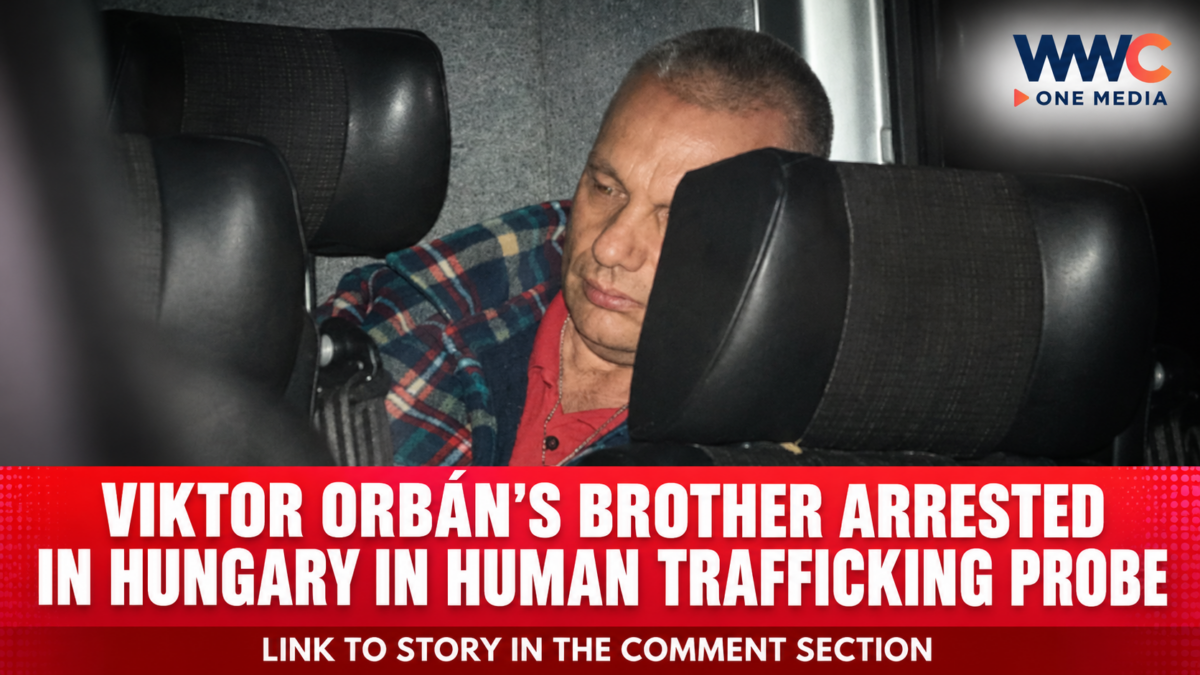
Photographs published by Hungarian outlet HVG reportedly showed Áron Orbán arriving at a Budapest detention facility in a police vehicle on November 9.
The distinction matters: the authorities have confirmed the investigation and arrests, while the individual allegations must still be established through the legal process.
Why More Than 100 Vietnamese Nationals Are at the Center of the Investigation
The investigation focuses on an alleged arrangement involving foreign workers and Hungarian residence permits.
According to police information reported by the Associated Press, the suspects allegedly helped more than 100 Vietnamese nationals obtain residence permits in 2024.
Investigators are examining whether political connections were used to speed up administrative procedures in exchange for substantial payments.
The alleged scheme raises questions about how foreign workers were recruited, how their immigration applications were processed and whether individuals connected to the operation received money for providing access to government procedures.
Reuters reported that the alleged arrangement involved fees collected from visa applicants through recruitment-related channels and connections with Hungary’s diplomatic missions in Vietnam.
Authorities are also examining the possibility that influence was used to obtain faster approvals.
If established, the allegations could point to abuses involving immigration procedures, recruitment arrangements and access to government services.
However, the existence of a visa-facilitation arrangement does not automatically establish that every Vietnamese national involved was knowingly participating in illegal activity.
Some foreign applicants may have been ordinary workers seeking employment opportunities.
Investigators must determine who organized the alleged scheme, who benefited financially and whether the applicants were misled or exploited.
Hungary’s New Prime Minister Turns Up Pressure on Orbán’s Former Network
The investigation comes during a major political transition in Hungary.
Péter Magyar’s Tisza party defeated Viktor Orbán’s Fidesz party in the April 2026 parliamentary election, ending Orbán’s 16 consecutive years in government.
Magyar campaigned on promises to investigate alleged corruption, improve government accountability and examine the use of public resources during the previous administration.
Following his election victory, the new government established an asset-recovery and protection office to investigate suspected financial misconduct and recover public assets where wrongdoing is established.
The investigation involving Áron Orbán has become one of the most politically sensitive cases associated with that effort.
Magyar has publicly commented on the detention and presented it as part of the government’s broader accountability campaign.
The operation has also attracted attention because investigators are examining alleged activities that took place while Viktor Orbán was still prime minister.
But the investigation does not, by itself, establish that the former prime minister directed or participated in the alleged operation.
No evidence presented in the reports establishes that Viktor Orbán personally committed the alleged immigration offenses.
The legal responsibility of each suspect must be examined separately.
Viktor Orbán Calls the Arrest Political Revenge
Viktor Orbán has rejected the political implications of the investigation and described the detention of his brother as an attempt to target him.
In a public statement, the former prime minister said he believed he was the real target and that his younger brother was being used as a means to reach him.
Orbán characterized the government’s actions as political persecution rather than genuine accountability.
His Fidesz party also added Áron Orbán to a list of individuals it describes as political prisoners.
The accusation has intensified the political confrontation between Hungary’s former governing party and Magyar’s new administration.
For the opposition, the case raises concerns about whether anti-corruption investigations are being used fairly and consistently.
For the government, the investigation represents an opportunity to demonstrate that individuals with political connections are not beyond legal scrutiny.
These competing positions will likely remain part of the political debate as investigators pursue the case.
Neither political accusation nor government statements should substitute for evidence established in court.
Hungarian Investigative Journalists Had Raised Questions About the Visa Business Earlier
The latest detention did not emerge without prior reporting.
Hungarian investigative outlet Telex published earlier investigations into Áron Orbán’s business associates and alleged connections involving foreign-worker recruitment and visa applications.
Its reporting examined relationships between individuals involved in the visa business and people with connections to political circles during Viktor Orbán’s administration.
Telex also reported on police activity at a property associated with a company owned by Áron Orbán.
The publication described how earlier allegations involving business associates and visa applications had developed into a wider investigation.
Its reporting is important because it provides background that goes beyond the immediate police operation.
It also illustrates how local investigative journalism can identify potential connections that later become subjects of official inquiries.
However, earlier reporting and allegations are not equivalent to judicial findings.
Investigators still need to establish which individuals were involved, what roles they performed and whether any laws were violated.
This Is Not the First High-Profile Investigation Targeting Orbán-Era Figures
Áron Orbán’s detention is part of a wider series of investigations involving people who held important positions or had close connections during the previous administration.
In October 2026, Hungarian authorities detained former central bank governor György Matolcsy in a separate investigation involving suspected financial misconduct.
Matolcsy is suspected of involvement in the alleged misuse of approximately $818 million in public assets connected with a foundation established during his tenure.
Matolcsy has denied wrongdoing.
Authorities have also detained two former ministers in separate investigations involving alleged misuse of public funds and bribery.
These cases have increased scrutiny of the financial and political networks that operated during Orbán’s 16-year administration.
The new government’s actions have been presented as part of a broader effort to investigate possible abuses of office.
Nevertheless, the cases involve separate allegations and different individuals.
They should not be treated as proof that all former officials or people associated with the previous government committed crimes.
Why the Investigation Could Have Wider European Implications
The alleged visa operation also raises concerns beyond Hungary’s domestic political dispute.
Hungary is part of the European Union’s Schengen area, which allows qualifying travelers to move across participating European countries without routine internal border checks.
This makes the integrity of residence-permit and immigration procedures particularly important.
If authorities establish that residence permits were unlawfully obtained through bribery, influence peddling or organized smuggling, the case could raise questions about how immigration controls were administered.
The investigation could also attract attention from European authorities concerned about cross-border criminal networks, irregular migration and the exploitation of foreign workers.
Vietnamese nationals seeking employment abroad may be particularly vulnerable to deceptive recruitment practices, excessive fees and misleading promises about immigration status.
However, it would be inaccurate to suggest that the Vietnamese applicants were necessarily victims or participants in criminal activity without individual evidence.
The investigation must distinguish between organizers, intermediaries, recruiters and the foreign nationals who applied for permits.
That distinction will be essential in determining the actual scale of the alleged operation.
What Happens Next in the Hungary Investigation?
The immediate priority for Hungarian investigators is to establish the roles of the four detained suspects and determine whether additional individuals were involved.
Authorities will need to examine financial transactions, communications, immigration applications, recruitment arrangements and records involving the relevant diplomatic and administrative procedures.
Several questions remain unanswered:
- Who allegedly organized the visa-facilitation network?
- How much money was collected from applicants?
- Which individuals allegedly used political connections to influence immigration procedures?
- Were government officials involved in approving or accelerating applications?
- Did the alleged network extend beyond the more than 100 Vietnamese nationals identified in the investigation?
- Could investigators uncover additional business or political connections?
The answers could determine whether the case remains focused on a limited group of suspects or develops into a broader investigation involving immigration administration and alleged political influence.
For now, the four arrests and the reported detention of Áron Orbán represent a significant development, but they do not establish the guilt of any suspect.
The Bottom Line: A Visa Investigation Is Now Testing Hungary’s New Political Leadership
The detention of Áron Orbán has transformed an investigation into alleged people-smuggling and influence peddling into one of Hungary’s most politically sensitive cases.
The alleged involvement of more than 100 Vietnamese nationals, the examination of residence-permit procedures and the reported connections to political circles have attracted attention well beyond Budapest.
For Prime Minister Péter Magyar, the investigation represents an important test of his promise to pursue accountability following the end of Viktor Orbán’s 16-year administration.
For the former prime minister, the detention of his brother has become another battleground in an increasingly bitter political confrontation.
But the most important question is not which political camp wins the argument.
It is whether investigators can establish the truth about the alleged visa operation, identify those who benefited and prove any criminal conduct through a fair legal process.
Could the detention of Viktor Orbán’s younger brother be the beginning of a much wider investigation into Hungary’s former political and business networks — or will the case ultimately expose the limits of the new government’s anti-corruption campaign?