President Ferdinand Marcos Jr. has vowed that the government will do everything possible to defend the Philippine peso after the currency weakened beyond the ₱64-per-dollar level, raising concerns that it could slide further and increase the cost of living.
Marcos issued the assurance on Wednesday, October 28, as the peso came under renewed pressure from a stronger US dollar, elevated oil prices and uncertainty in global financial markets.
The President urged the public not to panic, saying the country has the means to protect the local currency and limit the effects of its depreciation.
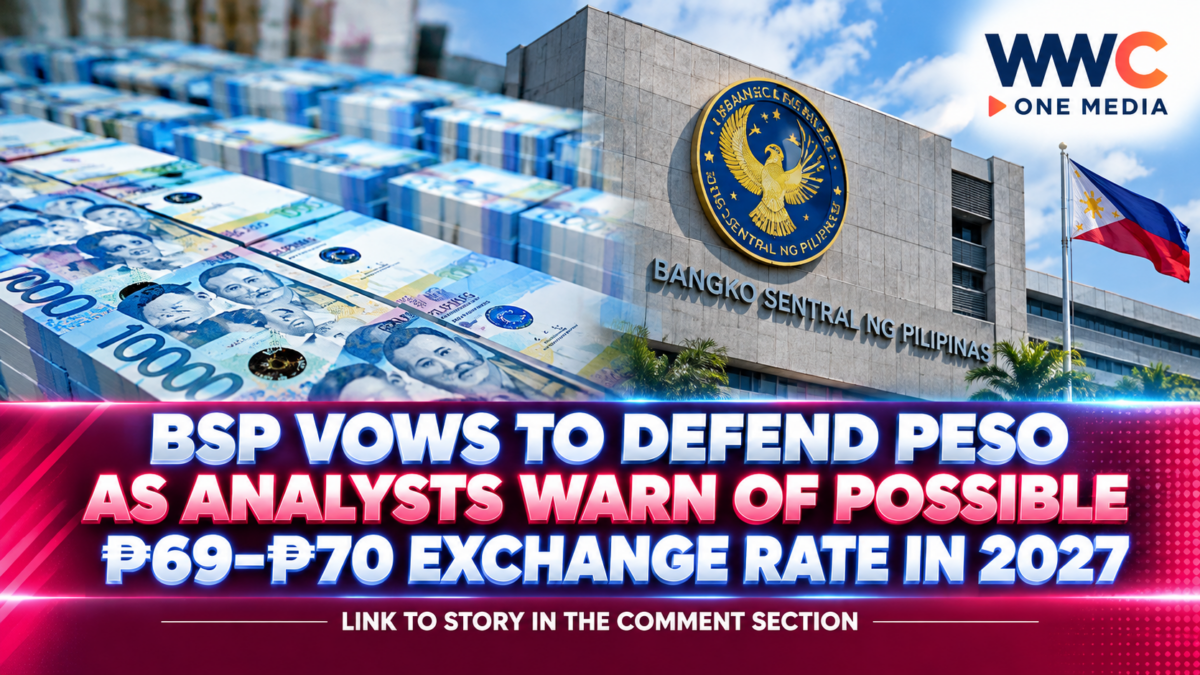
The warning came as economists raised the possibility of the peso reaching ₱65 against the US dollar before the end of 2026, with a worst-case projection placing it between ₱69 and ₱70 in 2027.
Marcos Says Government Has Means to Defend the Peso
Marcos said the government would continue taking measures to prevent the peso from weakening further against the US dollar.
He pointed to the country’s foreign exchange reserves, which he described as healthy and available to support efforts to stabilise the currency.
A central bank can help defend a currency by selling foreign exchange reserves and purchasing its domestic currency in the market. It can also use monetary policy, including interest-rate adjustments, to influence capital flows and currency demand.
However, these measures have limitations. Sustained intervention can reduce foreign reserves, while higher interest rates can make borrowing more expensive for households and businesses.
The President also acknowledged that monetary policy alone cannot control the prices of essential goods, particularly food and oil.
He said the administration was closely monitoring food prices and implementing measures intended to protect consumers from further increases.
Former BSP Governor Warns ₱65 Could Be Breached
Former Bangko Sentral ng Pilipinas (BSP) governor Jose Cuisia Jr. warned that the peso could reach ₱65 against the dollar sooner than previously expected.
Cuisia said the possibility had become increasingly difficult to dismiss after the currency crossed the ₱64 level.
He also cautioned that a possible interest-rate increase by the US Federal Reserve could place additional pressure on the peso by making dollar-denominated assets more attractive to investors.
However, Cuisia pointed to the seasonal increase in remittances from overseas Filipino workers during November and December as a potential source of support for the local currency.
He also stressed that the President’s public statements should not pressure the BSP into defending a particular exchange-rate level.
The central bank must retain its independence and decide whether intervention is appropriate based on economic conditions, rather than political expectations.
Peso Could Reach ₱69 to ₱70 in a Worst-Case Scenario
Bank of the Philippine Islands lead economist Emilio Neri Jr. warned that the peso could weaken to between ₱69 and ₱70 per dollar in 2027 under a worst-case scenario.
His projection assumes the currency could first reach around ₱65 by the end of 2026 before facing further pressure the following year.
Such an outcome is not a guaranteed forecast. It represents a downside scenario that could materialise if external and domestic economic conditions deteriorate.
The peso’s performance will depend on several factors, including international oil prices, US monetary policy, foreign investment flows, the country’s trade position and geopolitical developments.
A prolonged period of elevated oil prices could be particularly damaging because the Philippines relies heavily on imported fuel.
Foreign Reserves and BSP Policy Remain Critical
The BSP has several tools to manage excessive currency volatility, but economists have cautioned against using foreign reserves to defend an arbitrary exchange-rate target.
Foreign reserves are also needed to pay for imports, service external debt and maintain confidence in the country’s ability to meet international financial obligations.
The BSP recently raised its Target Reverse Repurchase Rate by 50 basis points, increasing its key policy rate and the interest rates applied to its overnight deposit and lending facilities.
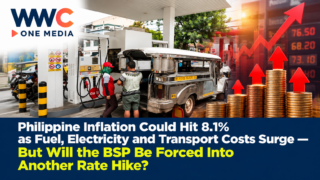
The move came as inflation accelerated to 7.2 percent in September 2026, up from 6.1 percent in August, according to the Philippine Statistics Authority.
Higher food, housing, utilities and transportation costs contributed to the increase.
The combination of a weaker peso and rising inflation presents a difficult challenge for monetary authorities, as further interest-rate increases could help support the currency but may also weigh on economic activity.
How a Weaker Peso Could Affect Filipino Households
A declining peso can make imported products and raw materials more expensive because businesses need more pesos to purchase the same amount of goods priced in US dollars.
The effects could be felt across several sectors:
- Fuel and transportation: Imported petroleum becomes more expensive, potentially increasing fuel prices and transport costs.
- Electricity: Power producers that purchase fuel or equipment overseas may face higher expenses, which could eventually affect electricity rates.
- Food: Imported wheat, animal feed and other agricultural inputs may become more expensive, adding pressure to food prices.
- Medicine: Pharmaceutical products and medical supplies sourced overseas could cost more.
- Businesses: Companies with dollar-denominated loans or imported production materials may face higher operating and financing costs.
Filipinos receiving remittances from relatives working abroad could benefit from receiving more pesos when converting foreign currency. However, that advantage may be offset by higher prices for everyday necessities.
Government Faces Pressure to Control Inflation
Marcos said the administration was working to contain food prices, including through measures intended to increase the availability of agricultural commodities.
The government has also raised the minimum access volume for corn imports to 500,000 metric tons this year as part of efforts to support supply and manage prices amid El Niño concerns.
Oil prices, however, remain more difficult for the government to control because domestic petroleum prices are influenced by international markets and the country’s oil deregulation framework.
The latest developments highlight the challenge facing the administration and the BSP: protecting the peso while preventing further inflation from weakening household purchasing power.
Although the government has promised to defend the currency, economists warn that the outcome will depend largely on global financial conditions and the Philippines’ ability to strengthen its economic fundamentals.
For Filipino consumers, the bigger concern is whether continued peso depreciation will translate into another round of higher prices for fuel, food, electricity and other essential expenses.