
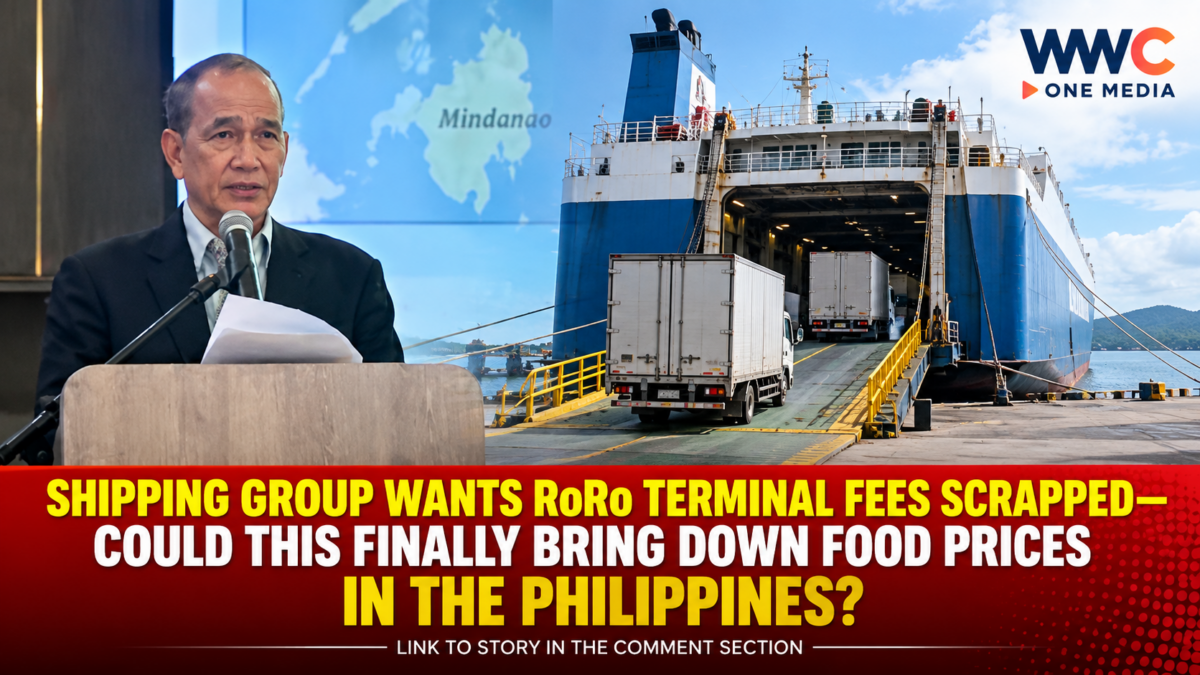
A major domestic shipping industry group is urging the government to abolish roll-on/roll-off (RoRo) terminal fees, arguing that lower transportation costs could help ease pressure on food prices and make businesses more competitive across the Philippines.
The Philippine Coastwise Shipping Association (PCSA) is calling for reforms to the country’s logistics system, including the removal of RoRo terminal fees and the development of additional expressway corridors in the Visayas and Mindanao.
The proposals aim to address transportation expenses that affect the movement of agricultural products, construction materials and other essential goods between Philippine islands.
According to a report by SunStar Cebu published on October 23, PCSA chairman Lucio Lim Jr. argued that high logistics expenses have consequences beyond the shipping industry, influencing consumer prices and the ability of businesses to compete.
“When logistical costs rise, food prices rise,” Lim said, emphasizing the connection between transportation efficiency and the everyday cost of living.
RoRo Fees Could Account for a Significant Share of Freight Costs
RoRo vessels allow trucks, buses and other wheeled vehicles to board and disembark ships, providing an important connection between road networks separated by bodies of water.
However, the PCSA says terminal fees add to the cost of moving cargo through these facilities.
The association estimates that RoRo terminal fees account for approximately 5% to 10% of the freight cost of a 10-wheel truck, with the proportion reportedly reaching as high as 15% on some short-haul routes.
For transport operators handling frequent shipments, these charges can accumulate and increase the cost of delivering goods to markets.
The industry group’s position is that eliminating the fees could reduce one component of domestic freight expenses. Whether consumers would see lower prices, however, would depend on how much of the savings businesses pass on to buyers.
Why the Proposal Matters to Filipino Consumers
The Philippines relies heavily on maritime transportation to connect its many islands and move goods between production areas, ports and major markets.
When shipping and trucking expenses increase, businesses may face higher costs for distributing food, construction supplies and other necessities.
Those additional expenses can contribute to higher retail prices, although fuel costs, weather disruptions, supply shortages, competition and other factors also influence what consumers pay.
The PCSA’s proposal therefore places port charges within a wider debate over how to make domestic transportation more efficient and reduce the cost of doing business.
The potential benefit is significant: if the government removes eligible fees and operators pass on the savings, businesses could have more room to manage distribution expenses and consumers could benefit from more affordable goods.
However, the association’s estimates do not establish how much prices would fall nationwide, and no guaranteed retail price reduction has been announced.
Government Has Already Introduced Targeted RoRo Fee Relief
The latest proposal comes after the government introduced a separate measure to reduce transportation expenses for agricultural shipments.
In March 2026, the Philippine Ports Authority (PPA) announced that the RoRo terminal fee would be reduced to ₱1 for eligible vehicles carrying raw and unprocessed agricultural products. The measure was announced as a six-month policy, with continuation or adjustments dependent on conditions and its impact.
Eligible goods include rice, corn, fruits, vegetables, fishery products, livestock and poultry, subject to the policy’s requirements. The reduced rate does not automatically apply to every vehicle or all types of cargo.
Philstar.com and the Philippine Information Agency also reported on government relief measures for agricultural transport and shipping operators amid rising fuel costs.
These targeted measures demonstrate that authorities have already used fee reductions to support the movement of essential goods. The PCSA’s latest demand goes further by advocating the removal of RoRo terminal fees as a broader policy rather than relying only on specific relief measures.
PCSA Also Wants New Expressway Corridors
The association is also asking the government to commission feasibility studies for proposed expressway corridors in the Visayas and Mindanao.
The eight proposed routes include Bogo City to Santander in Cebu, Caticlan to Iloilo City, Bacolod to Dumaguete, Calapan to Roxas in Oriental Mindoro, Dapitan to Zamboanga City, Aroroy to Esperanza in Masbate, Allen in Samar to Liloan in Southern Leyte, and Surigao City to Davao City.
The proposed corridors range from approximately 121 to 406 kilometers, according to the SunStar report.
The PCSA suggested that feasibility studies and potential construction could be pursued through public-private partnerships or multiyear congressional appropriations.
The group also proposed treating RoRo facilities as extensions of the national highway network, with the management and maintenance of certain ports transferred from existing port authorities to the Department of Public Works and Highways.
Such a change would require government consideration of the appropriate legal, administrative and funding arrangements before implementation.
Broader Logistics Reforms Remain a Challenge
The shipping group’s proposal comes amid wider efforts to address high logistics expenses and inefficiencies in Philippine ports.
In an October 22 report, PortCalls Asia said a proposed joint administrative order addressing port congestion, logistics costs and the return of empty containers had been signed by the Department of Finance, with other participating agencies reviewing the measure.
The proposed order covers issues involving shipping charges, port operations and other logistics providers. It represents a separate policy initiative from the PCSA’s call to eliminate RoRo terminal fees.
The broader challenge is not simply reducing individual charges. Authorities must also consider how ports will fund operations, maintenance and infrastructure improvements if existing revenue sources are reduced or removed.
The government would also need to assess whether fee savings are passed on to consumers, how the policy would affect different shipping routes and cargo categories, and whether alternative funding arrangements are sustainable.
Will Removing RoRo Fees Make Goods Cheaper?
The PCSA’s proposal puts a key question before policymakers: can reducing the cost of moving goods between islands translate into meaningful savings for Filipino households?
Scrapping terminal fees could ease expenses for shipping and trucking operators, particularly on routes where those charges represent a substantial share of freight costs. Better road connections could also improve the movement of goods between ports and inland markets.
But the outcome will depend on implementation, the cost of maintaining port infrastructure, market competition and whether operators pass their savings on to customers.
For now, the abolition of RoRo terminal fees remains an industry proposal, not a confirmed nationwide government policy.
The next major development to watch is whether the government formally evaluates the PCSA’s recommendations and announces concrete steps to reduce domestic logistics costs.
For Filipino consumers, the stakes extend beyond shipping fees: more efficient transportation could help businesses move goods at lower cost, but the real test will be whether those savings eventually reach supermarket shelves and public markets.










