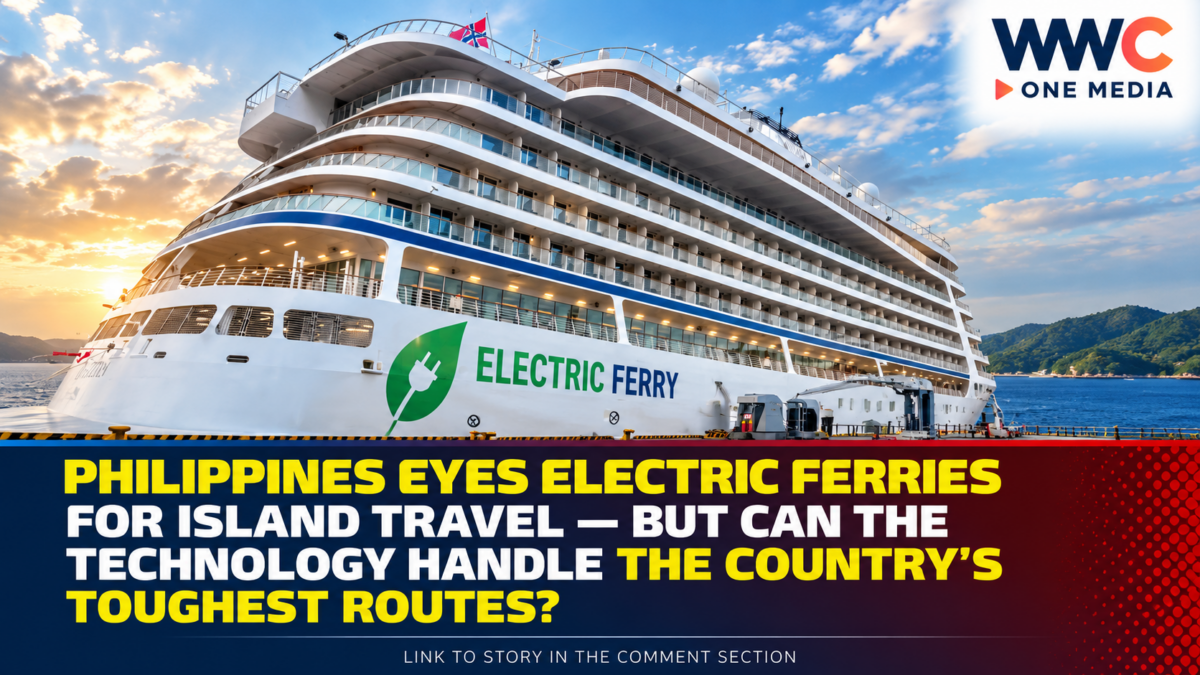
MANILA, Philippines — The Philippines is exploring a cleaner future for maritime transportation, with the Department of Transportation (DOTr) and the Maritime Industry Authority (MARINA) looking at pilot testing hybrid and fully electric ferries as part of efforts to modernize the country’s domestic shipping sector.
The proposed initiative could help reduce dependence on diesel, cut emissions and potentially lower operating expenses on suitable routes. But the transition will require significant planning, including investments in charging stations, port infrastructure, vessel safety systems and technology suited to Philippine waters.
The effort builds on a broader ferry-decarbonization study supported by the World Bank and involving the country’s maritime agencies and industry stakeholders. MARINA’s March 2026 newsletter outlined potential pilot projects ranging from battery-electric ferries on short routes to hybrid vessels and fuel-efficiency improvements for longer journeys.
The goal is not simply to replace diesel engines with batteries. It is to identify where cleaner propulsion can operate reliably, make economic sense and improve transportation for passengers and communities.
Why the Philippines Is Considering Electric Ferries
With thousands of islands, the Philippines depends on boats and ships to connect communities, transport goods and support tourism. Many domestic vessels still rely on conventional marine fuels, exposing operators to fuel-price fluctuations and contributing to air pollution and greenhouse gas emissions.
Hybrid ferries combine electric propulsion with conventional power systems, allowing operators to use electricity under suitable conditions while retaining another source of propulsion when needed.
Fully electric ferries use batteries to power their motors and produce no exhaust emissions from onboard propulsion while operating. Their overall environmental benefits also depend on how the electricity used for charging is generated.
For short, predictable routes with regular stops and accessible charging facilities, electric ferries may offer an attractive alternative. Longer voyages, particularly those carrying vehicles or heavy cargo, present different technical and economic challenges.
That is why the proposed pilot approach considers different technologies for different routes rather than assuming one vessel design will work everywhere.
M/B Dalaray: A Filipino-Built Electric Ferry Already Exists
The Philippines is not starting from scratch.
On October 6, 2025, the Department of Science and Technology (DOST) and the University of the Philippines Diliman launched M/B Dalaray, a locally developed battery-electric passenger ferry intended for Pasig River operations.
Developed with support from DOST’s Philippine Council for Industry, Energy and Emerging Technology Research and Development, the project involved collaboration with MARINA, the Metropolitan Manila Development Authority and other partners.
According to DOST-PCIEERD, the vessel features:
- A battery system with a capacity of 160 kilowatt-hours.
- Two electric motors rated at 50 kilowatts each.
- An aluminum catamaran hull.
- Passenger capacity for 40 people, plus three crew members.
- A reported range of approximately 45 kilometers at eight knots.
- A charging time of around two to three hours.
The project demonstrates the potential of electric propulsion for urban waterways, where routes are relatively predictable and vessels can return to designated charging facilities.
However, a successful demonstration on the Pasig River does not automatically establish that battery-electric technology is suitable for every inter-island route. Sea conditions, distance, passenger and cargo loads, reserve power requirements and access to charging infrastructure must all be considered.
Three Possible Paths Toward Greener Shipping
MARINA’s March 2026 newsletter described three proposed pathways under the Inter-Island Ferry Decarbonization Pilot Study.
1. Fully electric ferries
Short-distance routes, including the Iloilo–Bacolod corridor, were identified as potential candidates for electrification. Such services could be evaluated for vessel performance, charging requirements, passenger demand and operating costs.
2. Hybrid ferries
Routes such as Batangas–Calapan were identified as possible candidates for hybrid vessels. Combining electric and conventional propulsion could offer flexibility where journey length, operating schedules and charging access make fully electric operation more difficult.
3. Fuel-efficiency improvements
For longer-distance operations, upgrading existing vessels and improving fuel efficiency may provide a more practical near-term way to reduce emissions while the industry assesses other technologies.
These routes are potential pilot pathways identified in the study, not confirmation that all the proposed services have already been converted or that final implementation schedules have been established.
The next step is to turn the study’s recommendations into workable projects involving shipowners, local governments, port operators, regulators and potential investors.
Could Electric Ferries Reduce Operating Costs?
Fuel is a major expense for many shipping operators. Electric propulsion could reduce energy costs on routes where electricity is competitively priced and vessels can charge efficiently between trips.
Electric motors can also reduce engine noise and eliminate exhaust emissions from onboard propulsion. Maintenance requirements may differ from those of conventional vessels, potentially creating additional savings in some operating conditions.
But the economics are not straightforward.
Electric ferries can require substantial upfront investment in vessels, batteries, charging equipment and electrical infrastructure. Operators must also account for battery life, replacement costs, electricity tariffs, maintenance and the need to keep vessels available for scheduled trips.
Lower operating expenses would not necessarily mean cheaper tickets for passengers. Whether fares change would depend on financing arrangements, competition, government support and the commercial decisions of operators.
A pilot program would therefore need to measure actual energy consumption, reliability, maintenance requirements and total operating costs before broader adoption could be justified.
Charging Infrastructure Is a Major Hurdle
Even the most advanced electric ferry cannot provide reliable service without sufficient charging capacity.
Ports may need upgraded electrical connections, charging equipment, safety systems and trained personnel. Operators must also coordinate charging schedules with departure times to avoid delays and maintain service frequency.
Island communities may face additional challenges where electricity supply is limited or expensive. Installing charging infrastructure at every port would require careful planning, particularly for routes involving multiple destinations.
Hybrid vessels may be more practical in some locations because they can combine electric power with conventional propulsion. Fully electric ferries may be better suited to shorter routes with predictable energy requirements and dependable charging facilities.
Choosing the right technology for each route will be essential to avoid investing in vessels that cannot meet their operating needs.
Safety and Regulation Must Keep Pace
As maritime operators explore new propulsion systems, regulators must ensure that passenger and crew safety remains a priority.
Battery systems require appropriate monitoring, fire protection, emergency procedures and maintenance. Ports must also be equipped to support charging and respond to incidents involving electrical equipment.
MARINA has separately been working with the Department of Energy, Bureau of Fire Protection and Philippine Coast Guard on safety protocols for the carriage of electric and hybrid vehicles aboard domestic passenger vessels.
That work concerns the transportation of vehicles and batteries on passenger ships, which is distinct from the use of electric propulsion in a purpose-built ferry. Nevertheless, both developments underscore the need for clear technical standards and coordinated emergency procedures as electric mobility expands.
The regulatory framework must address vessel certification, battery installation, crew training, emergency response and the operating conditions under which different technologies can safely be used.
What It Could Mean for Filipino Commuters and Island Communities
Cleaner ferries could provide benefits beyond environmental protection.
In urban areas, expanded passenger services on waterways could offer an alternative to road travel and help reduce pressure on congested transport corridors. For island communities, modernized ferry operations could improve the reliability and efficiency of passenger connections where suitable routes and infrastructure are available.
However, electric propulsion alone will not resolve broader transportation challenges. Reliable schedules, adequate passenger capacity, affordable fares, well-maintained terminals and efficient connections to land transport will remain important.
For communities that depend on maritime links for work, education, tourism and trade, the real test will be whether modernized services deliver practical improvements.
What Happens Next?
The DOTr and MARINA’s interest in hybrid and fully electric ferries signals an effort to move the country’s maritime sector toward lower-emission technologies.
The immediate challenge is turning proposed pilot projects into operational services that can demonstrate safety, reliability and financial viability under Philippine conditions.
The experience of M/B Dalaray provides a local starting point, while the inter-island ferry study offers potential pathways for scaling up the approach.
Whether the transition succeeds will depend on coordinated investment, appropriate vessel selection, charging infrastructure, regulatory readiness and the willingness of operators to adopt new technology.
The big question is whether the Philippines can make electric ferries more than a promising demonstration—and turn them into a reliable, affordable part of everyday travel between its islands.