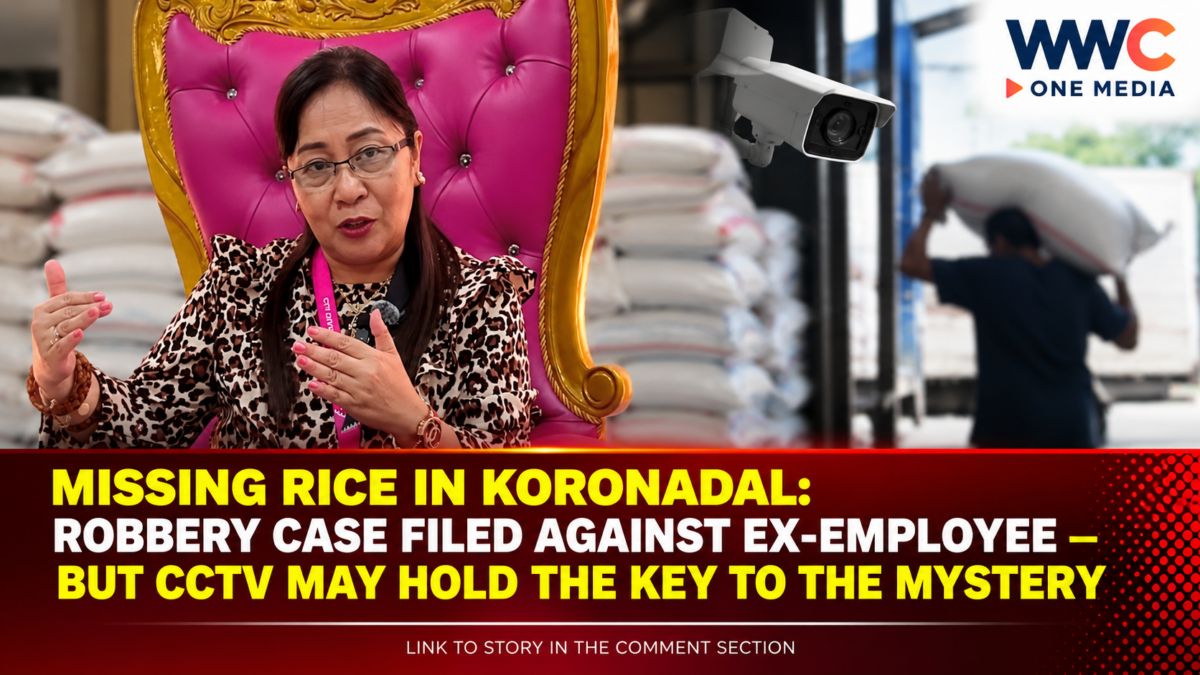
KORONADAL CITY, South Cotabato — A criminal complaint has been filed against a former city employee over rice stocks reportedly missing from a government warehouse in Koronadal City, prompting renewed scrutiny of how public supplies are stored, monitored and protected.
Mayor Erlinda P. Araquil confirmed the filing on Wednesday, October 21, 2026, and shared a video of herself taking an oath before the City Prosecutor’s Office, according to a report by Politiko.
The complaint stems from the reported disappearance of rice intended for the city’s rice distribution program. Authorities will need to establish the circumstances surrounding the missing stocks and determine whether the available evidence supports the allegations.
The case has drawn attention because of the mayor’s account of CCTV footage showing a tricycle parking near the warehouse before an individual entered through the main door.
Araquil said the footage suggested that the person had access to a key to the facility.
However, the footage and the complaint alone do not establish who is legally responsible for the missing rice. The allegations remain subject to investigation and the applicable legal process.
Mayor Confirms Complaint Over Missing Rice
Araquil publicly confirmed that a complaint had been filed, reiterating her administration’s position that illegal activities involving public resources would not be tolerated.
The missing rice was reportedly stored at a city warehouse and intended for a government distribution program. The disappearance raises questions about inventory controls, warehouse access and the procedures used to account for rice stocks before they are distributed to beneficiaries.
The mayor also emphasized that government employees and other individuals must comply with the law when handling public property.
At this stage, publicly available reporting does not establish the exact quantity or monetary value of the rice involved, nor does it provide a complete accounting of the circumstances surrounding its disappearance.
Those details will be important in determining the scope of the alleged loss.
What CCTV Footage Reportedly Showed
In an earlier media interview, Araquil described CCTV footage showing a tricycle arriving and parking near the warehouse. She said an individual subsequently entered through the main door.
According to the mayor, the footage suggested that the individual possessed a key to the facility.
That detail could become significant as investigators examine who had authorized access to the warehouse, whether entry records were maintained and whether inventory discrepancies can be linked to specific dates or movements of rice stocks.
Investigators may also need to compare CCTV recordings with warehouse logs, stock inventories, delivery documents and records showing who was authorized to remove supplies.
The mayor’s account is an important part of the reported case, but the footage’s full contents and evidentiary findings have not been independently established in the publicly available reports reviewed for this article.
Why Missing Government Rice Matters
Rice stocks intended for public distribution are more than warehouse inventory. They represent resources allocated to programs designed to serve residents and eligible beneficiaries.
When supplies go missing, the consequences can extend beyond the immediate financial value of the goods. A shortage may complicate distribution schedules, create additional administrative costs and weaken public confidence in the safeguards protecting government resources.
The case also highlights the importance of transparent inventory systems, controlled access to storage facilities and regular reconciliation of physical stocks against official records.
For local governments, these safeguards help ensure that goods purchased or stored for public programs reach their intended recipients.
What Happens After the Complaint Is Filed?
The filing of a criminal complaint begins a legal process; it does not automatically establish that a crime occurred or that the person named in the complaint is guilty.
The City Prosecutor’s Office will have to assess the allegations and supporting evidence under the applicable procedures. Depending on the findings, the case may proceed further or the complaint may be dismissed if the evidence is insufficient.
Investigators may also examine whether there were weaknesses in warehouse security, gaps in inventory documentation or other circumstances that could explain the missing stocks.
The outcome will depend on the evidence and the findings of the appropriate authorities.
Questions That Still Need Answers
Several important details remain unclear from the reports currently available:
- How many sacks of rice are missing, and what is their estimated value?
- When were the stocks last verified and accounted for?
- Who had authorized access to the warehouse?
- What does the complete CCTV recording show?
- Have authorities recovered any of the missing rice or identified other possible participants?
These questions are central to establishing what happened and determining whether additional administrative or criminal proceedings are warranted.
For now, the case places warehouse security and the protection of public rice supplies under scrutiny. The next major development will be whether investigators can use the CCTV footage, inventory records and other evidence to establish how the rice went missing—and who, if anyone, should be held legally accountable.