
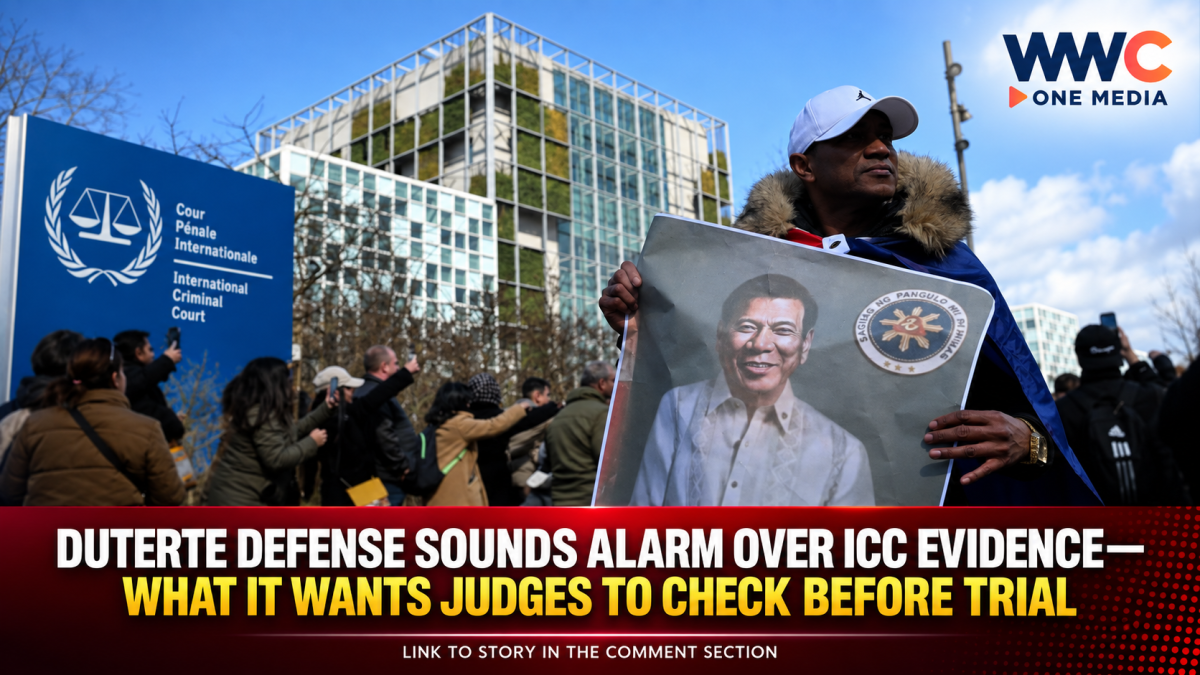
MANILA, Philippines — Former President Rodrigo Duterte’s defense team is asking the International Criminal Court (ICC) to tighten its procedures for handling digital evidence, warning that online material can be difficult to authenticate and may include manipulated, duplicated or unreliable content.
The request comes less than three months before Duterte’s scheduled November 30, 2026 trial in The Hague, putting the handling of electronic evidence at the center of another pre-trial dispute.
In a filing dated August 31, defense lawyer Peter Haynes asked ICC Trial Chamber III to amend its E-Court Protocol by adding an “Expert Verification” field for open-source and user-generated digital material.
The proposal would require information showing how a digital item was authenticated, where it came from and whether it may have been altered or manipulated. The defense also wants the court to have information about the expert who conducted the verification and the methodology used.
The request was first reported by ABS-CBN News and was also reported by The Philippine Star, GMA News and Daily Tribune.
Duterte camp raises concerns over volume and quality of evidence
The defense says the amount of material disclosed by prosecutors has grown substantially.
According to the defense filing cited by GMA News and Daily Tribune, prosecutors had disclosed more than 25,000 evidence items, compared with just over 5,000 items before the February 2026 confirmation-of-charges hearing. The defense also said prosecutors had indicated that another 200 gigabytes of material could be disclosed.
The defense has raised concerns about what it describes as illegible documents, audiovisual material without transcripts or translations, duplicate material and documents from the same source appearing under separate evidence reference numbers.
Haynes argued that the sheer volume of material could make meaningful review more difficult and could increase the risk that unreliable or irrelevant material enters the evidentiary record.
The defense is particularly focused on material gathered through online sources, arguing that simply providing a URL does not establish where material originated or prove that it is authentic.
What exactly does the defense want?
The proposed Expert Verification field would provide additional information about digital evidence, including:
- the original source of the material;
- its chain of custody;
- whether the item is an original or a copy;
- available metadata;
- whether the material has been edited or manipulated;
- the steps taken to authenticate it;
- the qualifications and experience of the person conducting the verification; and
- the methodology used in the verification process.
The defense says this information would help the Trial Chamber assess the evidence’s relevance, reliability and admissibility.
The request also highlights the enormous volume of material that can be submitted through the ICC prosecutor’s OTPLink, an online system through which information concerning alleged international crimes may be provided to the Office of the Prosecutor.
According to the defense filing as reported by Daily Tribune, hundreds of thousands of electronic files were received through OTPLink in previous years. The defense questioned how such material was screened and raised concerns about the possibility of falsified or manipulated submissions.
But ICC rules already provide a mechanism for assessing evidence
The defense’s request comes against the backdrop of procedures already established by ICC Trial Chamber III.
The chamber’s June directions for Duterte’s trial state that documentary, digital and physical evidence may be submitted without the court first making a ruling on its admissibility.
Instead, the judges said they would ultimately evaluate the evidence based on relevance, probative value and potential prejudice as part of their overall assessment when determining whether the accused is guilty or innocent.
The chamber also retained the ability to make an immediate admissibility ruling for evidence it considers particularly important, either on its own initiative or at the request of a party.
That distinction is important: the Duterte defense is seeking additional verification safeguards for certain digital material, but its request does not mean that the ICC has already ruled that the prosecution’s evidence is fake, unreliable or inadmissible.
As of the latest reporting, the prosecution had not publicly commented on the defense’s request.
Trial remains scheduled for November 30
The ICC has set November 30, 2026 as the opening date of Duterte’s trial.
The court’s official case record says Duterte is charged with crimes against humanity involving alleged murder and attempted murder connected to the Philippines’ so-called war on drugs between November 1, 2011, and March 16, 2019. The ICC says its Pre-Trial Chamber confirmed the charges on April 23, 2026 and committed Duterte to trial.
The prosecution has also submitted its final witness and evidence lists ahead of the trial. The lists were filed confidentially because they contain sensitive information concerning witnesses.
The development adds another major procedural issue to a case already involving disputes over evidence, trial preparation and Duterte’s fitness to stand trial.
Why the digital-evidence fight matters
The dispute could become significant once the trial begins because the prosecution and defense are expected to rely on a large body of documentary, audiovisual and electronic material.
The defense’s argument is essentially that the quantity of evidence should not come at the expense of authentication and reliability.
For the prosecution, however, the ultimate question will be whether the evidence presented to the court can establish the charges beyond the applicable legal standard.
The ICC itself emphasizes that Duterte is presumed innocent unless and until proven guilty, and that he has the right to a fair and impartial hearing, to present evidence and witnesses, and to challenge the prosecution’s case.
The courtroom battle therefore may not only be about what evidence exists—but also about how that evidence was obtained, authenticated, interpreted and ultimately weighed by the judges.
With the November 30 trial date approaching, the defense’s push for stricter digital-evidence verification could become one of the key procedural battles before the ICC proceedings move into their full evidentiary phase.




Leave a Reply