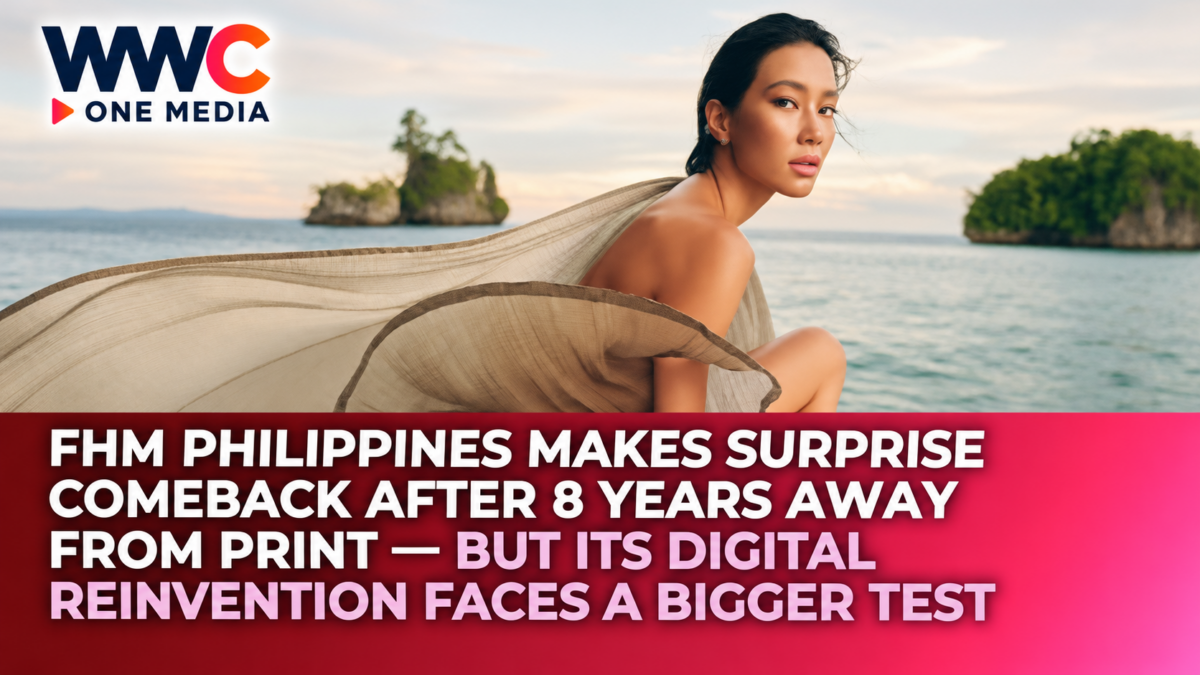
MANILA, Philippines — October 12, 2026 — FHM Philippines, the iconic men’s lifestyle magazine that helped shape a generation of Filipino pop culture, is making a surprise comeback with a new digital-first identity designed for today’s smartphone-driven audience.
After ending its regular print edition in 2018, the brand announced its return on October 8, 2026, through a campaign featuring striking red billboards and a promise to bring back the personality that made FHM a familiar name in Philippine entertainment.
The revival is expected to feature content covering style, culture, fitness, technology, nightlife and entertainment, delivered through digital platforms rather than a conventional monthly print magazine.
According to Bilyonaryo and separate reports from GMA News, Philstar and TV5, the new FHM aims to reconnect with readers who remember its magazine era while introducing the brand to younger audiences.
But the announcement raises a bigger question.
Can a magazine made famous during the height of Philippine print media reinvent itself in an entertainment market now dominated by TikTok, Instagram, YouTube and independent digital creators?
FHM Philippines Is Officially Making a Comeback
The brand confirmed its return on October 8, following a billboard campaign designed to attract attention and revive public curiosity.
For Filipinos who grew up in the early 2000s, FHM was more than a magazine found on bookstore shelves.
It became a recognizable part of the country’s entertainment and lifestyle culture.
Its distinctive mix of celebrity interviews, fashion, humor, gadgets, fitness and nightlife made it a popular choice among younger adult readers.
The relaunch announcement emphasizes that FHM’s familiar personality will return, but its distribution strategy will be different.
Rather than depending primarily on printed copies, the new publication is being designed around mobile consumption and social sharing.
The company has not yet announced a full editorial lineup or a specific date for the publication of its first major new digital edition.
From Magazine Stands to Smartphones
The shift reflects a dramatic transformation in how Filipino audiences discover and consume entertainment.
During FHM’s original popularity, readers often bought magazines from bookstores, convenience stores and newsstands.
Today, lifestyle stories, celebrity photographs, fashion trends and entertainment coverage spread rapidly through social media.
Publishers increasingly compete for attention through videos, short-form posts and mobile-friendly articles.
FHM’s new strategy recognizes that change.
The brand says its upcoming content will be easy to access on mobile devices and designed for readers to share with friends.
That approach could make the publication more accessible than its former print model.
However, it also places FHM in direct competition with established lifestyle websites, entertainment platforms and online personalities.
The challenge will not simply be attracting attention to a familiar name.
It will be giving readers a reason to keep returning.
A Look Back at FHM’s Philippine Legacy
FHM Philippines was launched in 2000 under Summit Media.
It became one of the country’s most recognizable men’s lifestyle publications, particularly during the early 2000s.
The magazine was known for its celebrity cover features and annual popularity rankings, alongside articles about fashion, relationships, fitness, technology and entertainment.
Its approach combined humor with a provocative editorial identity that distinguished it from traditional lifestyle publications.
FHM also became part of discussions about celebrity culture and the representation of women in Philippine media.
Some readers remember the magazine for its entertainment value and cultural influence.
Others have criticized aspects of its historic presentation of women.
Those different perspectives matter as the brand attempts to connect with audiences whose expectations about representation, consent and editorial responsibility have evolved.
Its comeback presents an opportunity to retain recognizable elements of its identity while adapting to today’s media environment.
Why FHM Stopped Printing in 2018
FHM Philippines’ regular print edition ended in 2018 as part of Summit Media’s broader digital transformation.
In an April 11, 2018 statement, Summit Media announced that it was discontinuing its remaining print magazines.
The affected titles included Cosmopolitan, Preview, YES!, Top Gear, FHM and Town & Country.
The company explained that its audiences were increasingly moving to digital platforms and that the business was restructuring around online publishing.
This was not simply a case of one struggling magazine being shut down.
It reflected a larger industry shift away from traditional print distribution.
Readers increasingly expected convenient access to content on their phones, while advertisers explored more measurable digital campaigns.
FHM’s new relaunch returns the brand to a market that has changed substantially since its final regular print issue.
Only 50 Physical Copies Reportedly Planned
Although FHM is returning primarily as a digital publication, physical copies may still form part of the relaunch.
GMA Entertainment reported on October 8 that the new FHM would produce only 50 physical copies.
The report suggests that print could play a limited role in the revival rather than become the publication’s main distribution channel.
However, the available announcement did not establish whether those copies would be sold, gifted, distributed through promotions or reserved for another purpose.
Their contents, pricing and release schedule also remain unclear.
Collectors and longtime readers will need to wait for official details before assuming that a conventional print subscription is returning.
The contrast is striking: a brand once associated with mass-circulation magazines is now placing mobile platforms at the center of its strategy.
FHM Sets Its Sights on a New Generation
The relaunch is intended to appeal to two different audiences.
The first consists of longtime followers who remember FHM during its print era.
For them, the familiar name and visual identity could trigger nostalgia.
The second includes younger Filipino audiences who may know the brand only through older covers, archived articles and references in pop culture.
Reaching this second group could prove more challenging.
Younger consumers have grown up with entertainment that is immediate, interactive and frequently created by social media personalities.
They can discover fashion advice, fitness content, celebrity interviews and gadget reviews without subscribing to a conventional publication.
FHM will therefore need to demonstrate what distinguishes its new editorial offering.
A familiar name can generate initial curiosity.
Sustaining an audience requires consistently relevant and original content.
Will FHM Bring Back Its Famous Covers?
One of the most recognizable features of the old FHM Philippines was its cover culture.
Celebrity features and special editions helped make the magazine a prominent entertainment brand.
The new announcement has not confirmed which personalities will appear in future covers or whether its historic rankings and special features will return.
There has also been no fully disclosed schedule for new cover reveals.
Speculation about possible celebrity appearances should therefore not be treated as confirmed editorial plans.
For now, FHM is directing audiences to its official social media accounts for future announcements.
The comeback’s initial messaging emphasizes the brand’s wider lifestyle identity rather than a confirmed roster of cover personalities.
A Wider Digital Media Shake-Up in the Philippines
FHM’s return comes as Philippine media businesses continue experimenting with new technology, distribution methods and commercial partnerships.
In August 2026, Summit Media and PlayTime Entertainment announced a joint venture called PT Summit.
According to Philippine Entertainment Portal and SPOT.ph, the venture aims to develop digital publishing technology, audience insights and marketing tools.
The partnership illustrates how established publishers are adapting to a market in which content creation and technology infrastructure increasingly overlap.
However, available reporting does not conclusively establish that PT Summit is the company directly publishing the relaunched FHM.
The joint venture should therefore be considered wider industry context rather than confirmation of FHM’s new operating or ownership structure.
The Business Challenge Behind FHM’s Digital Comeback
The return of a well-known media brand offers potential commercial advantages.
FHM already has name recognition and a history that could attract initial attention from readers and advertisers.
A digital-first model could also avoid some costs associated with traditional magazine printing and distribution.
But digital publishing introduces different challenges.
Media companies need to compete for social media attention, retain audiences and generate sufficient advertising or other commercial revenue.
Platforms can also change their algorithms, affecting how easily publishers reach readers.
And advertisers increasingly expect clear evidence of audience engagement and campaign performance.
For FHM, the real commercial test will be whether nostalgia can translate into sustained readership.
It remains too early to assess the relaunch’s financial prospects because no verified audience forecasts, revenue targets or new commercial performance figures have been disclosed.
Can FHM Succeed in Today’s Social Media Era?
The new FHM enters a market where established publications compete directly with influencers, video creators and entertainment communities.
That competitive environment could be an opportunity as well as a challenge.
A recognizable editorial brand can potentially offer curated reporting, professional photography, original interviews and more consistent production standards.
But it must demonstrate that value rather than rely solely on its reputation.
The success of FHM’s revival will also depend on its ability to adapt its historical tone to changing audience expectations.
The magazine’s original identity was shaped by the culture of its time.
Its new version will need to remain recognizable while showing that it understands contemporary discussions about entertainment, relationships, representation and lifestyle.
The Bigger Question: Can Nostalgia Become a Sustainable Digital Business?
FHM’s return is one of the more recognizable examples of a legacy Philippine lifestyle publication attempting to reconnect with audiences in the digital era.
The familiar branding and billboard campaign have already attracted media coverage.
But the relaunch is still at an early stage.
A complete editorial lineup, launch schedule and detailed commercial strategy have not been publicly established in the reports reviewed.
For longtime readers, the announcement represents a return of a familiar pop culture name.
For younger audiences, it introduces a brand associated with a different period in Philippine entertainment.
And for the publishing industry, it raises an important question about the continuing value of established magazine brands.
The first challenge was bringing FHM back into the conversation. The harder challenge will be making it relevant enough to stay there.
FHM Philippines is preparing to move beyond its magazine-stand legacy and build a new life on digital platforms.
But whether the comeback becomes a lasting success will depend on more than nostalgia — it will depend on whether FHM can deliver content worth following in a world where audiences already have endless entertainment at their fingertips.