
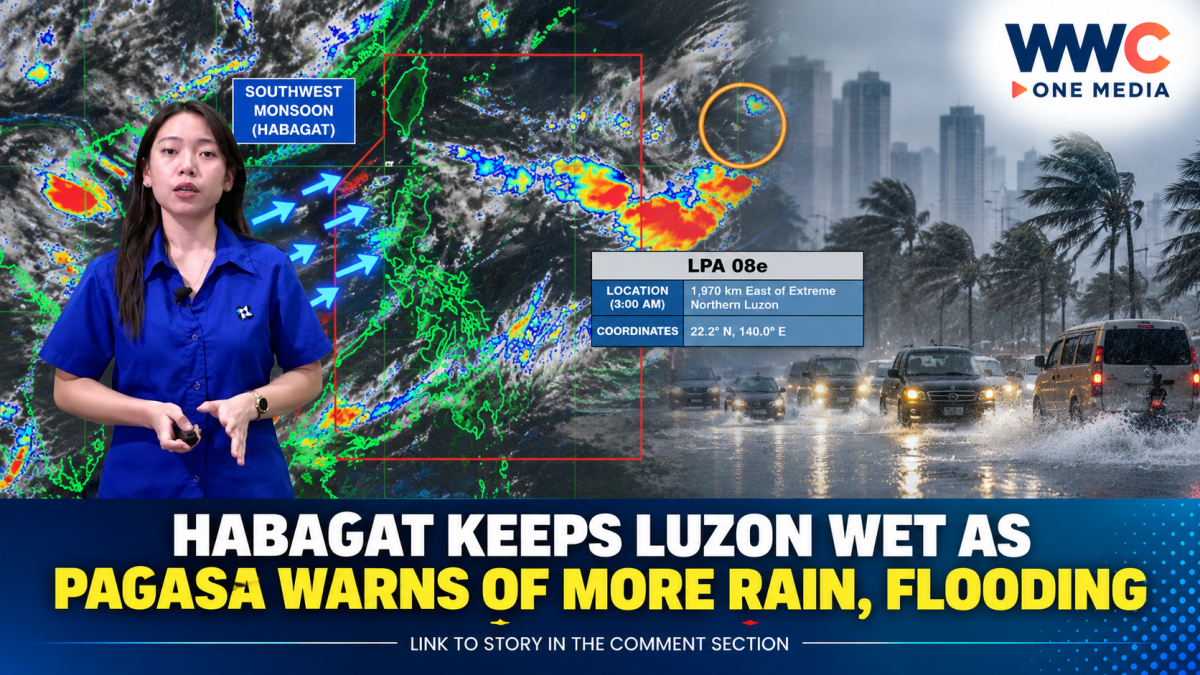
MANILA — The southwest monsoon, or habagat, continues to blanket large parts of Luzon with rain, with several areas facing the risk of flooding and landslides as the weather system remains active this weekend.
PAGASA’s latest forecasts show that monsoon rains will prevail over Occidental Mindoro, while occasional rains are expected over Metro Manila, Zambales, Bataan, Pampanga, Bulacan, Rizal, Cavite, Laguna, Batangas, Oriental Mindoro and Antique on September 5–6.
Most parts of Luzon and Western Visayas are also expected to see cloudy skies, scattered rain and thunderstorms.
The forecast comes as communities across Luzon continue dealing with the effects of prolonged rainfall, including flooding, class suspensions and weather-related disruptions.
The biggest concern: flooding
PAGASA has repeatedly warned that moderate to heavy rainfall associated with the habagat can trigger flash floods and landslides, particularly in vulnerable and low-lying areas.
As of the latest rainfall warning issued Saturday morning, PAGASA placed portions of Bataan, Zambales and Pampanga under an Orange Warning, meaning flooding remains a threat.
The situation has already prompted local governments to suspend classes in several areas.
Quezon City, for example, suspended face-to-face classes at all levels in public and private schools on September 5 after authorities anticipated rainfall of around 50 to 100 millimeters associated with the habagat.
GMA News and ABS-CBN News likewise reported multiple class suspensions across parts of Metro Manila and Southern Luzon because of the continuing bad weather.
This is not simply a one-day rain event
What makes the latest forecast more significant is that PAGASA expects the habagat to remain a factor well into September.
PAGASA Administrator Nathaniel Servando said the southwest monsoon is expected to continue until the end of September, although rainfall is expected to be relatively lighter than the extreme conditions experienced in recent weeks.
However, Servando cautioned that western Luzon, Occidental Mindoro and western parts of the Visayas could still experience above-normal rainfall.
That means residents should not interpret a temporary improvement in rainfall as the end of the threat.
PAGASA’s weekly outlook also points to continued monsoon activity after the weekend. For September 7–8, the agency expects occasional rains in parts of western and southern Luzon, while by September 9–10, a possible low-pressure area west of Luzon could potentially enhance the habagat and produce heavier monsoon rains over the western section of Luzon.
A troubling reminder from August
The current situation follows one of the more intense rainfall episodes experienced in Metro Manila this year.
PAGASA reported that its Science Garden station in Quezon City recorded 201.7 millimeters of rain in just five hours on August 17.
Servando said an event involving an exceptionally large volume of rainfall could happen again during the habagat season, particularly because PAGASA expects two to three tropical cyclones in September.
That does not mean another rainfall event of exactly the same magnitude is certain. But it underscores why authorities continue urging residents in flood- and landslide-prone areas to remain vigilant.
What residents should watch this weekend
For September 5–6, PAGASA’s forecast calls for:
- Occidental Mindoro: Monsoon rains
- Metro Manila: Occasional rains
- Zambales and Bataan: Occasional to potentially heavier rain, with flooding concerns in affected areas
- Pampanga, Bulacan, Rizal, Cavite, Laguna and Batangas: Occasional rains
- Oriental Mindoro and Antique: Occasional rains
- Most of Luzon and Western Visayas: Cloudy conditions with scattered rains and thunderstorms
- Other areas: Generally partly cloudy to cloudy skies with isolated rain showers or thunderstorms
The latest PAGASA rainfall warnings should take priority over a general forecast because rainfall conditions can change rapidly.
The bigger picture: September could remain unsettled
The continuing habagat is particularly important because it is interacting with the broader tropical-weather environment around the Philippines.
Earlier in the week, tropical systems north and east of the country helped influence monsoon activity. PAGASA’s latest assessment, however, indicates that the current rains are expected to be less intense overall than those seen during previous weeks, partly because the tropical cyclones north of the Philippines are weak and far away.
Still, the weather bureau is not ruling out episodes of very heavy rainfall.
The combination of a persistent habagat, saturated ground in some areas and possible tropical disturbances means flooding and landslides can remain a serious localized threat even when there is no typhoon directly crossing the Philippines.




Leave a Reply