MANILA — The Philippines could face another major inflation shock in the coming months as a potentially very strong El Niño threatens agricultural production, food supplies, power generation and household costs.
Economists are warning that the weather phenomenon may become the biggest risk to the country’s inflation outlook, just as consumer price growth has already accelerated sharply.
Inflation Jumps to 7.2%
Philippine inflation surged to 7.2% in September, up from 6.1% in August and marking the highest rate since March 2023.
Food and non-alcoholic beverages were the biggest contributors, with inflation in the category accelerating to 6.7% from 4.6% a month earlier. Transport prices also rose faster, while housing, water, electricity, gas and other fuels recorded an 8.4% increase.
The latest data indicate that price pressures are becoming broader rather than being driven by only a handful of commodities.
El Niño Could Push Food Prices Higher
Economists are particularly concerned about the effect of prolonged dry conditions on rice and other agricultural products.
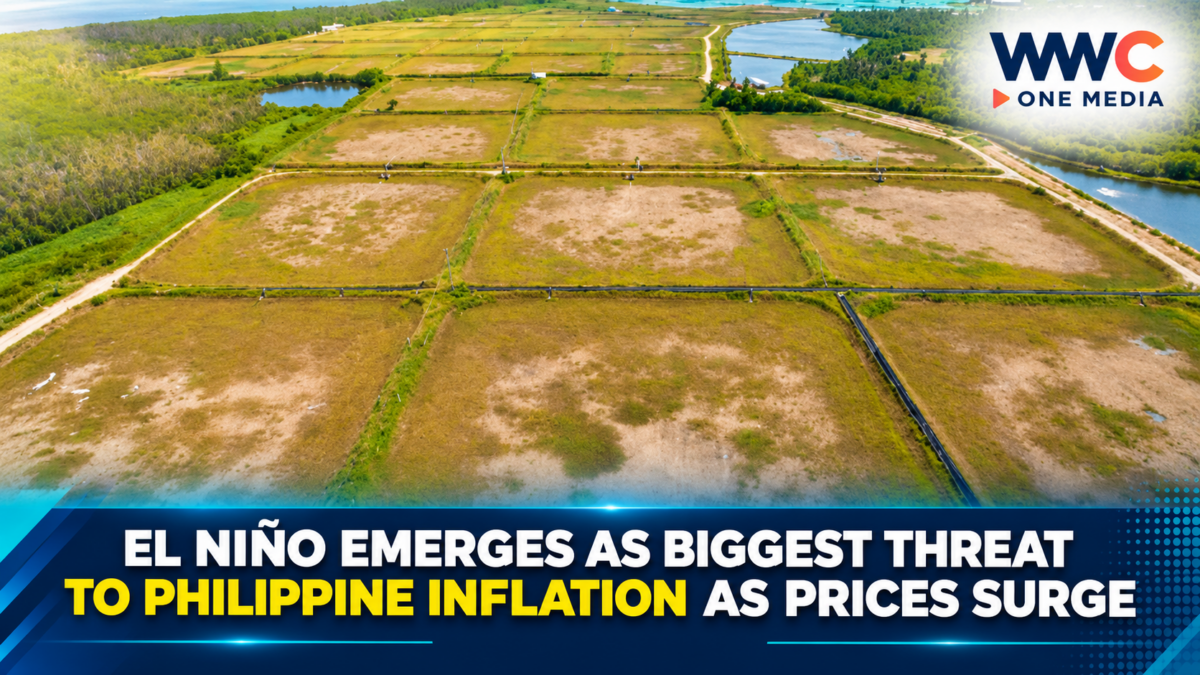
The weather bureau has warned that the current El Niño could intensify into a very strong event between September and December 2026 and persist into the first half of 2027.
Rice is especially vulnerable because production can be heavily affected by insufficient rainfall. Retail rice inflation had already accelerated to 20.3% year-on-year in September, up from 19.4% in August.
If the dry spell becomes more severe than expected, weaker domestic harvests could force greater reliance on imports while potentially pushing food prices higher.
Power and Water Costs Also Face Pressure
The threat extends beyond food.
Extreme heat and drought can reduce the efficiency and reliability of power plants while increasing electricity demand as households and businesses use more cooling equipment.
Lower water availability could also affect hydropower generation and agricultural production, creating additional pressure on utility and food costs.
The government has already set aside ₱45 billion for its El Niño response, with ₱6.2 billion released so far to support measures intended to protect food supplies and stabilize prices.
BSP Faces a Difficult Inflation Fight
The inflation surge presents a difficult challenge for the Bangko Sentral ng Pilipinas because many of the pressures are coming from supply-side factors that interest-rate increases cannot directly eliminate.
Higher interest rates can help prevent inflation expectations from becoming entrenched, but they cannot create additional rice supplies, increase rainfall or immediately lower global oil prices.
Economists have nevertheless warned that a more severe El Niño could force the central bank to maintain a tighter monetary policy for longer.
Earlier projections had already identified severe El Niño as a potential reason for additional rate increases, particularly if food prices accelerate and inflation expectations rise.
More Inflation Risks Are Building
El Niño is not the country’s only inflation threat.
Recent transport fare increases are expected to have a larger impact on consumer prices beginning in October, while higher wages could create additional cost pressures for businesses.
Higher oil prices and geopolitical tensions are also adding to the uncertainty surrounding the inflation outlook.
The combination could make the final months of 2026 particularly challenging for consumers, businesses and policymakers.
The Critical Months Ahead
The most difficult period could come as the dry spell intensifies and its effects become more visible in agricultural production.
With inflation already at 7.2%, food prices rising rapidly and El Niño expected to persist into 2027, policymakers face the difficult task of protecting consumers without imposing excessive pressure on economic growth.
For Filipino households, the biggest concern is straightforward: if harvests deteriorate while transport, energy and other operating costs remain elevated, the cost of basic necessities could continue climbing well into next year.