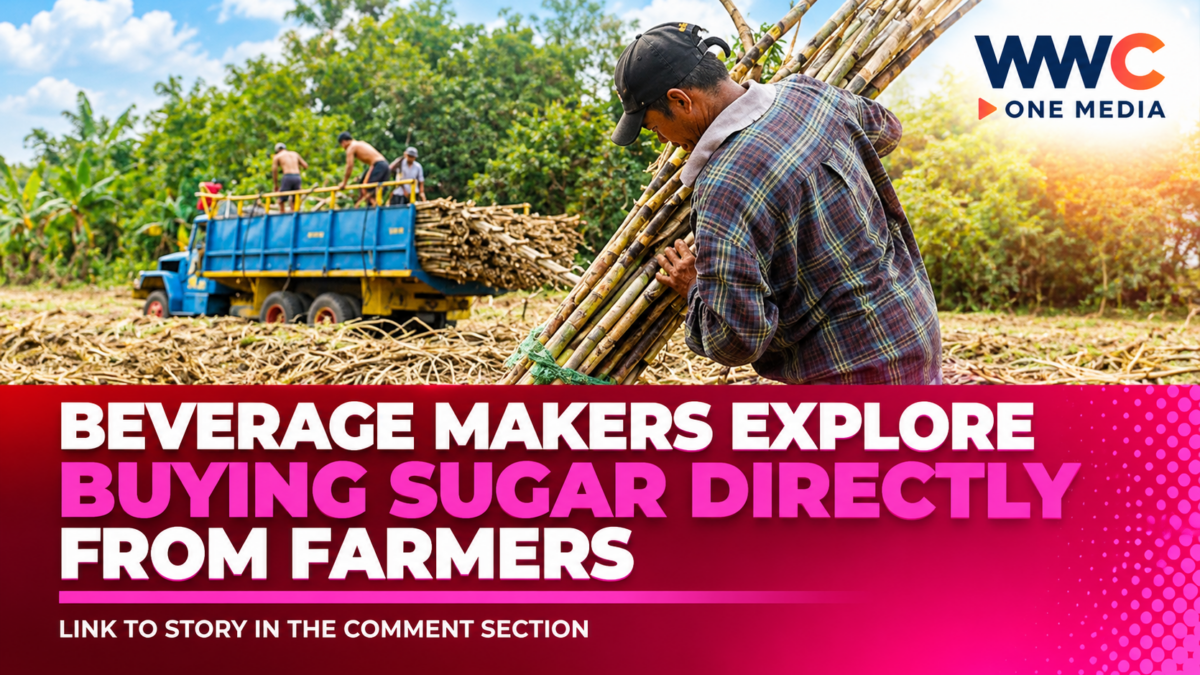
Major beverage manufacturers are exploring the possibility of buying sugar directly from Filipino farmers, a move that could reshape how the country’s sugar supply reaches large industrial users.
Sugar Regulatory Administration Administrator Pablo Luis Azcona said beverage companies have approached regulators about finding a way to purchase sugar directly from farmers instead of going through traditional channels involving millers. He said several major companies, including Coca-Cola and Pepsi, have expressed interest in such an arrangement.
The proposal comes as the domestic sugar industry faces pressure from farmers seeking better prices, while large beverage manufacturers continue to require significant volumes of refined sugar for production.
One of the main challenges is that farmers generally produce raw sugar, while beverage companies typically require refined sugar for their manufacturing operations. At present, beverage makers therefore obtain their refined sugar from millers and refiners rather than purchasing directly from farms.
Azcona said Coca-Cola is the largest domestic buyer of sugar among beverage manufacturers, purchasing more than 52,000 metric tons, equivalent to more than 1 million 50-kilogram bags. A direct purchasing system could potentially establish a closer link between large buyers and sugarcane producers if the necessary processing and regulatory arrangements are put in place.
The possible shift also comes as the government works to address concerns over farmgate prices and the financial condition of sugarcane farmers. The sector has been dealing with rising production costs, weather-related risks, pest infestation and competition from artificial sweeteners, adding pressure to growers.
The government has already introduced measures aimed at supporting demand for locally produced sugar. Under Sugar Order No. 2 for crop year 2025-2026, qualified buyers, including beverage makers, can voluntarily purchase locally produced raw sugar. Participants can receive priority in future sugar import and export programs, with the initiative designed to help stabilize farmgate prices while maintaining domestic supply conditions.
The direct-buying proposal could therefore complement existing efforts to connect farmers with large industrial consumers. However, any arrangement would need to address the difference between the raw sugar produced by farmers and the refined sugar required by beverage manufacturers.
The issue is particularly significant because beverage manufacturers and other industrial users account for a substantial share of domestic sugar consumption. Azcona has said these industries consume about 60% of the country’s sugar stockpile, making their purchasing decisions important to the broader sugar market.
At the same time, the government is examining other policies intended to strengthen demand for locally produced cane sugar. Industry groups have proposed a two-tier tax system for sweetened beverages, with a lower rate for products made entirely with locally produced cane sugar and a higher rate for beverages using imported artificial or alternative sweeteners.
The sugar industry is also facing agricultural challenges. The Department of Agriculture said the sector is dealing with a red-striped soft scale insect infestation, drought risks, higher production costs and growing competition from artificial sweeteners. Government agencies have been deploying financial assistance, chemical controls, drones and biological measures to address the problems, particularly in affected areas of the Visayas.
For farmers, direct access to large industrial buyers could potentially reduce dependence on intermediaries, although the actual impact would depend on the purchase price, quality requirements, logistics and the final structure of the program.
For beverage companies, buying closer to the farm level could provide another source of domestic supply, but they would still need reliable refining, processing and distribution arrangements to convert raw sugar into the refined product required by their factories.
The proposal remains under discussion, and regulators have yet to establish a final framework that would allow beverage manufacturers to routinely bypass millers and purchase directly from farmers. Its implementation will depend on how policymakers address processing, pricing, quality standards and the existing structure of the sugar supply chain.