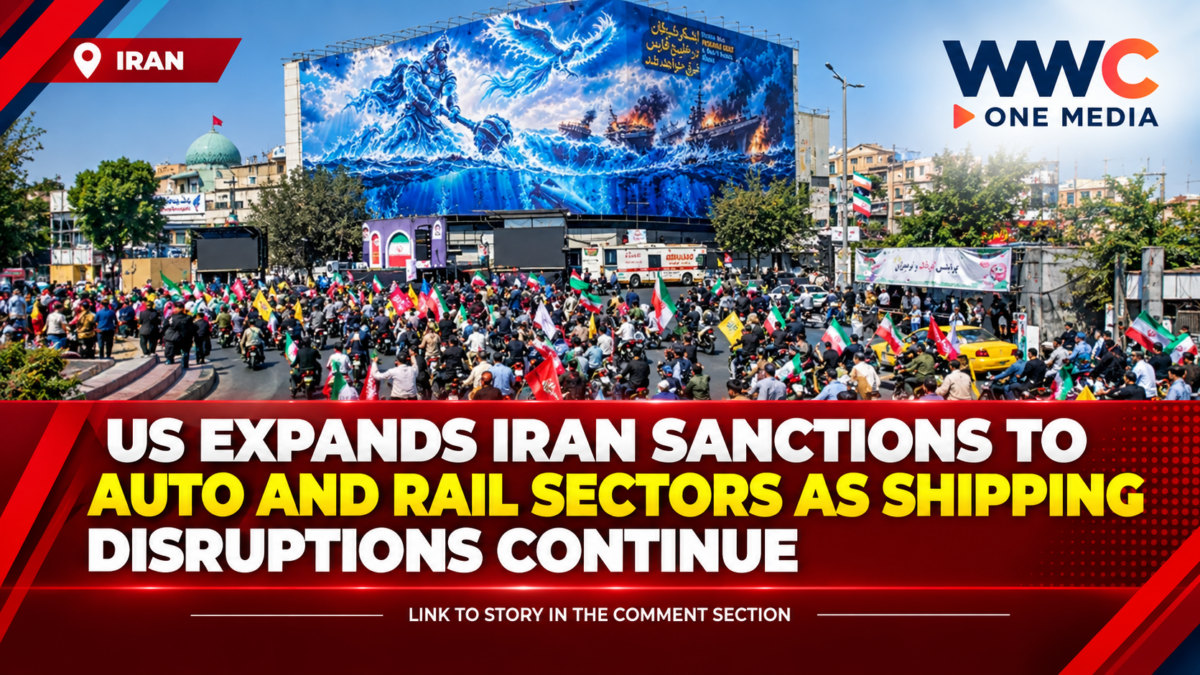
WASHINGTON — The United States has expanded its economic pressure on Iran, imposing new sanctions on major Iranian automotive and railway companies as disruptions to shipping through the Strait of Hormuz push Tehran toward alternative routes for moving fuel and other goods.
The U.S. Treasury Department announced the measures on Oct. 1 as part of “Operation Economic Outcast,” a campaign launched in August that Washington says is intended to restrict funding for Iran’s war effort, missile development, cyber activities and the Islamic Revolutionary Guard Corps (IRGC).
The latest action expands the pressure from Iran’s maritime trade into sectors that are important to its domestic transportation and industrial networks.
Iran’s Auto Industry Comes Under New Sanctions
Two of Iran’s largest automakers are among the companies designated by the U.S.:
- Iran Khodro Company (IKCO)
- SAIPA Iranian Automobile Manufacturing Company
The Treasury Department said the two companies account for more than 90% of Iran’s domestic automobile market.
Washington also sanctioned foreign companies in Indonesia, the United Arab Emirates and Turkey that it says supply Iran’s automotive industry.
The move means that U.S. sanctions are extending beyond Iranian companies themselves to parts of the international supply network that supports the country’s automobile sector.
Railways Become a New Target
The United States also designated three Iranian railway companies:
- Islamic Republic of Iran Railway Company
- Raja Passenger Trains Company
- Sherkat-E Rah Ahan-E Khamle-O-Naghle, also known as the Railway Transportation Company
The Treasury Department says these companies play important roles in passenger and freight transportation.
The rail sector has taken on greater importance amid restrictions affecting Iran’s maritime oil trade. According to U.S. officials, Iran has increasingly relied on land transportation to move petroleum, fertilizer, chemicals and other goods.
Why the Strait of Hormuz Matters
The latest sanctions follow major disruption to shipping through the Strait of Hormuz, one of the world’s most important energy routes.
According to the Reuters report, restrictions on Iranian oil shipments have reduced Tehran’s ability to use maritime routes and increased its reliance on alternative transportation networks.
That has made railways and other land-based infrastructure more important to Iran’s economic activity — and consequently a new focus of Washington’s sanctions strategy.
The Strait of Hormuz is particularly significant because large volumes of global energy trade traditionally pass through the waterway.
Washington Says It Is Targeting Iran’s Revenue Network
Treasury Secretary Scott Bessent said the new measures are intended to target companies and networks that Washington considers to be supporting Iran’s government.
The Treasury described the automotive and rail sectors as important remaining parts of Iran’s industrial and logistical infrastructure and said the sanctions are designed to restrict the government’s access to revenue and international procurement networks.
The U.S. government has framed the broader campaign as an effort to reduce Tehran’s ability to finance military-related activities and maintain economic networks that can operate despite earlier sanctions.
Analysts Warn of Potential Civilian Costs
The economic consequences could extend beyond the Iranian government and sanctioned companies.
Brett Erickson, a sanctions expert and managing principal at Obsidian Risk Advisors, told Reuters that restrictions reaching deeper into Iran’s transportation and industrial networks could affect ordinary workers and households.
His assessment was that restricting major economic sectors can also disrupt the livelihoods that depend on those industries.
That creates a central issue surrounding the latest measures: while Washington says the sanctions are aimed at Iran’s government and its supporting networks, restrictions on major industries can have broader economic effects.
Pressure Moves From Sea to Land
The latest sanctions represent another step in Washington’s broader effort to pressure Iran economically.
Earlier measures focused heavily on oil and maritime trade. The new designations reach into automobiles, railways and foreign suppliers, targeting sectors that the U.S. says have become increasingly important as Iran’s access to maritime trade has been disrupted.
The result is a widening economic pressure campaign that now reaches further into Iran’s domestic transportation and manufacturing systems.
For Tehran, the immediate challenge is maintaining the movement of goods and industrial activity while facing restrictions on both maritime trade and key land-based sectors.
For Washington, the next question is whether expanding sanctions will further restrict Iran’s revenue and logistics networks — or produce wider economic costs that reach beyond the targets named by the U.S. government.
WWC ONE MEDIA G,A