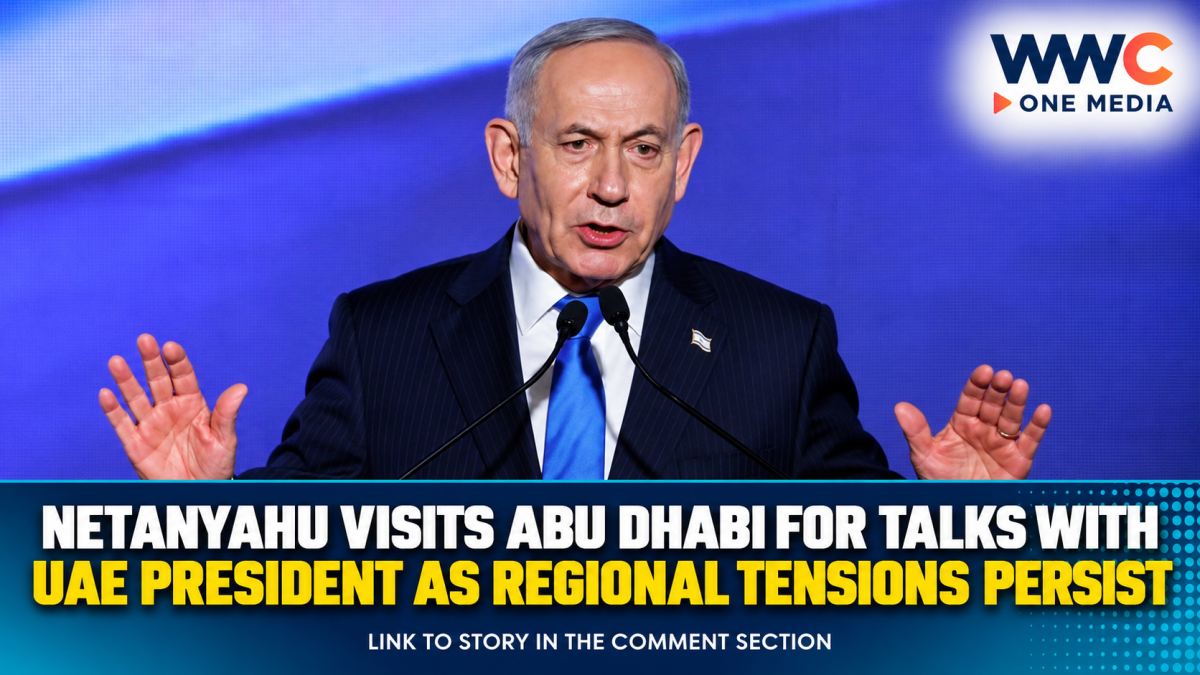
Israeli Prime Minister Benjamin Netanyahu traveled to Abu Dhabi on Sunday and met with United Arab Emirates President Sheikh Mohammed bin Zayed Al Nahyan, a senior Israeli official told Reuters, in a previously unannounced visit amid continuing tensions across the Middle East.
There was no immediate public comment from Netanyahu’s office or the UAE’s Foreign Ministry about the meeting. Israeli media reported that Netanyahu traveled aboard a private aircraft and spent several hours in Abu Dhabi before returning to Israel later that day.
The visit comes against a complicated regional backdrop. Israel and the UAE established diplomatic relations under the US-brokered Abraham Accords in 2020, creating channels for cooperation in trade, security and regional diplomacy.
The UAE has maintained communication with Israel while also navigating heightened security concerns following the conflict with Iran earlier this year. The country’s relationship with both Israel and the United States has given Abu Dhabi channels through which it can engage on regional security issues.
The latest meeting also comes amid controversy in Israel over a report concerning events before the Oct. 7, 2023 Hamas-led attack. Haaretz reported this month that Sheikh Mohammed had warned Netanyahu roughly a week and a half before the attack that Hamas was preparing a major operation. The report said the warning was not passed to Israeli intelligence agencies or the military.
Netanyahu has denied that account and threatened legal action against the newspaper. Israeli opposition figures have separately accused the prime minister of bearing responsibility for security failures preceding the Oct. 7 attack, claims that remain part of an ongoing political dispute in Israel.
The UAE has not publicly endorsed the allegations in the Haaretz report. Emirati officials have instead emphasized that Abu Dhabi and Jerusalem have maintained open communication since establishing diplomatic relations, while a UAE source previously said security discussions are generally handled through relevant government entities rather than directly between national leaders.
The secrecy surrounding Netanyahu’s latest trip is also notable because the UAE previously denied that Sheikh Mohammed had met Netanyahu during an earlier visit in March. At that time, Netanyahu’s office said the Israeli leader had traveled to the UAE and met the Emirati president, while the UAE Foreign Ministry rejected the account. A person familiar with that meeting later said the two leaders had met in Al Ain on March 26.
The latest visit therefore appears to add another high-level contact between the Israeli and Emirati leaderships, although the governments have not publicly described the agenda or announced any agreements from Sunday’s meeting.
The timing is significant as the Middle East continues to deal with the consequences of the Iran conflict, military threats and shifting regional relationships. The UAE has sought to maintain its security partnerships while also preserving its diplomatic and economic interests across the region.
For Israel, direct communication with Abu Dhabi provides an established channel with an Arab state that normalized relations with Israel six years ago. For the UAE, engagement with Israel remains part of a broader network of relationships involving Washington and other regional powers.
The lack of an official account means the specific subjects discussed by Netanyahu and Sheikh Mohammed remain unclear. Until either government releases details, the significance of the meeting will depend largely on whether subsequent diplomatic or security initiatives emerge from the contact.