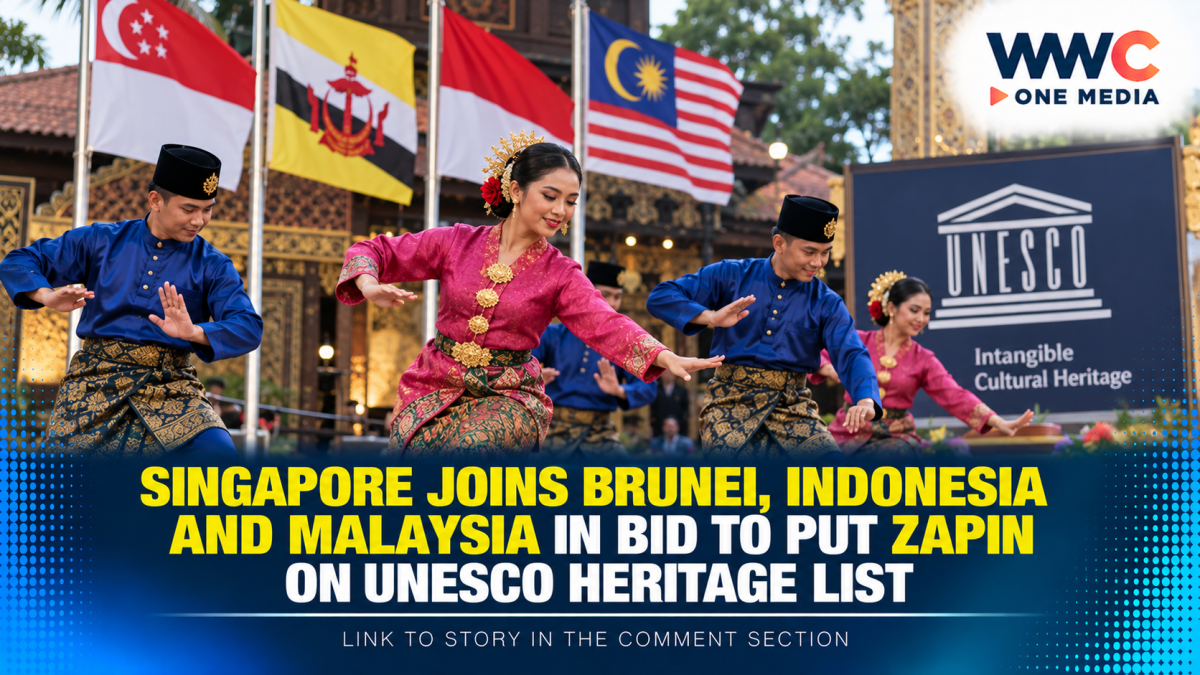
SINGAPORE — A traditional Malay dance with centuries-old roots is heading toward a potential global cultural spotlight, as Singapore joins Brunei, Indonesia and Malaysia in a multinational bid to have zapin inscribed on UNESCO’s Representative List of the Intangible Cultural Heritage of Humanity.
The four countries plan to submit a joint nomination dossier to UNESCO by March 31, 2027, with the application set to be considered in the 2028/2029 inscription cycle, according to Malaysia’s Tourism, Arts and Culture Ministry and reporting by The Straits Times.
The move reflects the cross-border nature of zapin, which has been practiced by Malay communities in several parts of maritime Southeast Asia rather than belonging exclusively to a single modern nation.
A Dance That Crosses Borders
Singapore’s National Heritage Board says zapin is among the traditional Malay dance forms practiced in Singapore. The dance is believed to have been introduced to the Malay Archipelago by Arab Muslim communities around the 14th century and is now practiced in Singapore, Malaysia, Indonesia and Brunei.
Over generations, different communities developed their own versions and names for related forms, including zapin, jipin, jepin and japin, among others. Malaysia’s heritage authorities describe the tradition as a living cultural practice tied to identity, continuity and community belonging.
That regional diversity is central to the new UNESCO effort.
Rather than presenting zapin as the exclusive property of one country, the participating governments say the nomination is intended to safeguard a shared tradition and strengthen cooperation among the communities that practice and transmit it.
Why Singapore’s Participation Matters
Singapore has previously participated in multinational UNESCO heritage nominations involving traditions shared across Southeast Asia.
In 2024, kebaya was inscribed on UNESCO’s Representative List through a joint nomination involving Brunei, Indonesia, Malaysia, Singapore and Thailand. UNESCO’s current list also includes multinational heritage elements such as pantun, jointly inscribed by Indonesia, Malaysia and Brunei.
The zapin initiative follows that broader regional approach: cultural practices that developed across communities and borders can be documented and safeguarded through cooperation rather than treated solely as national heritage.
For Singapore, zapin is already part of the country’s documented intangible cultural heritage. Traditional Malay dances continue to be performed at festive events, presented on stage and taught to younger generations through performing-arts programmes.
More Than a UNESCO Label
The proposed nomination is also about keeping zapin alive for future generations.
Malaysia’s culture ministry said safeguarding efforts include education, university programmes, youth training, community workshops, research, festivals and digital documentation. The four countries also envision greater collaboration through performances, workshops, youth exchanges and regional festivals.
The process is expected to involve the communities and practitioners who perform and pass down zapin, with consultations intended to secure their continued participation and support.
The goal is therefore not simply to secure an international designation, but to ensure that the knowledge, movements, music and cultural values associated with zapin continue to be transmitted from experienced practitioners to younger generations.
Southeast Asia’s Shared Heritage Takes Center Stage
The proposed zapin nomination adds another chapter to Southeast Asia’s growing use of multinational UNESCO nominations to recognize traditions that transcend today’s borders.
Singapore’s participation underscores how cultural heritage can serve as a link between communities with intertwined histories. If the nomination advances through the UNESCO process, zapin could gain another international platform while remaining rooted in the communities that continue to practice it today.
The next major milestone is March 2027, when the four countries are expected to submit their joint nomination dossier — setting the stage for a potential UNESCO decision in the following cycle.
WWC ONE MEDIA G,A