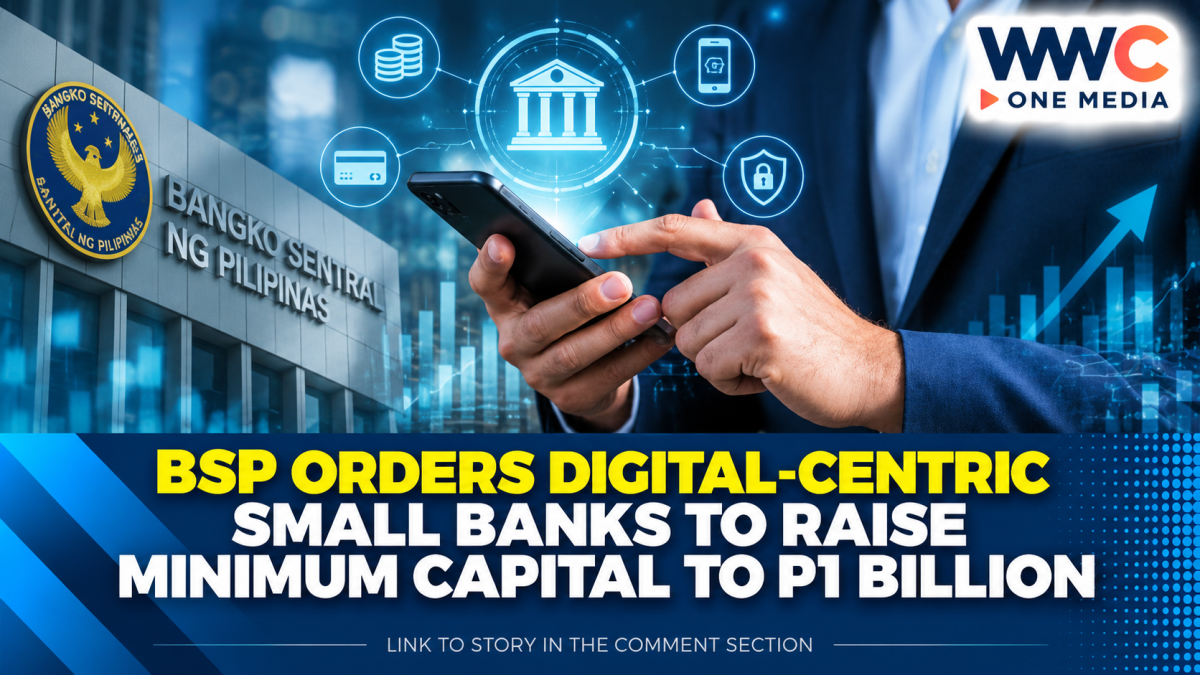
The Bangko Sentral ng Pilipinas (BSP) is tightening capital and prudential requirements for thrift, rural and cooperative banks whose operations increasingly resemble those of digital banks, requiring covered institutions to maintain at least P1 billion in capital.
The new rules are contained in BSP Circular No. 1240, issued on Sept. 21. Existing thrift, rural and cooperative banks that the central bank determines are operating under a business model similar to a digital bank will have six months from receiving formal notice to meet the P1-billion minimum capital requirement.
The requirement will also apply when a proposed acquisition is intended to transform a thrift, rural or cooperative bank into a technology-driven business. Such institutions must meet the P1-billion capital threshold at the time of application and comply with prudential standards applicable to digital banks.
The BSP said the rules cover smaller banks that either operate under a business model similar to a digital bank or whose capital and risk-management systems are no longer aligned with the nature and risk profile of their operations. Banks that use digital platforms and experience significant growth in loans or deposits may also fall under the requirements.
Beyond capital, the BSP may impose additional safeguards on affected institutions, including enhanced supervisory reporting, restrictions on certain activities or new digital products and services, and stronger risk-management and internal-control systems.
The central bank said the measures are intended to ensure that banks can manage risks arising from the nature, scale, complexity and risk profile of increasingly technology-driven operations. The rules are also part of the BSP’s effort to maintain consistent prudential standards as traditional banks adopt more digital business models.
The circular also provides a pathway for qualified thrift, rural and cooperative banks to apply for a formal digital banking license. The BSP said licensed digital banks can offer services to a wider customer base, including customers outside their traditional geographic areas.
However, conversion is subject to regulatory review. The BSP will consider factors including the bank’s readiness to operate as a digital bank, the strength of its governance and systems, its business model and value proposition, and the resources available to support the transition.
The Philippines currently has seven licensed digital banks, according to the BSP and recent reports. The new framework could allow more existing smaller lenders to transition into the digital banking segment while requiring them to meet capital and risk-management standards appropriate to their expanded operations.
The changes come as Philippine banks increasingly use digital platforms to attract deposits, expand lending and deliver financial services. For smaller lenders, the new requirements could mean additional capital and compliance needs if their digital operations grow sufficiently to fall within the BSP’s technology-driven banking framework.