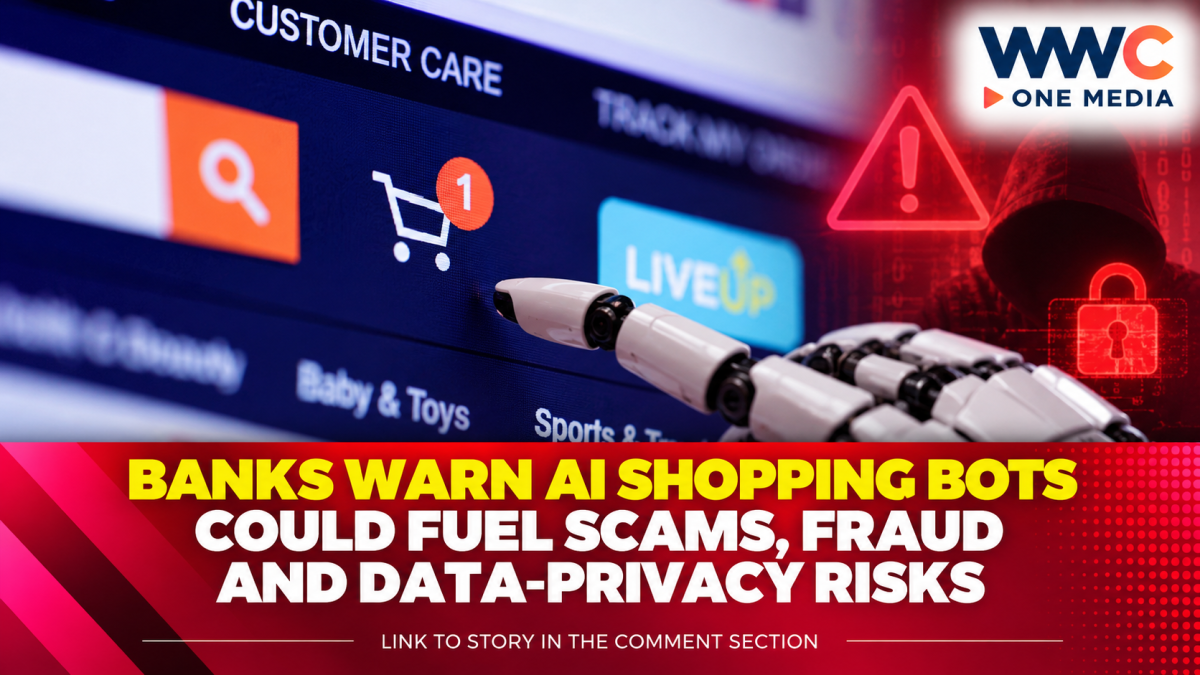
Banks are warning that the rapid rise of artificial intelligence shopping agents could create new opportunities for scams, fraud and data-privacy breaches as consumers increasingly allow AI tools to search for products and make purchases on their behalf.
The warning came from a group of banks including NatWest, Bank of America, ING, ASB Bank and Capital One, which have outlined principles for the development of so-called agentic commerce. The technology allows AI agents to perform shopping tasks that traditionally required consumers to search, compare products and complete transactions themselves.
Technology companies are increasingly promoting AI assistants as shopping tools, while retailers are competing to influence the recommendations generated by those systems. Data from British retailer John Lewis showed that searches originating from AI agents increased to 2.5% in September from 0.3% a year earlier, illustrating how quickly the technology is gaining traction.
The banks said consumers are interested in the convenience of AI-powered shopping but remain uncertain about whether an agent will always act in their interests. Potential problems include an AI system purchasing the wrong product, spending more than intended or directing consumers toward fraudulent sellers or payment methods with weaker protections.
Another concern involves payment information. AI agents may need access to customers’ card details or could enter payment information directly into websites. The banks warned that this creates additional points where sensitive financial information could potentially be exposed or misused.
The concerns come as the financial industry itself prepares for wider adoption of AI-driven payments. Mastercard and Visa have been developing systems that allow AI agents to conduct transactions under predefined permissions, spending limits and other controls, showing that so-called agentic payments are moving from experimentation toward commercial use.
The banks argue that the technology is developing faster than industry standards and consumer protections. They are proposing clearer disclosure when an AI agent is involved in a transaction, greater transparency about how agents make purchasing decisions and stronger safeguards for customer data.
The issue is also becoming a point of tension between technology companies and retailers. Amazon recently blocked Meta’s Muse AI shopping agent from browsing and purchasing products on its platform, highlighting unresolved questions over control of customer interactions, commercial data and third-party AI access.
For consumers, the emergence of AI shopping agents means convenience may increasingly come with new responsibilities. Users may need to set spending limits, review purchase instructions and understand what financial information an AI service can access before allowing an agent to act independently.
As AI moves from recommending products to completing transactions, the key challenge for banks, retailers, technology companies and regulators will be establishing who is responsible when an automated purchase goes wrong and ensuring that consumers retain meaningful control over their money and personal data.