Iran and the United States remain sharply divided over how to end their war, even as the two sides resumed diplomatic contacts on the sidelines of the United Nations General Assembly in New York.
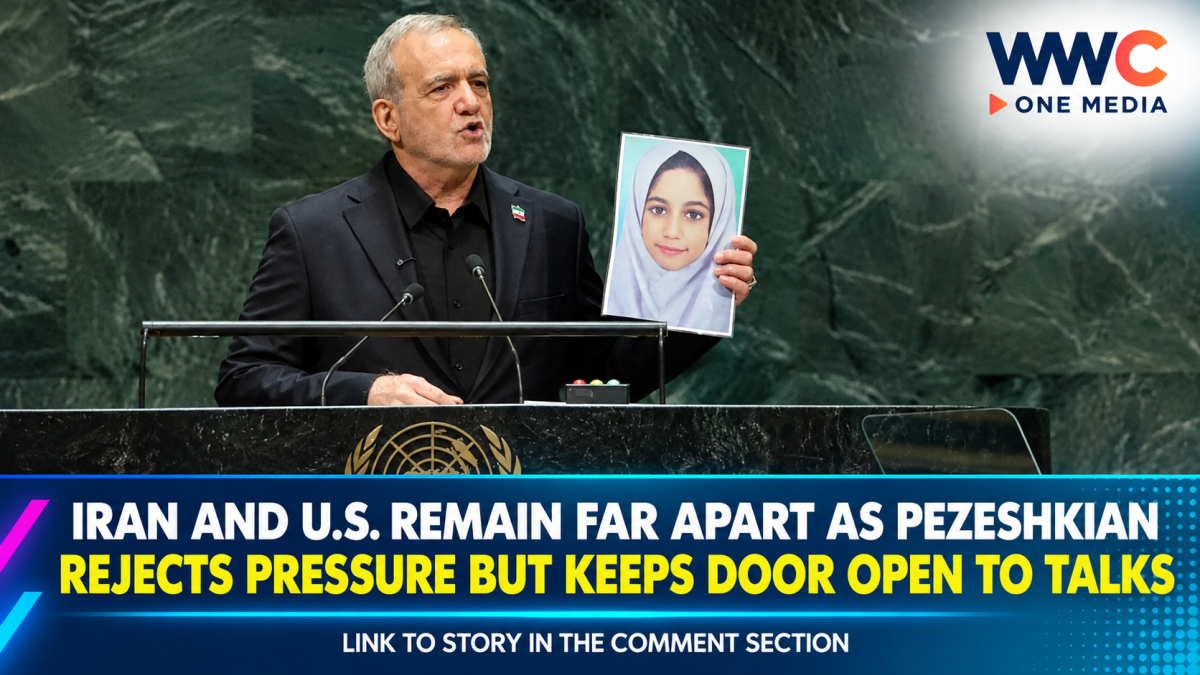
A senior Iranian official said Tehran and Washington were still far apart on the terms of a possible settlement, although diplomacy would continue. The assessment came after Iranian President Masoud Pezeshkian used his U.N. address to reject U.S. pressure while saying Iran remained prepared for negotiations.
The latest contacts marked the first indirect U.S.-Iran talks in months. Iranian Foreign Minister Abbas Araghchi communicated through mediators with U.S. special envoys Steve Witkoff and Jared Kushner in New York. The discussions followed an earlier ceasefire arrangement that collapsed in July.
U.S. President Donald Trump described the meeting involving his envoys as productive and said another round of discussions was being planned. Iran, however, has indicated that substantial differences remain, particularly over the conditions required to end the conflict.
Pezeshkian, speaking at the U.N. on Wednesday, accused Trump of what he described as a “bullying mentality” and said Iran would not surrender under pressure. At the same time, he said Tehran was willing to pursue dialogue and diplomacy, provided negotiations were not conducted through threats or force.
One of the central issues is the Strait of Hormuz, the strategically important waterway through which a significant share of global energy supplies normally passes. Iranian officials have linked a possible reopening of the strait to a reduction in U.S. military pressure and the lifting of the U.S. blockade on Iranian ports.
Iran has also been reviewing Washington’s response to its proposals for ending the conflict. Tehran’s position has included demands involving the U.S. naval blockade, the reopening of the Strait of Hormuz and other conditions tied to the cessation of hostilities.
The diplomatic push is unfolding alongside continued military and economic pressure. Maritime security officials have reported attacks on commercial shipping in the Strait of Hormuz, while disruptions to energy exports have contributed to shortages and higher costs in global markets.
The U.S. and Iran are therefore attempting to keep diplomatic channels open while publicly maintaining positions that remain difficult to reconcile. Washington has threatened further military action if an agreement is not reached, while Tehran continues to reject what it considers coercive demands.
For now, the New York talks have reopened a diplomatic channel but have not produced a publicly announced breakthrough. The next stage will depend on whether Washington and Tehran can narrow their differences over the conditions for ending the war, restoring shipping through Hormuz and establishing a framework that both sides are prepared to accept.