Wall Street is heading into one of the most closely watched weeks of September with investors juggling a difficult mix of higher interest rates, elevated oil prices, rising Treasury yields, artificial-intelligence uncertainty and a potentially market-moving meeting between US President Donald Trump and Chinese President Xi Jinping.
The week of September 21–25 comes immediately after the Federal Reserve delivered its first interest-rate increase in more than three years.
The Fed raised its benchmark federal-funds target by 25 basis points to a range of 3.75% to 4%, saying inflation remains elevated and that further policy tightening may be needed.
That decision has changed the market’s central question.
Investors are no longer waiting to find out whether the Fed will raise rates in September. They are now trying to determine how far the central bank may go from here — and whether higher rates, oil prices and bond yields can coexist with continued strength in US equities.
And the answer could become clearer this week.
Wall Street Finished A Wild Week In Uneasy Calm
US stocks managed to recover some ground Friday, but the broader market remained under pressure.
The Dow Jones Industrial Average fell 0.18%, while the S&P 500 gained 0.17% and the Nasdaq Composite advanced 0.40% on September 18.
For the week as a whole, the S&P 500 and Dow finished lower, while the Nasdaq recorded a weekly gain. Reuters noted that the Dow suffered its largest weekly percentage decline since March.
The recovery in technology stocks helped stabilize the major indexes.
But investors still had to contend with a powerful counterweight: the benchmark 10-year Treasury yield moved above 5% during the week.
That matters because Treasury yields influence borrowing costs throughout the economy and affect how investors value future corporate earnings.
The Fed Hike Is Done. The Rate Path Is Now The Story.
The September rate decision was widely anticipated.
The surprise for markets was less about the size of the move and more about what comes next.
The Fed’s latest projections point to another rate increase later this year, while investors have been wrestling with a potentially more aggressive path depending on inflation, oil prices and economic activity. Nasdaq said the Fed’s median projection indicates another hike this year before rates stabilize next year, although market pricing has reflected expectations for additional tightening.
That divergence makes every piece of economic data and every comment from Fed officials more important.
Several Federal Reserve officials are scheduled to speak during the week, including policymakers from the New York, Chicago, Richmond, Cleveland and Philadelphia Federal Reserve banks.
Their comments could provide clues about whether September’s increase represents the beginning of a broader tightening cycle or a more limited response to stubborn inflation.
The 5% Treasury Yield Is Becoming A Market Test
The 10-year Treasury yield may be just as important to stocks as the Fed’s policy rate.
The benchmark yield briefly moved above 5% during the past week, reaching levels that have not been seen consistently since the global bond selloff intensified.
Reuters reported that rising yields and oil prices were among the principal sources of pressure on Wall Street.
Higher long-term yields can make bonds more attractive relative to equities while also increasing the discount rate applied to future corporate profits.
That can be particularly important for technology and other growth companies whose valuations depend heavily on earnings expected years into the future.
It also raises financing costs for companies investing heavily in factories, data centers, energy infrastructure and artificial-intelligence systems.
For investors, therefore, the question is not simply whether the 10-year yield crosses 5%.
It is whether it can remain there.
Oil Above $100 Keeps Inflation In The Spotlight
Crude oil is the second major variable.
Oil prices remained above $100 a barrel at the end of the week, after a period of sharp increases linked to the conflict and disruptions involving major Middle Eastern energy routes.
Higher energy prices create a complicated problem for the Federal Reserve.
They can push inflation higher even as higher interest rates are simultaneously slowing demand.
That puts policymakers in a difficult position because monetary policy can influence demand but cannot directly increase global oil supply.
Morningstar similarly identified elevated oil prices as one of the major risks facing equities following the Fed’s latest decision.
If crude prices retreat, some pressure on inflation expectations could ease.
If oil rises again, investors may have to reconsider expectations for future interest-rate policy.
Trump-Xi Meeting Could Put Tech Stocks In The Spotlight
One of the biggest events on the calendar is the expected meeting between Trump and Xi in Washington on Thursday.
Trade, semiconductors, artificial intelligence and technology restrictions are among the issues investors are watching.
Reuters described the summit as the headline event of the coming week, with markets particularly interested in the US-China AI race and semiconductor restrictions.
That makes the meeting particularly important for technology stocks.
Semiconductors have been one of the major engines of the market’s gains this year, but the sector has also become increasingly exposed to geopolitical and regulatory risks.
Any change in US-China trade policy, chip restrictions or licensing expectations could therefore have an immediate effect on semiconductor shares and the broader Nasdaq.
At the same time, investors should distinguish between diplomatic headlines and actual policy changes.
A meeting alone does not change tariffs, export controls or technology rules.
The market impact will depend on what, if anything, changes afterward.
AI Has Become Another Source Of Market Uncertainty
The artificial-intelligence boom remains one of Wall Street’s most powerful investment themes — but it is no longer completely one-directional.
Several prominent AI executives have recently raised concerns about the pace and risks of AI development.
Those warnings triggered selling in some semiconductor and AI-linked stocks earlier in the week. Reuters reported that Nvidia and other chipmakers were among the companies affected as investors reacted to calls for a slower approach to AI development.
The bigger question for investors is whether the debate remains largely about AI safety or begins affecting actual corporate spending.
So far, there has been no broad evidence that the AI infrastructure investment boom has suddenly stopped.
Reuters reported that investors were looking for more concrete evidence of a slowdown before concluding that the broader AI spending cycle had fundamentally changed.
That leaves technology stocks particularly sensitive to both policy announcements and corporate spending signals.
Economic Data Will Provide The Next Clues
The economic calendar is not as crowded as some previous weeks, but several reports could influence expectations for monetary policy.
Among the key releases are:
- Monday: ADP weekly employment data
- Wednesday: Preliminary S&P Global manufacturing and services PMIs
- Thursday: Initial jobless claims and new-home sales
- Friday: Preliminary durable-goods orders and the final University of Michigan consumer-sentiment reading
The preliminary PMI figures could be particularly important because they provide an early look at economic activity in September.
Investors are looking for an economy that remains strong enough to support corporate earnings but not so strong that it forces the Federal Reserve into substantially tighter monetary policy.
That balance is becoming increasingly difficult as energy prices remain elevated.
Corporate Earnings Return To The Spotlight
The market’s attention will not be entirely focused on central banks and geopolitics.
Corporate earnings are also back on the calendar.
Among the companies scheduled to report are AutoZone, KB Home, Paychex, Cintas, General Mills, Costco Wholesale and Darden Restaurants, according to the week’s earnings schedule.
Costco’s results could attract particular attention because they offer another window into US consumer spending.
Investors will be watching whether consumers are continuing to spend despite elevated gasoline prices, borrowing costs and broader cost-of-living pressures.
The results from homebuilder KB Home could provide another read on the effect of higher mortgage rates on housing demand.
Meanwhile, General Mills and restaurant companies could offer clues about whether consumers are trading down or changing spending habits.
The Market Is Caught Between Earnings And Macro Risk
One of the unusual features of the current market is that corporate earnings remain relatively supportive even as macroeconomic risks increase.
Morningstar noted that healthy corporate earnings remain a potential tailwind for equities, while high oil prices, higher interest rates and uncertainty around AI investment represent significant counterweights.
Reuters similarly reported that the S&P 500 has been broadly resilient despite the recent rise in Treasury yields and oil prices.
That creates a market with competing forces.
Strong earnings can support stock prices.
Higher yields can pressure valuations.
Falling oil could ease inflation concerns.
Rising oil could produce the opposite effect.
And a major US-China announcement could suddenly change the outlook for technology companies.
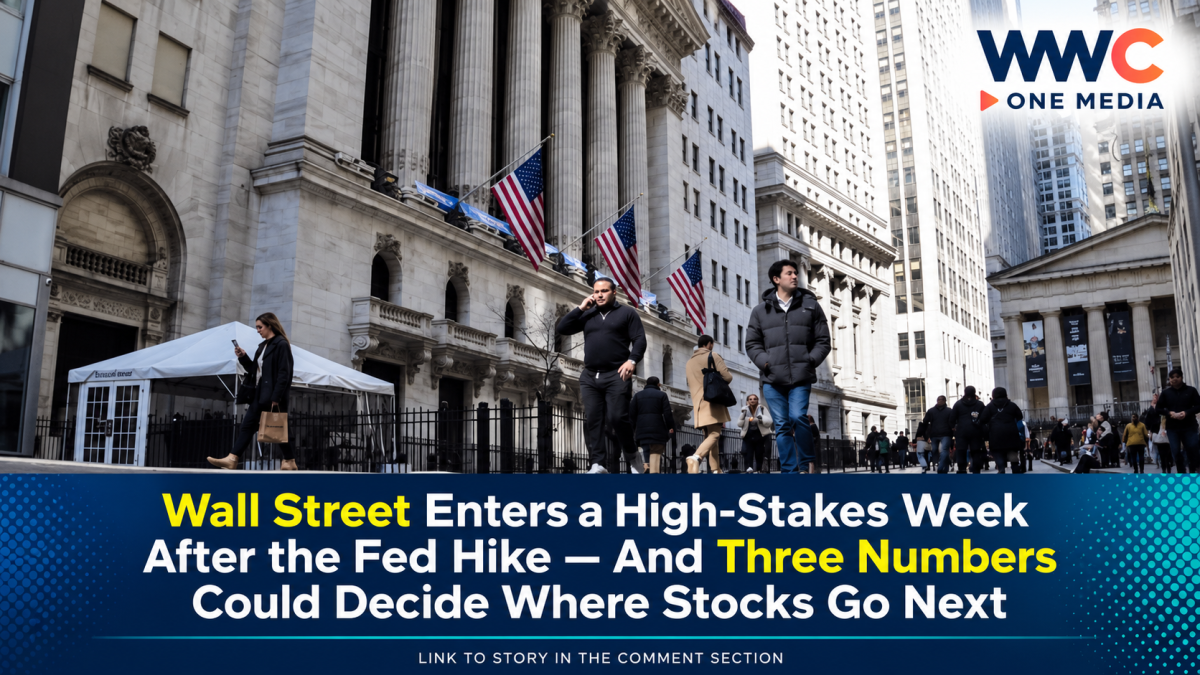
Three Numbers Wall Street Will Be Watching
As the new week begins, three figures stand out.
First: 5%.
That is the critical psychological level for the 10-year Treasury yield.
Second: $100.
That is the approximate threshold oil has been trading above, keeping energy-driven inflation firmly on investors’ radar.
Third: 3.75% to 4%.
That is the Fed’s new target range for its benchmark policy rate following September’s 25-basis-point increase.
Together, those three numbers capture the market’s central problem.
Money is becoming more expensive at precisely the moment geopolitical risks are keeping energy prices elevated.
What Investors Will Be Watching Most Closely
The coming week is likely to revolve around five questions:
Will Treasury yields remain above 5%?
Will oil remain above $100?
Will Fed officials signal another rate increase?
Will the Trump-Xi meeting produce changes affecting trade and semiconductors?
And will corporate earnings continue to justify elevated equity valuations?
None of these questions can be answered by looking at one market indicator alone.
But their interaction could determine whether the recent volatility fades or returns with greater force.
For now, Wall Street has demonstrated that it can absorb a rate increase, higher oil and elevated bond yields without a broad market breakdown.
The more difficult test is whether that resilience can continue if all three pressures persist simultaneously.
The Fed has already made its move. Now the bond market, oil market, corporate earnings and Washington-Beijing negotiations are preparing to take center stage — and Wall Street will be watching every signal.