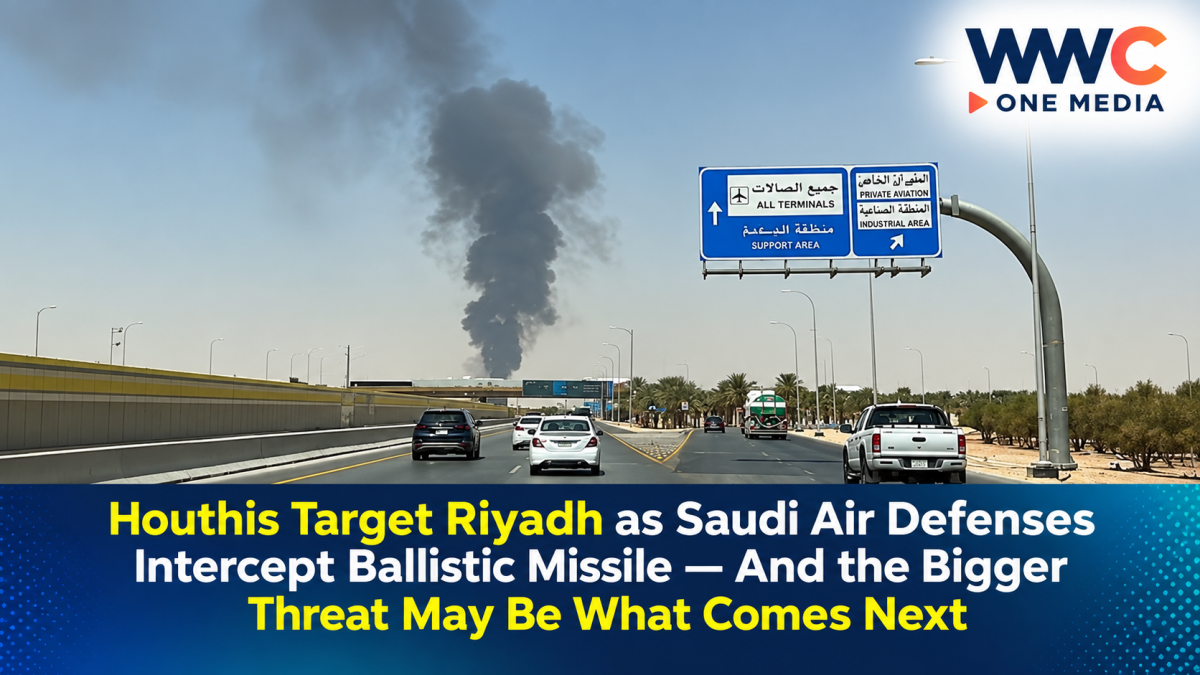
Saudi Arabia has faced a major escalation in attacks by Yemen’s Houthi rebels, with the kingdom saying it intercepted a ballistic missile fired toward its capital, Riyadh, in an incident that marked a significant expansion of the conflict.
The Saudi-led coalition said its air defenses destroyed the missile early Saturday, September 19, after Saudi authorities issued warnings of a hostile aerial threat over Riyadh and other areas.
The Houthis separately claimed they had launched missiles and drones against what they described as “sensitive” targets in Riyadh, as well as an oil facility belonging to Saudi Aramco in the Red Sea port city of Yanbu. Those claims about the oil facility have not been independently verified.
The incident comes as fighting between Saudi Arabia and the Houthis intensifies and raises fresh concerns over energy infrastructure, aviation and shipping routes across a region already dealing with disruptions around the Strait of Hormuz.
Riyadh Gets Its First Air-Raid Alert Since The Latest Escalation
Saudi authorities issued emergency alerts to residents of Riyadh and surrounding areas during the early hours of Saturday.
Reuters reported that residents heard explosions, while video and photographs showed a large plume of black smoke rising near King Khalid International Airport. Saudi authorities later issued an all-clear and reported no casualties or damage from the intercepted missile.
The Saudi coalition subsequently confirmed that a ballistic missile had been fired toward Riyadh and was intercepted by Saudi air defenses.
Saudi authorities also said other attempted attacks targeting Bisha, Taif, Farasan and Yanbu had been thwarted.
The Riyadh alert was particularly significant because it was the first such warning in the capital since the latest phase of fighting with the Houthis intensified in July.
The Houthis Claim A Wider Attack
The Houthis said their operation involved both missiles and drones.
According to Reuters, the group claimed it targeted “sensitive” locations in Riyadh and an Aramco facility in Yanbu, describing the strikes as retaliation for Saudi military operations against Houthi-controlled areas in Yemen.
But there is an important distinction between the claims and independently verified facts.
Saudi Arabia confirmed the missile interception, while the Houthi claims regarding specific targets and damage to Saudi energy facilities have not been independently established.
That distinction matters because Yanbu is a strategically important Saudi energy hub.
Any confirmed damage to major oil infrastructure there could have broader consequences for regional energy flows.
Why Yanbu Matters To The Global Oil Market
Yanbu sits on Saudi Arabia’s Red Sea coast and plays an important role in the kingdom’s energy-export system.
Its strategic importance has increased as instability around the Strait of Hormuz has complicated traditional Gulf shipping routes.
The United Nations has already warned that the situation around the Bab el-Mandeb Strait has become increasingly volatile as Houthi forces advance along Yemen’s western coast. At the same time, the UN said commercial shipping through the Red Sea appeared to remain largely unaffected for the time being.
That creates a dangerous potential chain reaction.
If attacks begin consistently threatening Saudi energy facilities or shipping routes, insurers, shipowners and energy traders could demand higher risk premiums, potentially adding to transportation and energy costs.
For now, however, there is no verified evidence from the sources reviewed that Saturday’s Houthi claims caused a major interruption to Saudi oil production or exports.
The Conflict Is Moving Beyond Yemen’s Borders
The latest attack illustrates how the renewed Yemen conflict is becoming increasingly regional.
The United Nations told the Security Council that fighting had intensified along Yemen’s western coast, with the Houthis reportedly advancing toward the Bab el-Mandeb Strait and capturing several islands in the southern Red Sea.
The UN also reported that earlier Houthi attacks on Saudi Arabia had caused injuries and property damage.
On September 14, according to the UN briefing, Saudi coalition forces said 13 people were injured and seven residences damaged in missile and drone attacks involving Abha, Khamis Mushait and Taif.
That means the Riyadh incident is not an isolated event.
It is part of a broader escalation involving missiles, drones, energy infrastructure and maritime routes.
Saudi Arabia Is Also Seeking More Military Capability
The escalation comes just days after Washington approved a potential $24.3 billion sale of 48 F-35 fighter jets to Saudi Arabia, according to the US State Department notification reported by Reuters.
The proposed package would represent a major addition to Saudi Arabia’s military capabilities, although approval of a potential sale does not mean all aircraft have already been delivered or that the transaction has been completed.
The timing is notable.
Saudi Arabia is confronting missile and drone threats while simultaneously seeking to strengthen its ability to deter and respond to attacks.
The United States has also issued a Level 3 travel advisory for Saudi Arabia, citing risks related to armed conflict, drone and missile attacks and terrorism.
The Red Sea Is Becoming Another Pressure Point
The conflict also matters because of the Red Sea’s role in global trade.
The Bab el-Mandeb Strait connects the Red Sea with the Gulf of Aden and is one of the world’s key maritime chokepoints.
The UN said commercial shipping flows through the Red Sea had not yet been significantly disrupted by the latest escalation, but warned that the growing Houthi presence around the waterway was adding to market concerns while the Strait of Hormuz remained under pressure.
The concern for global markets is therefore less about one intercepted missile and more about whether attacks become persistent enough to alter the behavior of shipping companies, energy traders and insurers.
Saudi Markets Felt The Shock
The escalation was already visible in Gulf financial markets.
Reuters reported that Saudi stocks fell on Sunday following the Houthi claims. The Tadawul All Share Index declined 0.5%, while Saudi Aramco fell 0.6% and Saudi National Bank declined 0.5%. Qatar’s index also dropped 0.9%.
Those movements do not by themselves establish a long-term market trend, but they demonstrate how quickly security developments can feed into investor sentiment in Gulf markets.
For energy investors, the central question is whether the attacks remain intermittent or begin affecting actual production, export infrastructure and shipping capacity.
What Happens Next Could Matter More Than The Missile
The interception of the Riyadh-bound missile means Saudi air defenses successfully prevented the reported attack from producing casualties or confirmed damage in the capital.
But the larger strategic picture is becoming more complicated.
The Houthis have demonstrated the ability and willingness to target Saudi territory farther from Yemen’s traditional southern battlefield.
Saudi Arabia, meanwhile, has continued military operations against Houthi positions and is strengthening its defensive capabilities.
The United Nations is urging all sides to protect civilians and comply with international humanitarian law while warning that the conflict around Yemen and the Red Sea is becoming increasingly volatile.
For global markets, the critical issue is no longer simply whether another missile will be launched.
It is whether the escalation begins to threaten Saudi oil infrastructure, Red Sea shipping or other critical energy corridors at the same time.
That is the scenario that could turn a regional security crisis into a much broader economic shock.