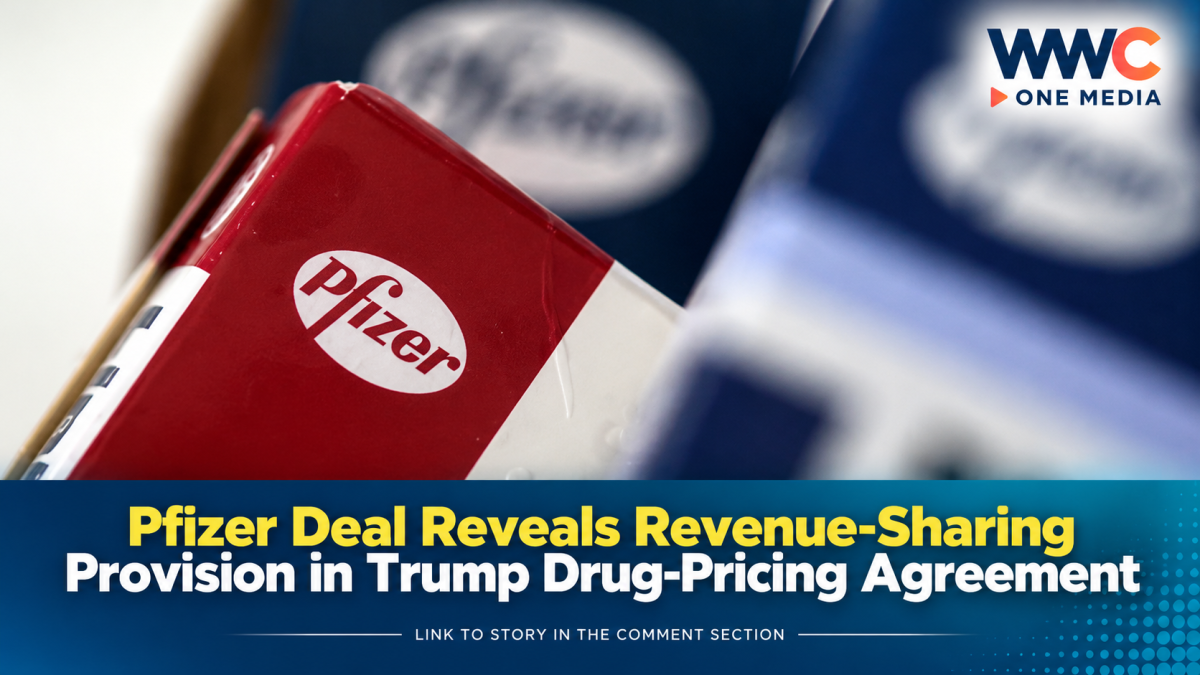
A newly disclosed Pfizer contract is shedding more light on the Trump administration’s controversial “most-favored-nation” drug-pricing strategy — including a provision requiring the pharmaceutical giant to share part of certain additional overseas revenue with the U.S. Department of Health and Human Services.
The provision was not publicly detailed when Pfizer and the Trump administration announced their drug-pricing agreement in September 2025. The contract was later obtained through a Freedom of Information Act lawsuit and released with substantial redactions, leaving important financial terms undisclosed.
The documents show that Pfizer agreed to share a portion of its net increased revenue from higher prices charged overseas on certain existing medicines with HHS.
The exact revenue-sharing rate, the specific medicines covered and other important provisions remain redacted in the released documents.
The provision was part of a broader pricing strategy
The newly disclosed clause is connected to the administration’s broader Most-Favored-Nation, or MFN, drug-pricing initiative, which seeks to bring U.S. drug prices closer to prices paid in other developed countries.
The administration has argued that Americans have historically paid disproportionately high prices for medicines while pharmaceutical companies charge lower prices in other wealthy countries.
The Pfizer agreement announced in September 2025 included commitments involving Medicaid pricing, direct-to-consumer discounts and pricing for newly launched medicines. Pfizer also received protection from certain tariffs under the agreement.
The newly released contract provides a more detailed look at how the administration attempted to address the international pricing gap.
Pfizer could raise some overseas prices — with HHS receiving a share
According to the contract, Pfizer agreed to share part of the additional net revenue it generates if it increases prices for certain medicines outside the United States.
The provision applies to medicines that were already on the market and covers the period from January 1, 2026, through January 20, 2029, according to documents reviewed by Bloomberg and reported by other outlets.
However, the released contract does not reveal the percentage that would be transferred to HHS. The identities of all affected medicines and other financial details are also redacted.
That makes it impossible to calculate from the public documents how much money the U.S. government could ultimately receive.
Why the overseas pricing provision matters
The provision is significant because it illustrates a central element of the administration’s MFN strategy: encouraging pharmaceutical companies to reduce the price gap between the United States and other developed markets.
The White House has said its policy is intended to prevent foreign governments from benefiting from lower negotiated drug prices while American consumers shoulder a greater share of pharmaceutical companies’ costs.
In its original announcement, the White House said Pfizer’s agreement would require the company to “repatriate” increased foreign revenue generated as a result of the administration’s trade policies for the benefit of American patients.
The newly released contract gives more concrete detail to that previously announced concept.
Pfizer’s original deal included major U.S. discounts
When Pfizer announced its agreement with the administration on Sept. 30, 2025, the company said it would provide U.S. patients with prices comparable to those available in other developed markets.
Pfizer also said many of its primary-care medicines and selected specialty brands would be offered through its direct-purchasing arrangement at discounts of up to 85%, with average savings of about 50% for the medicines covered by that program.
The White House highlighted individual examples, including discounts for Eucrisa, Xeljanz and Zavzpret under Pfizer’s direct-purchase arrangements.
Pfizer also agreed to provide Medicaid programs with MFN pricing for its medicines and to apply the pricing framework to newly launched innovative medicines.
Tariff protection was another major part of the agreement
The Pfizer contract also included commitments related to U.S. manufacturing and tariffs.
Pfizer said in 2025 that it had secured a three-year period during which its products covered by a Section 232 investigation would not face tariffs, provided the company made additional investments in U.S. manufacturing.
The Washington Post reported that the newly disclosed agreements with Pfizer and Eli Lilly contain tariff protections and other commitments that had not been publicly detailed when the deals were announced.
The documents therefore reveal that the agreements involved more than simply reducing the price Americans pay for medicines.
The contracts remained heavily redacted
The new disclosure has also intensified scrutiny of the administration’s decision to keep much of the pharmaceutical agreements confidential.
Public Citizen obtained the Pfizer and Eli Lilly documents after pursuing them through FOIA litigation. The consumer advocacy organization said substantial portions of the agreements remain blacked out, limiting the public’s ability to evaluate their full financial and policy implications.
The Washington Post likewise reported that the agreements contained broad confidentiality provisions and that several important terms were not publicly available when the companies and administration announced the deals.
The redactions mean some of the most consequential questions remain unanswered, including the precise amount of revenue Pfizer could ultimately share with HHS.
The administration says the policy is about lowering U.S. drug costs
The White House has presented the MFN agreements as part of an effort to reduce prescription-drug costs for Americans and change how pharmaceutical companies price medicines internationally.
The administration’s September 2025 announcement said the Pfizer agreement would make lower prices available through Medicaid and direct purchasing while requiring pricing changes for new medicines.
Pfizer similarly described the agreement as a way to reduce U.S. prices while encouraging additional investment in American research, manufacturing and innovation.
Those claims should be distinguished from independent assessments of how much the agreements will ultimately reduce total U.S. drug spending.
Critics question transparency and the structure of the deals
Public Citizen has argued that the newly released agreements raise questions about whether the arrangements primarily benefit patients or pharmaceutical companies.
The organization points specifically to provisions involving overseas prices and the extensive redactions in the contracts.
The Washington Post’s review similarly found that the agreements contained previously undisclosed incentives and commitments involving foreign pricing and tariffs.
These are competing interpretations of the agreements, while the publicly released documents establish that the revenue-sharing mechanism exists but do not disclose enough information to quantify its impact.
Pfizer is not the only drugmaker involved
The Pfizer agreement forms part of a much broader administration effort to negotiate voluntary pricing arrangements with major pharmaceutical companies.
Reuters reported in 2025 that Pfizer’s agreement involved lower prices for Medicaid and MFN pricing commitments for new drugs, alongside tariff relief.
The administration subsequently reached agreements with numerous other drugmakers. Recent reporting indicates that the MFN effort has expanded beyond the largest pharmaceutical companies to include additional biotechnology firms, particularly in arrangements connected to Medicaid.
But Pfizer and Eli Lilly are currently the two companies for which substantial portions of the underlying agreements have been publicly released through the FOIA process.
What the disclosure means for drug prices
The newly released Pfizer contract does not, by itself, establish how much U.S. patients will save or how much additional revenue HHS will receive.
The most important financial terms remain confidential or redacted.
What the document does establish is that the administration’s agreement with Pfizer went beyond a straightforward commitment to lower U.S. prices. It incorporated international pricing, potential increases in overseas revenue, revenue sharing with HHS, tariff protections and U.S. investment commitments into the same framework.
The arrangement is scheduled to operate through January 2029 for the revenue-sharing provision identified in the disclosed contract.
As additional portions of the agreements become available, the key questions will be whether the overseas pricing changes generate meaningful revenue for the U.S. government, how much of that revenue is ultimately returned to patients, and whether the MFN framework produces measurable reductions in overall U.S. prescription-drug spending.
For now, the newly released Pfizer contract offers a rare look inside a drug-pricing strategy whose most consequential financial details are still partly hidden from public view.