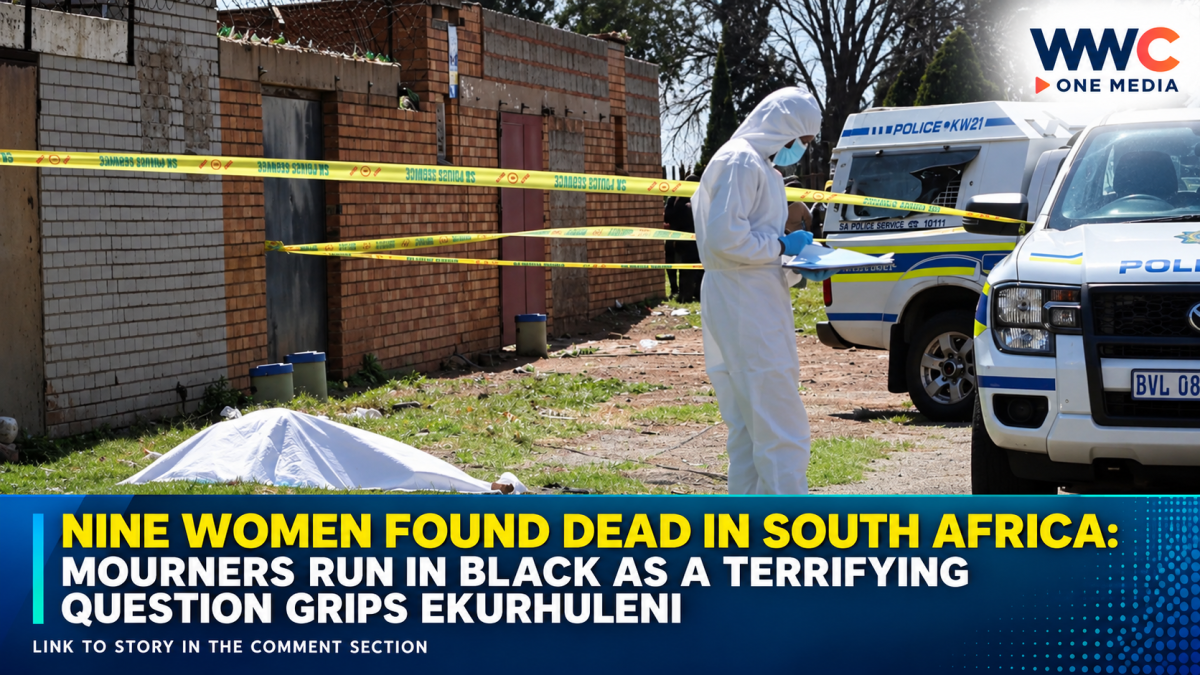
JOHANNESBURG — Grief has spilled onto the streets of South Africa after the deaths of nine women in Ekurhuleni, east of Johannesburg, prompted memorial runs, protests and renewed demands for stronger action against gender-based violence and femicide.
Runners and activists gathered in Johannesburg this week wearing black and carrying messages including “Enough. Stop Femicide.” The memorial events were held in memory of women whose deaths have shaken communities across Gauteng.
Among those remembered was Elizabeth “Tsontso” Moselakgomo, who disappeared after going out for a run earlier this month. Her body was discovered several days later. Reuters reported that Saturday’s memorial run was held in her honour, with participants saying women should be able to run, walk and live without fear.
Nine deaths, one investigation
South African police have recovered the bodies of nine women in the Ekurhuleni area over roughly two months. The victims were mostly young women, and investigators have reported similarities in several cases, including signs of sexual assault.
Authorities are investigating whether the deaths are connected, but police have not confirmed that a single person or group is responsible.
The discovery of the ninth body intensified fears in communities east of Johannesburg and prompted a high-level investigation. The Associated Press reported that police had previously described similarities among some of the killings as sufficiently concerning to issue a public warning.
The Washington Post reported that the victims ranged in age from 20 to 38 and that eight of the bodies showed signs of sexual assault, according to police. It also reported that a suspect had been arrested in connection with the discovery of the first victim, although authorities had not established whether that person was connected to the other deaths.
That distinction remains crucial: the investigation into the nine deaths is ongoing, and a serial killer has not been officially identified.
A tragedy that has reignited South Africa’s femicide debate
The killings have reopened a much larger national conversation about violence against women.
South Africa has struggled for years with exceptionally high levels of violent crime and gender-based violence. The government declared gender-based violence and femicide a national disaster in 2025, while activists have continued to demand stronger prevention, policing and accountability.
The latest deaths have brought particular attention to the safety of women in everyday situations — including running, walking home and travelling alone.
Women for Change, an advocacy organisation, criticised messages that place the responsibility for avoiding violence primarily on women themselves. Reuters reported that activists argued women should not have to reorganise their lives around the risk of being attacked.
The concern has also been reflected in local reporting. Mail & Guardian described the killings as exposing deeper concerns about how authorities respond to violence against women and whether intervention comes only after lives have already been lost.
Police response under scrutiny
South African President Cyril Ramaphosa has condemned the killings and said investigations must be pursued thoroughly.
Government officials have also pledged stronger action against gender-based violence and femicide. South Africa’s Department of Women, Youth and Persons with Disabilities said authorities would intensify efforts to address the crisis and enforce existing protections.
But the killings have also intensified scrutiny of policing and investigative capacity.
Reuters reported that activists pointed to corruption and resource constraints within policing, while noting that only about one in 10 murders is solved.
Local political figures and advocacy groups have separately called for greater police resources, improved forensic investigations and stronger measures to prevent further killings.
From mourning to a demand for change
For the runners taking part in the memorial events, the gatherings were about more than remembering those who died.
They were also a public statement that women should be able to move through their communities without living in constant fear.
Moselakgomo’s death has carried particular resonance because she was a runner. Her disappearance mobilised fellow runners and community members, and her death has become a symbol of the fears confronting women who simply want to exercise or travel through their neighbourhoods.
As candles were lit and mourners dressed in black, the message from activists was direct: mourning alone cannot be the end of the story.
The investigation into the nine deaths continues. For families waiting for answers, and communities demanding greater protection, the question now extends beyond who is responsible for the individual killings.
It is whether South Africa can turn the latest wave of outrage into lasting action — before another name is added to the list.